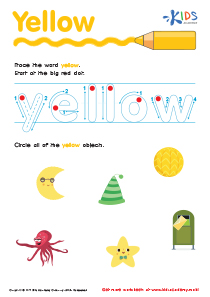
Writing practice Normal English for Beginners Worksheets for Ages 3-6
6 filtered results
Difficulty Level
Grade
Age
-
From - To
Subject
Activity
Standards
Unlock your child's potential with our Writing Practice Normal English for Beginners Worksheets designed for ages 3-6. These engaging, educational activities help young learners master the basics of English while improving their fine motor skills. Each worksheet is crafted to make learning fun and interactive, focusing on letter recognition, basic vocabulary, and simple sentence formation. Ideal for both classroom settings and home practice, our beginner worksheets provide an excellent foundation for future literacy success. Nurture your child's love for learning and watch their confidence soar as they progress through thoughtfully designed writing exercises.
Favorites
With answer key
Interactive
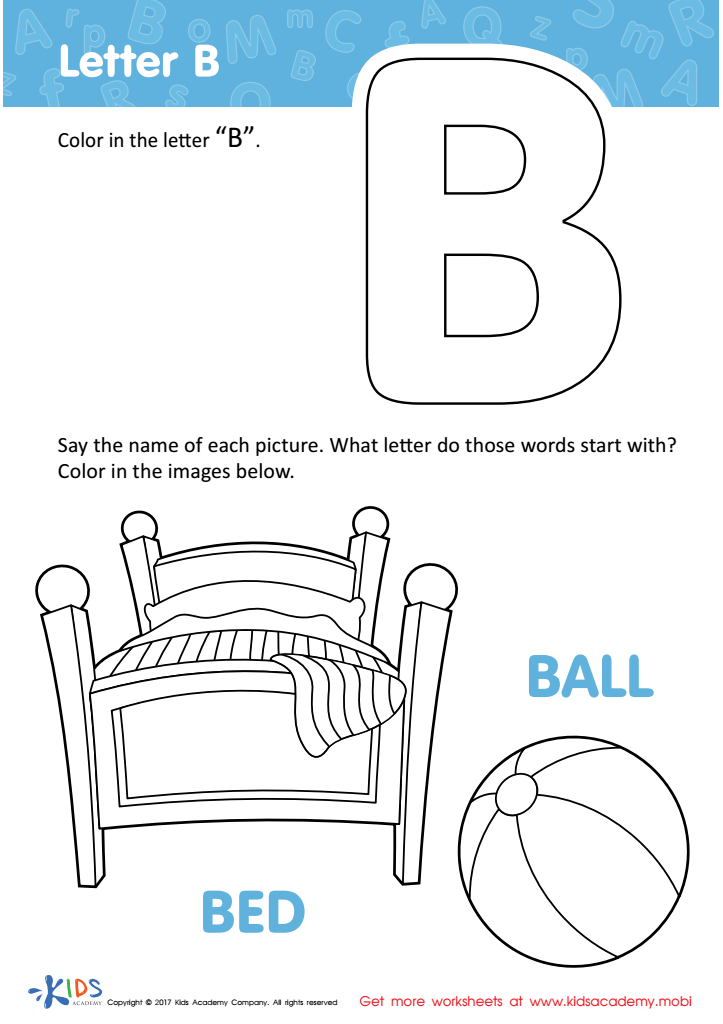
Letter B Coloring Sheet
Kids will love coloring this page that features things they like - balls, bubbles, bugs and bedtime - all words starting with "B"! It's a great way to introduce the alphabet and increase their exposure to letters and sounds. Let them have fun and learn at the same time!
Download (PDF)
 Assign to My Students
Assign to My Students
Letter B Coloring Sheet
Worksheet
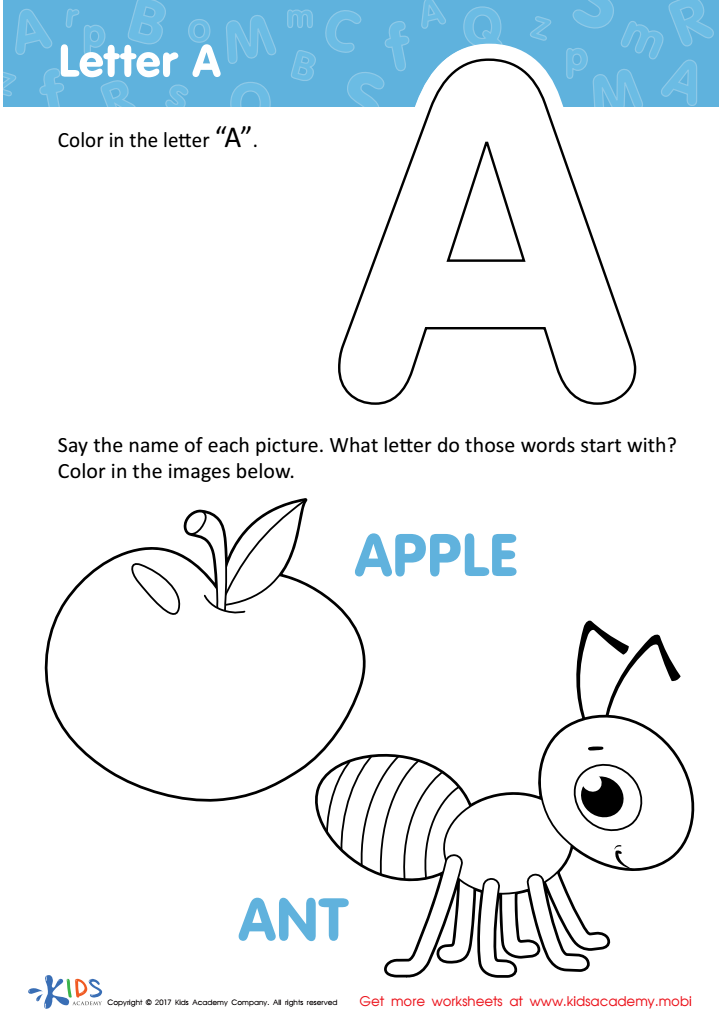
Letter A Coloring Sheet
This letter "A" coloring page is great for introducing kids to the alphabet! Let them exercise their creativity while they learn to recognize letters and sounds - it's a fun and easy way to help them get started.
Download (PDF)
Assign to My Students
Assign to My Students
Letter A Coloring Sheet
Worksheet

Letter H Tracing Page
Trace the letter "H", then practice writing its lowercase form. Finally, choose your favorite form of transport and ride away! Get our worksheets to make learning fun and easy.
Letter H Tracing Page
Worksheet
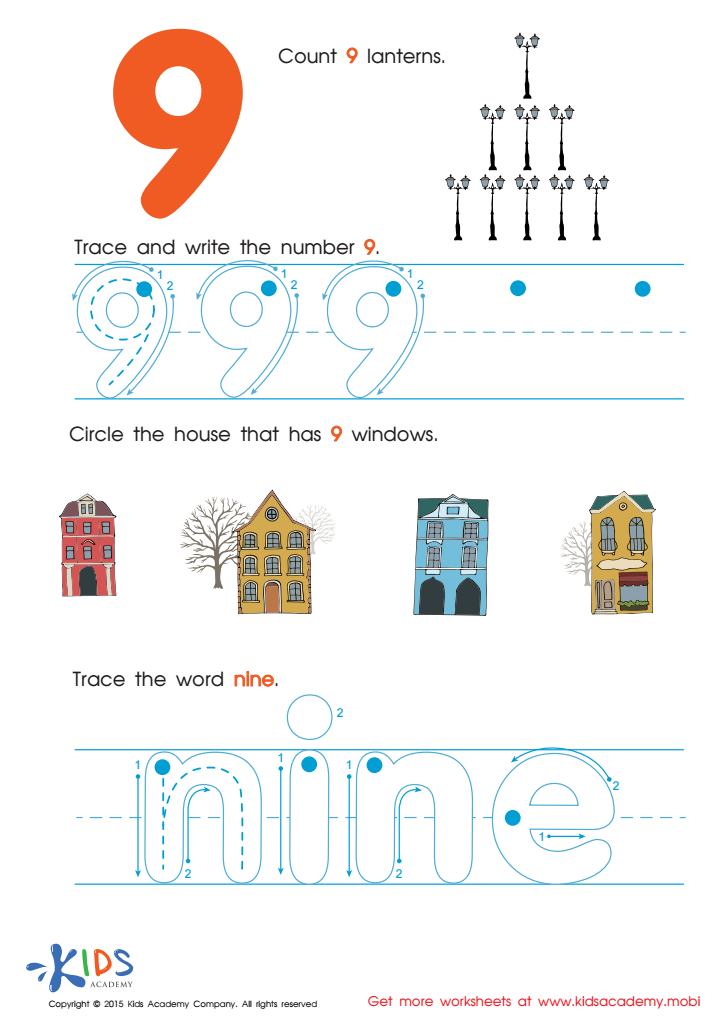
Tracing And Learning to Write Number 9 Worksheet
Explore our collection of learning numbers worksheets and make teaching numbers to preschoolers easier with Kids Academy. Trace numbers, circle houses with the specified number of windows, write the corresponding number words and revise previous numbers regularly to help kids learn.
Tracing And Learning to Write Number 9 Worksheet
Worksheet
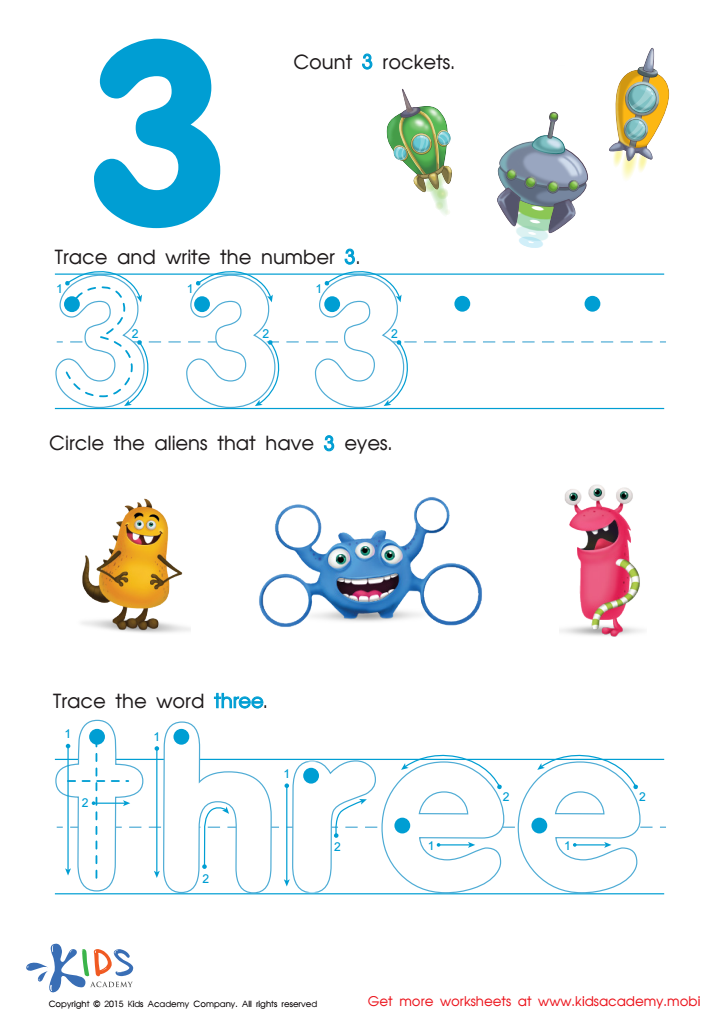
Learning Number Three Worksheet
Learn to count with aliens! Trace the number 3 and circle aliens with 3 eyes. Explore our web site for more number games and activities for preschoolers.
Learning Number Three Worksheet
Worksheet
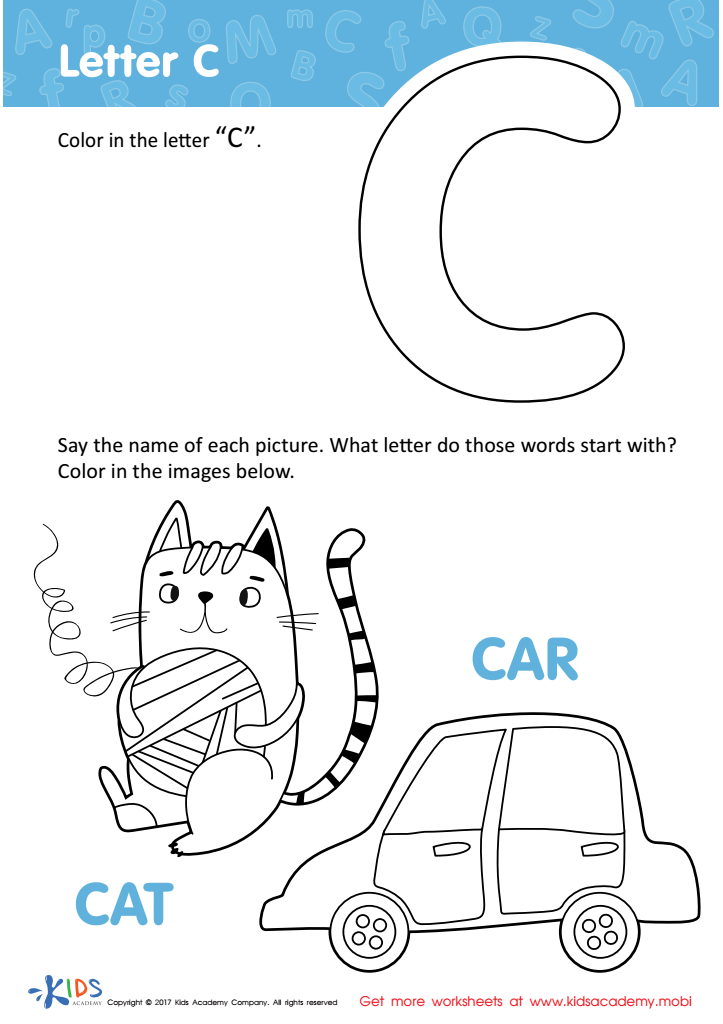
Letter C Coloring Sheet
Introduce kids to the letter 'C' with this fun coloring page! Exposing little ones to letters, words, and sounds helps them learn long before they can read. Start with simple words like 'cat' and 'car' - these are great first sight words for young children.
Download (PDF)
Assign to My Students
Assign to My Students
Letter C Coloring Sheet
Worksheet
Join Kids Academy for Free
Who is primarily going to use this learning content?




Writing practice is crucial for young children, ages 3-6, as it forms the foundation of their literacy and overall cognitive development. At this tender age, children are highly impressionable and their brains are remarkably adaptable. Engaging them in writing activities not only helps them master the alphabet and develop fine motor skills, but it also promotes creativity and self-expression.
For parents and teachers, focusing on writing practice is particularly important because it enhances hand-eye coordination and strengthens small muscles in the hands, which are essential for all kinds of future tasks, from tying shoelaces to using computers. Writing practice also fosters an understanding of language structure and vocabulary, laying the groundwork for reading skills.
When children practice writing, they begin to recognize letter shapes and sounds, which aids in decoding words and improves phonemic awareness. Moreover, learning to write familiar words and simple sentences can encourage a love for storytelling and communication. This excitement around literacy at a young age sets students up for academic success in the future.
Furthermore, consistency in practicing writing builds patience, concentration, and confidence in young learners. Thus, investing time in writing activities early on paves the way for proficient reading and writing abilities, critical thinking, and a lifelong passion for learning.