Spatial awareness Normal Reading Worksheets for Ages 3-6
3 filtered results
-
From - To
Enhance your child's vital spatial awareness skills with our engaging Normal Reading Worksheets, specially designed for ages 3-6. These worksheets feature fun activities that help young learners understand concepts like position, direction, and distance through colorful illustrations and interactive exercises. By integrating spatial awareness with early reading practices, children will build essential cognitive skills while staying entertained. Ideal for parents and educators, these worksheets promote hands-on learning and foster a love for reading in every child. Discover a world of exploration and growth through our creative resources, ensuring that your little one develops the foundational skills for lifelong learning!
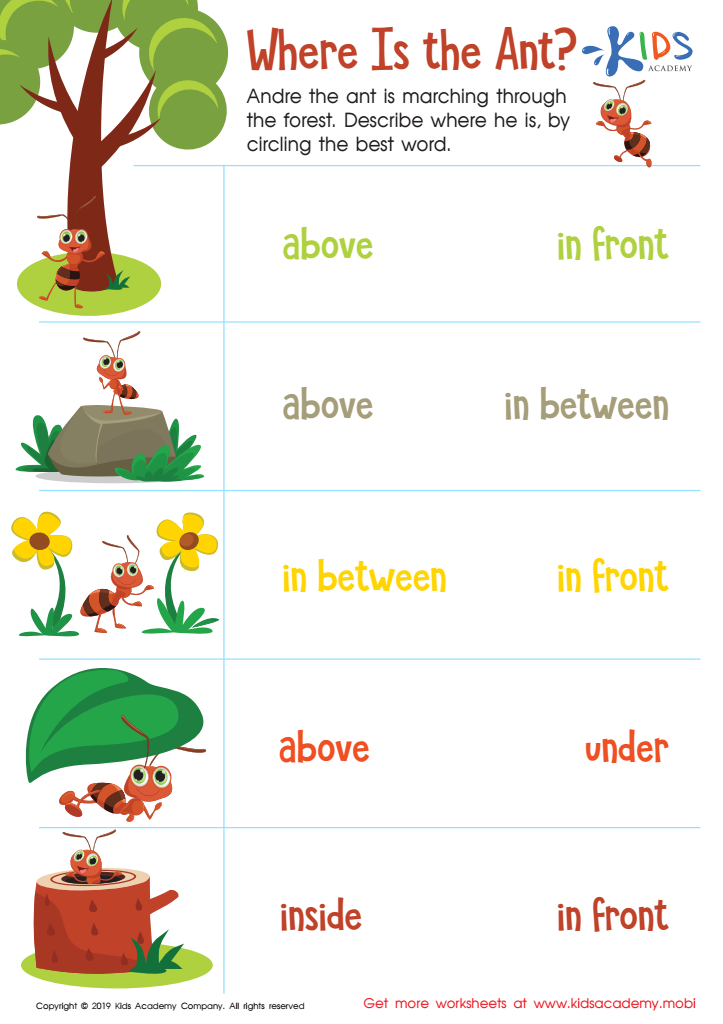
Where Is the Ant? Worksheet
 Assign to My Students
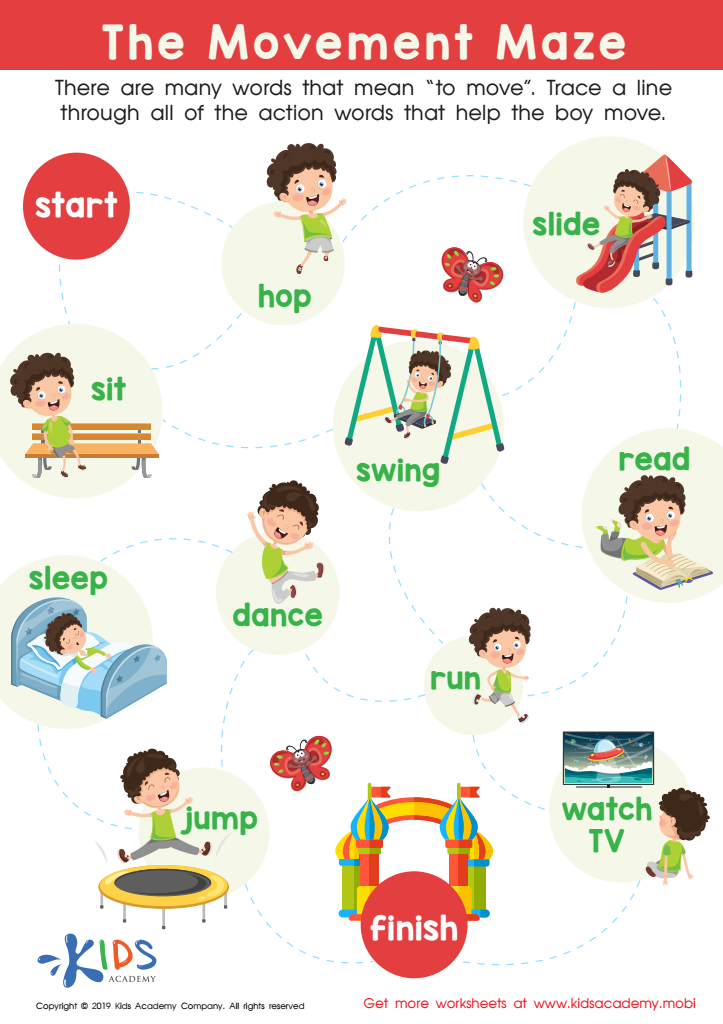
The Movement Maze Worksheet
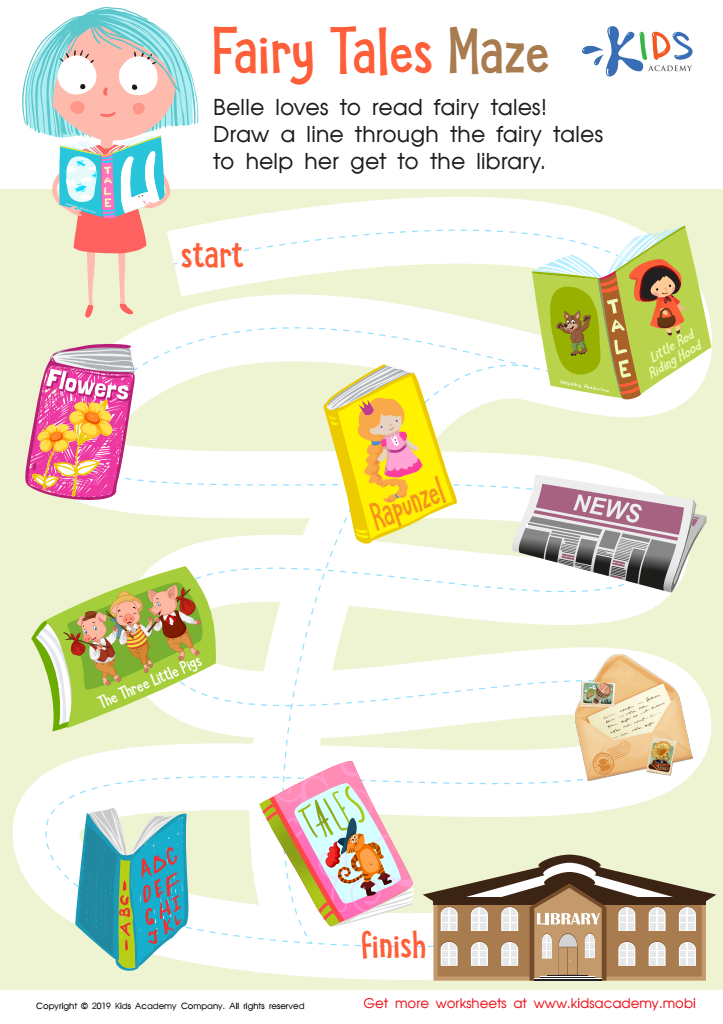
Fairy Tales Maze Worksheet



.jpg)


.jpg)

Spatial awareness is crucial for children's overall development, especially for those aged 3 to 6. Parents and teachers should care about fostering this skill because it lays the foundation for many essential abilities, including math, literacy, and motor skills. During these formative years, children develop an understanding of their position in space, how objects relate to one another, and the concept of size, shape, and movement.
Improving spatial awareness can significantly aid in academic success. For instance, children with strong spatial skills can better grasp concepts like patterns and geometric shapes that are fundamental in early mathematics. In literacy, spatial awareness helps with letter and word recognition, as children can more easily visualize and differentiate between similar shapes and sounds.
Beyond academics, spatial awareness is tied to physical coordination and balance. Activities that promote spatial skills, such as puzzles, building blocks, or games involving movement, enhance fine and gross motor skills, making children more confident in their physical abilities.
Finally, fostering spatial awareness encourages creativity and problem-solving skills, allowing children to explore their surroundings and engage in imaginative play. Therefore, parents and teachers play a vital role in supporting the development of this critical skill in young children.








