
Logical Reasoning Normal Reading Comprehension Worksheets for Ages 3-6
4 filtered results
Difficulty Level
Grade
Age
-
From - To
Subject
Activity
Standards
Enhance your child’s cognitive abilities with our specially crafted Logical Reasoning Normal Reading Comprehension Worksheets for ages 3-6. At Kids Academy, we focus on nurturing fundamental learning skills that merge reading comprehension with logical reasoning exercises. Our worksheets offer engaging and age-appropriate activities that help young learners develop critical thinking while improving their reading abilities. Perfect for preschoolers and kindergarteners, these exercises make learning fun and interactive, encouraging curiosity and problem-solving. Visit our website for a diverse selection of themed worksheets designed to support early learners on their educational journey with enjoyable learning experiences.
Favorites
With answer key
Interactive
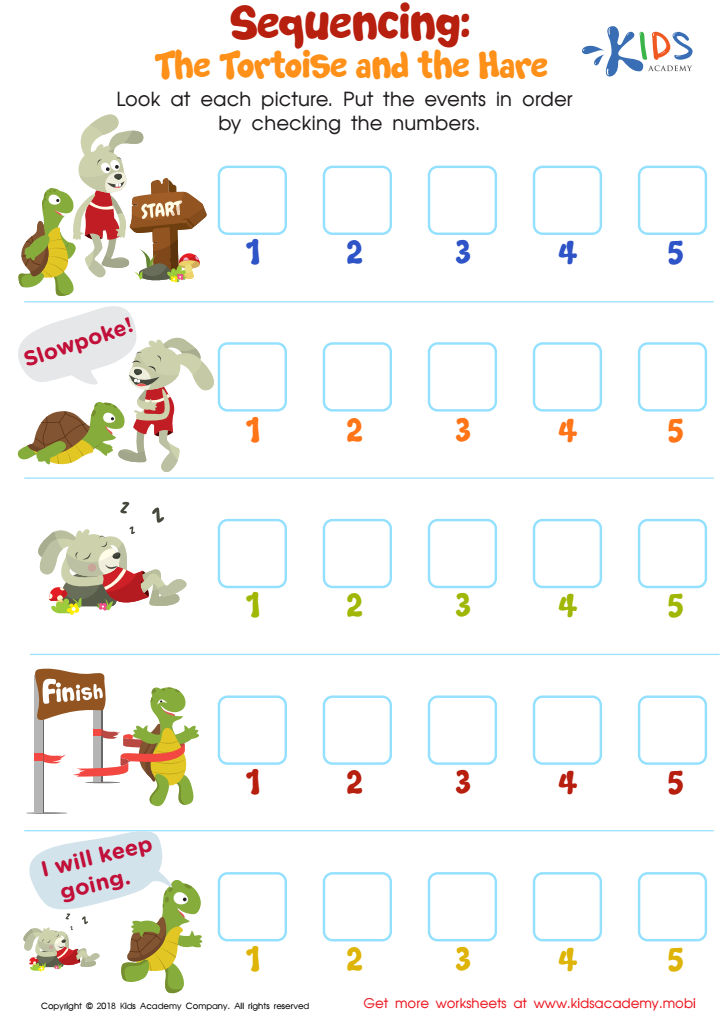
Sequencing: The Tortoise and the Hare Worksheet
Help your child become an independent reader and critical thinker with a sequencing worksheet from Kids Academy! Have them read the classic tale of the tortoise and the hare and use the accompanying worksheet to check their understanding of the story's sequence of events. Have kids identify the correct order of events by selecting the box next to the correct number for each image!
 Assign to My Students
Sequencing: The Tortoise and the Hare Worksheet
Worksheet
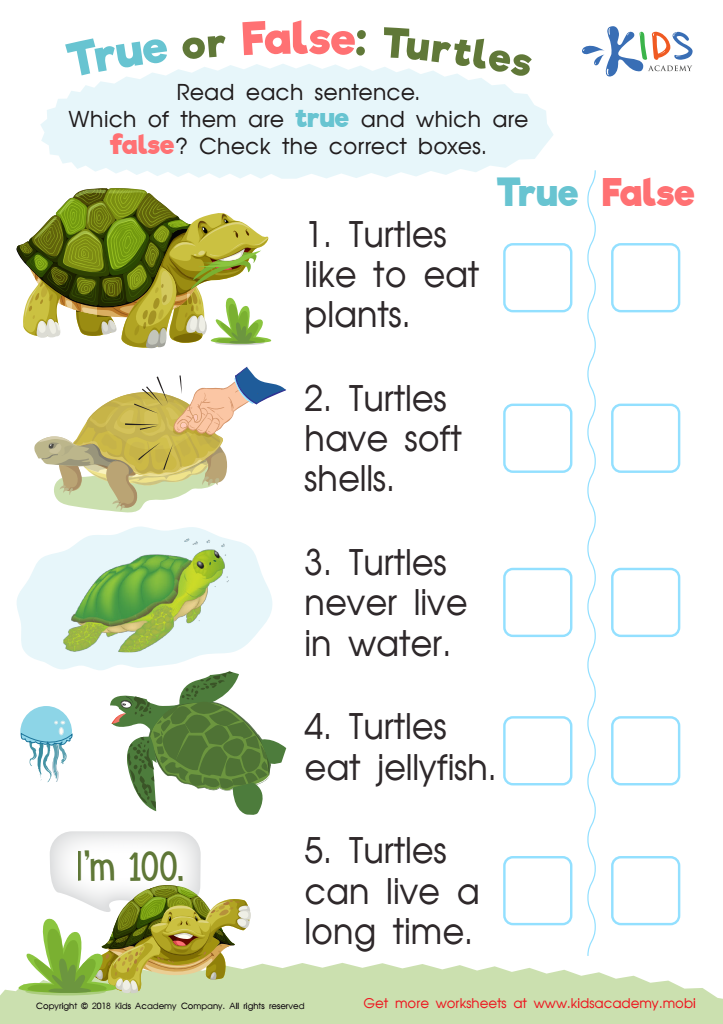
True or False: Turtles Worksheet
Print this free downloadable worksheet to strengthen your child's reading comprehension. Assist them to read each sentence and recall facts about turtles. Check true or false for each statement to verify their knowledge. Perfect for early learners!
True or False: Turtles Worksheet
Worksheet
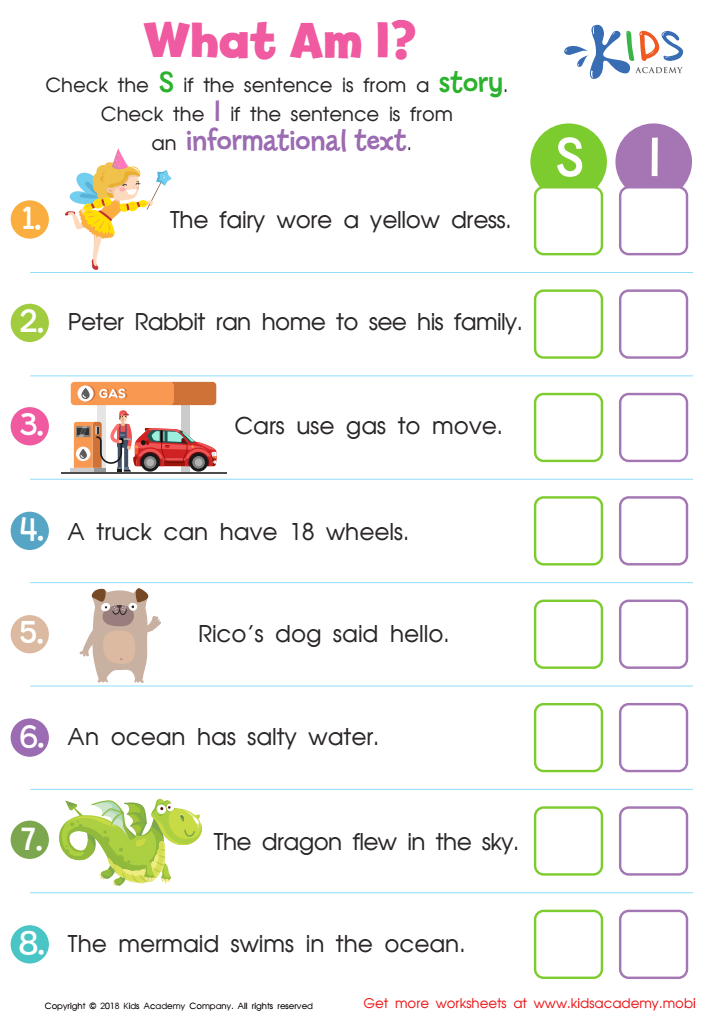
What Am I? Worksheet
This worksheet assesses students' ability to differentiate between stories and texts they read for facts. Students learn to distinguish between reading for pleasure and reading for information. It includes statements from both a story and an informational text, and students must decide what type of text it is.
What Am I? Worksheet
Worksheet
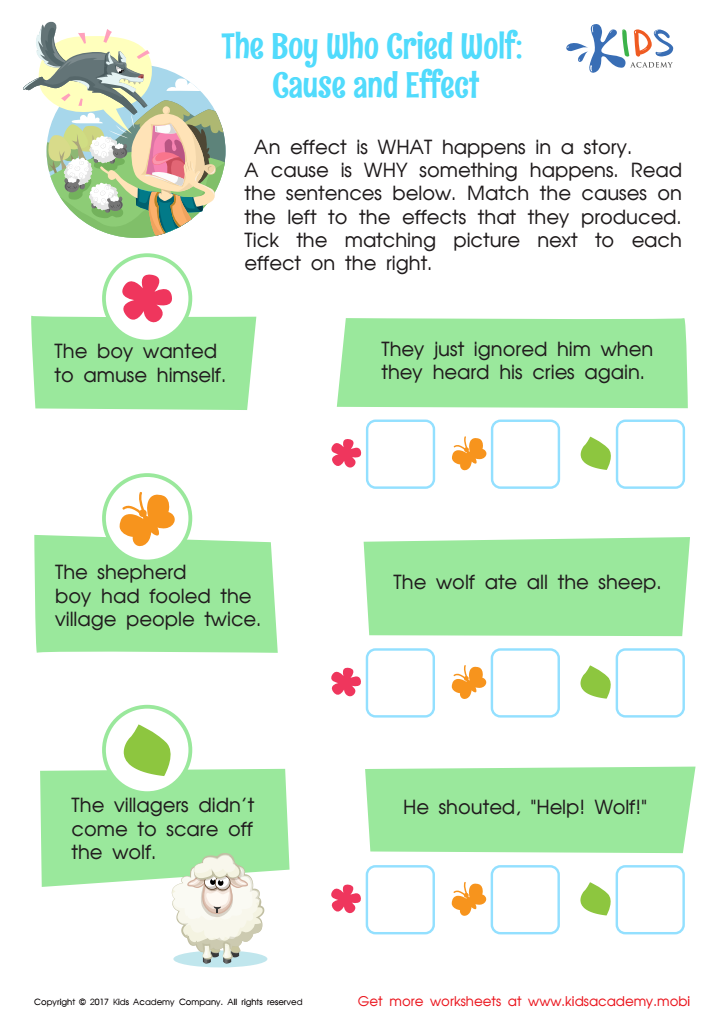
The Boy Who Cried Wolf: Cause and Effect Worksheet
With classic stories and fables, learning reading comprehension is easy - and fun!
The Boy Who Cried Wolf: Cause and Effect Worksheet
Worksheet
Join Kids Academy for Free
Who is primarily going to use this learning content?








Parents and teachers should highly prioritize Logical Reasoning and Reading Comprehension for children aged 3-6, as these foundational skills significantly influence early cognitive development and long-term educational success. During these formative years, children’s brains are especially receptive to learning, making it an optimal period to introduce and nurture critical thinking and comprehension abilities.
Logical reasoning helps young children make sense of the world around them. It promotes problem-solving skills, enhances their ability to think analytically, and supports better decision-making. For instance, when playing with building blocks or simple puzzles, children learn to recognize patterns, understand sequencing, and develop spatial awareness. These activities build the groundwork for mathematical thinking and scientific reasoning in later years.
Normal reading comprehension, on the other hand, is crucial for language development, communication skills, and academic achievement. When children understand what they read or are read to them, they expand their vocabulary, improve listening skills, and create a love for stories. This comprehension not only makes learning enjoyable but also sets the stage for successful reading and writing capabilities.
Together, logical reasoning and reading comprehension foster a well-rounded intellect, equipping children with the cognitive tools necessary for future academic experiences and everyday problem-solving. Therefore, nurturing these skills from an early age sets a positive trajectory for continued educational growth and lifelong learning.








