Spatial awareness Normal Science Worksheets for Ages 3-6
5 filtered results
-
From - To
Discover our engaging Spatial Awareness Normal Science Worksheets designed especially for children ages 3-6! These worksheets serve as a fun introduction to key concepts of spatial awareness, nurturing essential skills in young learners. Tailored to spark curiosity and creativity, they include various interactive activities that help children explore shapes, sizes, directions, and relationships in space. Perfect for both classroom and home settings, these worksheets promote critical thinking, problem-solving, and motor skills development. Download now to enrich your child’s learning experience with activities that are both educational and enjoyable, setting a solid foundation for future scientific exploration!
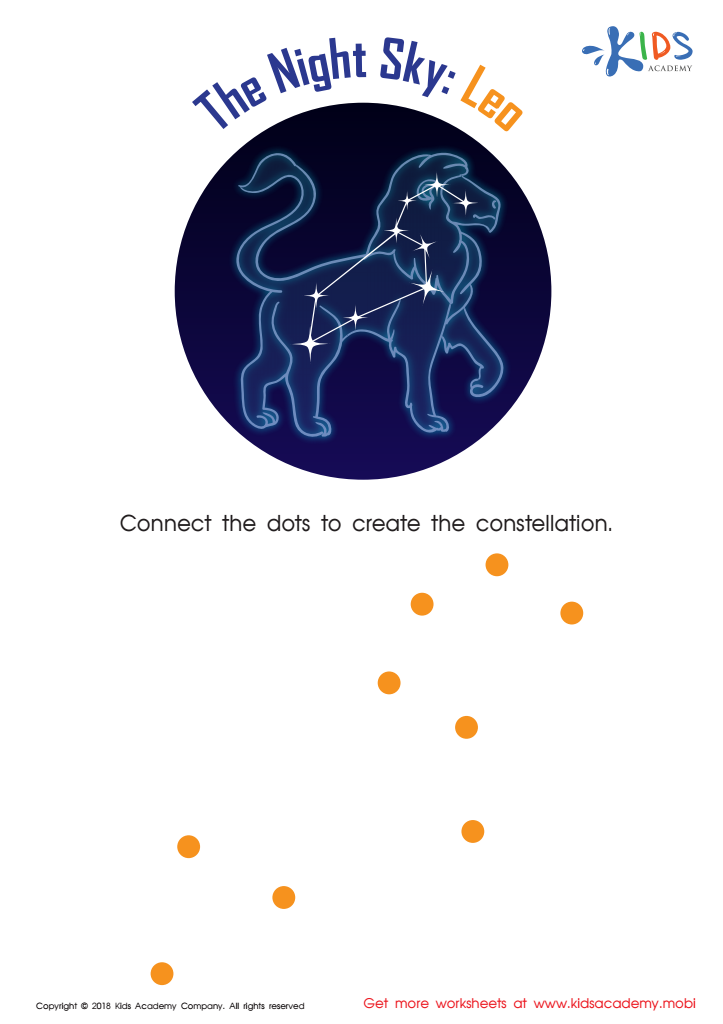
The Night Sky: Leo Worksheet
 Assign to My Students
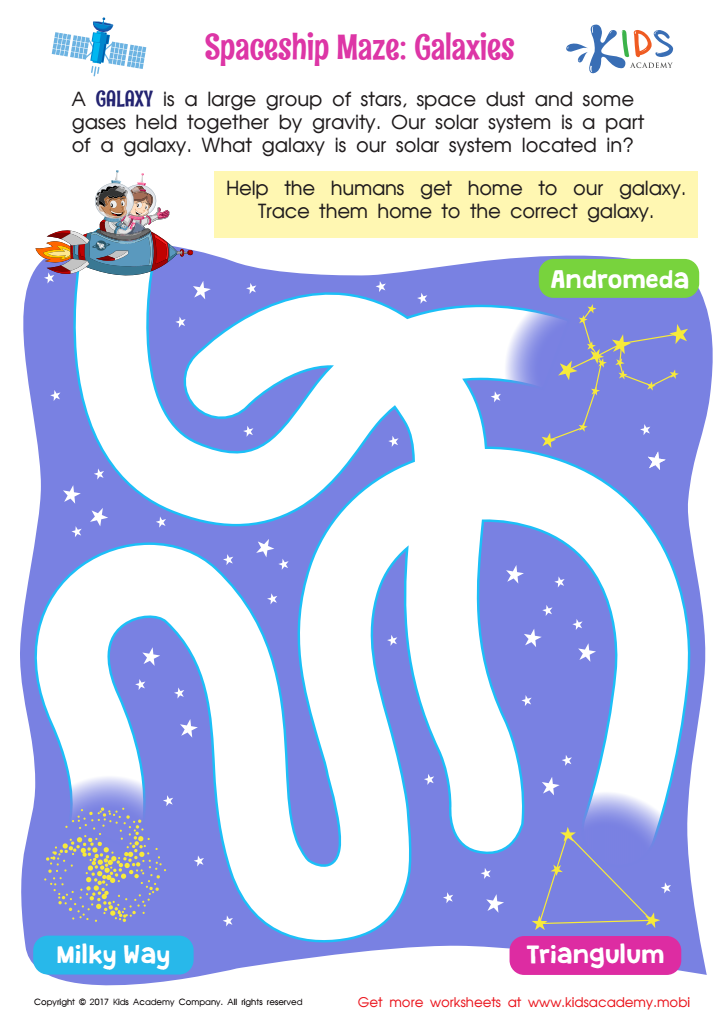
Spaceship Maze: Galaxies Worksheet
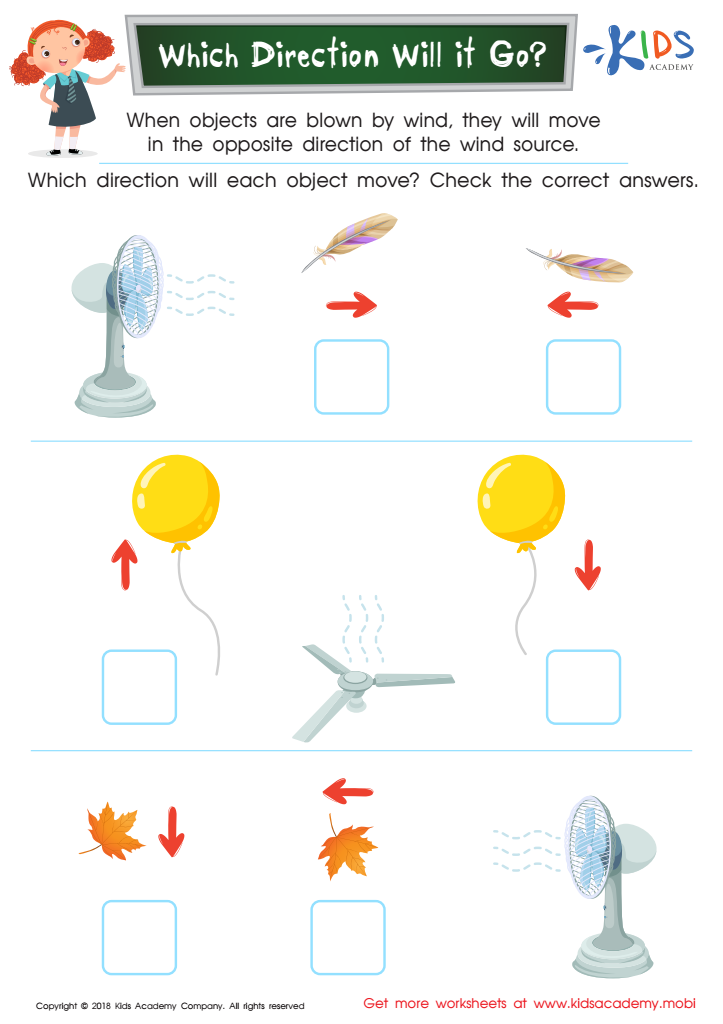
Which Direction Will it Go? Worksheet
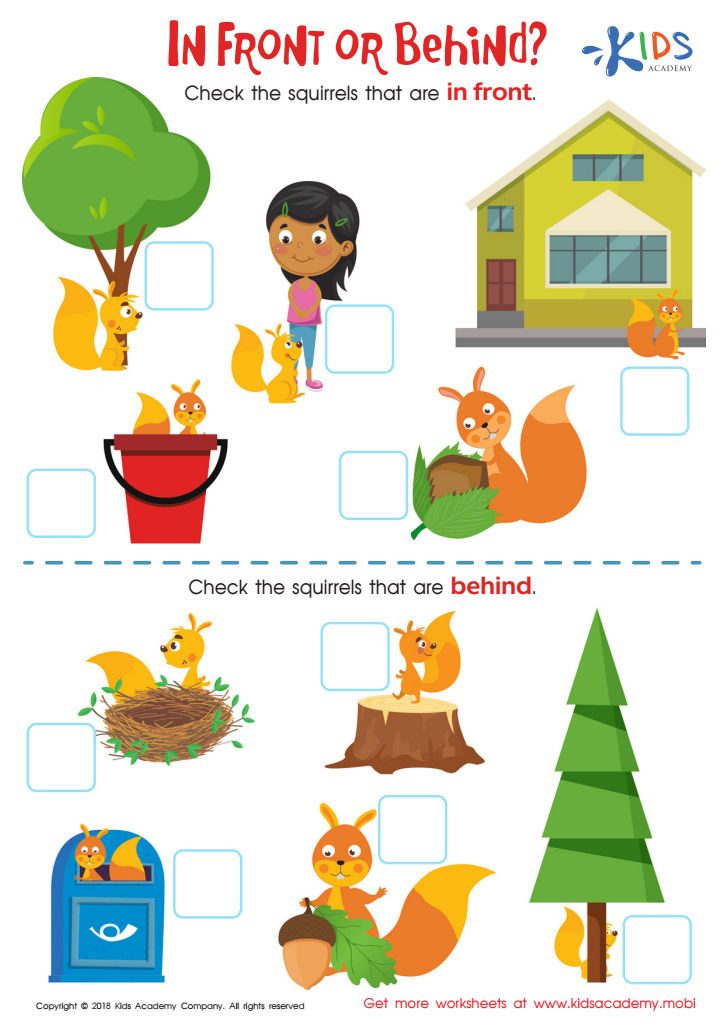
In Front or Behind: Part 2 Worksheet
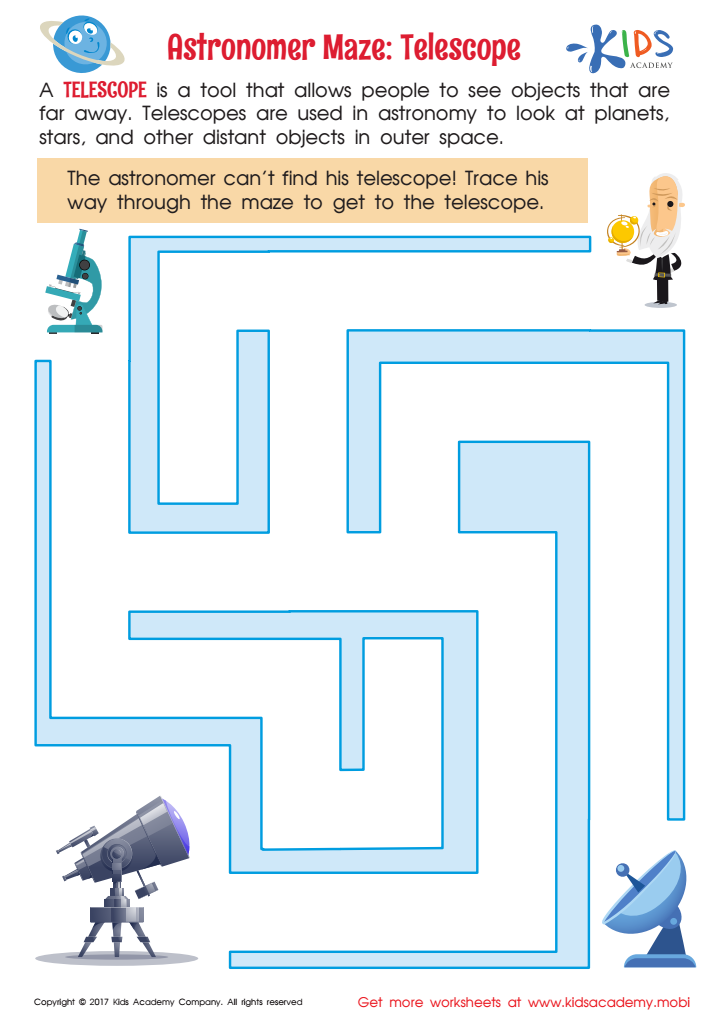
Astronomer Maze: Telescope Worksheet







Spatial awareness is a critical cognitive skill that refers to the ability to understand and navigate the space around us. For children ages 3-6, developing spatial awareness is essential for various aspects of learning and everyday life. Parents and teachers should care about this dimension of normal science development as it lays the foundation for future academic and social success.
During these formative years, children engage in activities that enhance their spatial awareness, such as building with blocks, completing puzzles, and participating in outdoor play. These experiences help them understand concepts like size, shape, direction, and distance. This understanding not only builds essential math and science skills—like geometry and measurement—but also enhances problem-solving abilities.
Moreover, strong spatial awareness contributes to social skills, as children learn to navigate playgrounds and other environments collaboratively. Engaging with spatial concepts develops fine motor skills, hand-eye coordination, and critical thinking.
Incorporating playful, hands-on activities that promote spatial awareness can drastically benefit children’s growth. By nurturing this skill, parents and teachers set the stage for children to excel academically and socially, ultimately empowering them to explore and interact effectively with the world around them.







