Understanding weather Normal Science Worksheets for Ages 3-6
3 filtered results
-
From - To
Explore our "Understanding Weather" science worksheets designed for young learners ages 3-6! These engaging, interactive resources help children grasp fundamental weather concepts through fun activities and vibrant illustrations. From identifying different types of weather to learning about seasonal changes, our worksheets encourage observation and curiosity about the natural world. Perfect for preschool and kindergarten settings, they promote critical thinking and creativity while reinforcing essential science skills. Download these educational tools today and watch your child's understanding of weather phenomena grow! Join us in making learning a delightful adventure with "Understanding Weather" worksheets that inspire exploration and discovery.
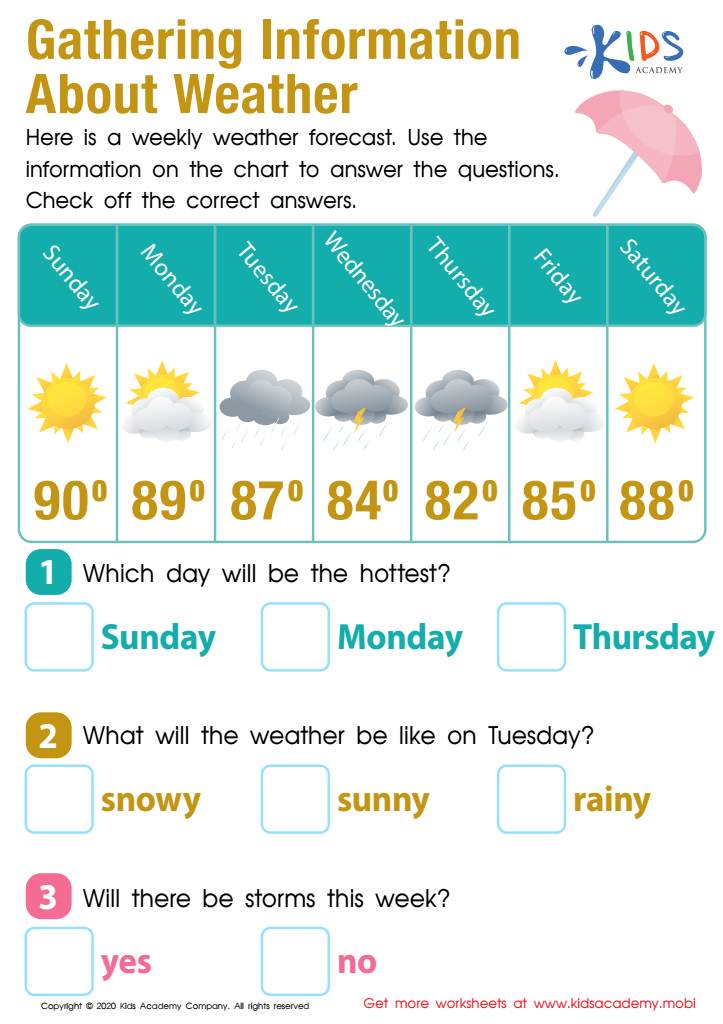
Gathering Information About the Weather Worksheet
 Assign to My Students
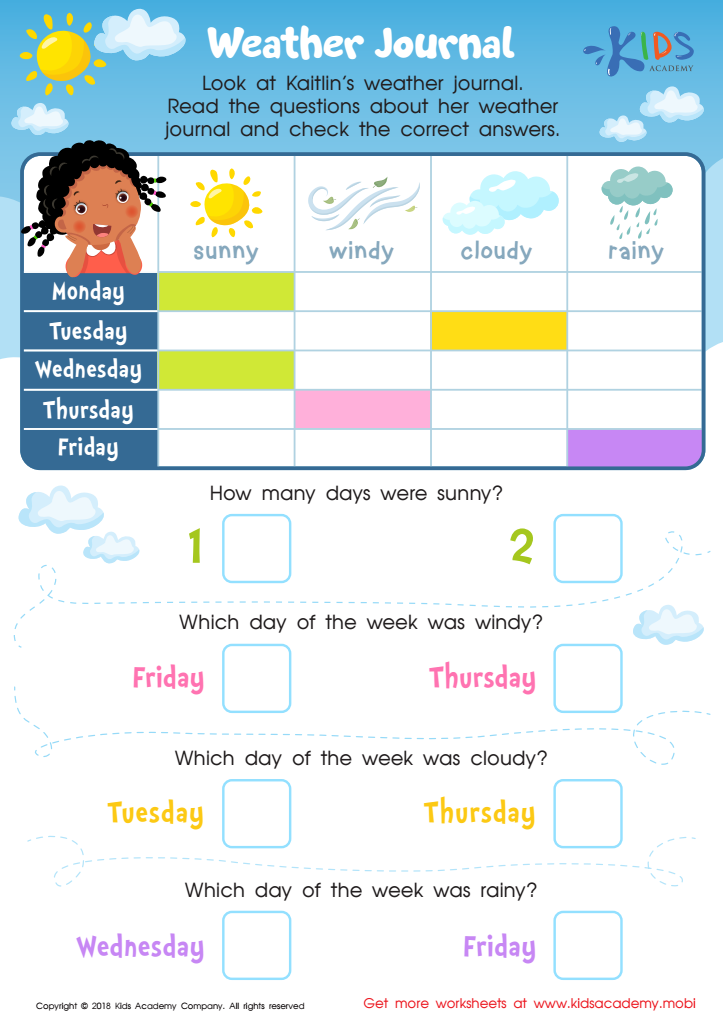
Weather Journal Worksheet
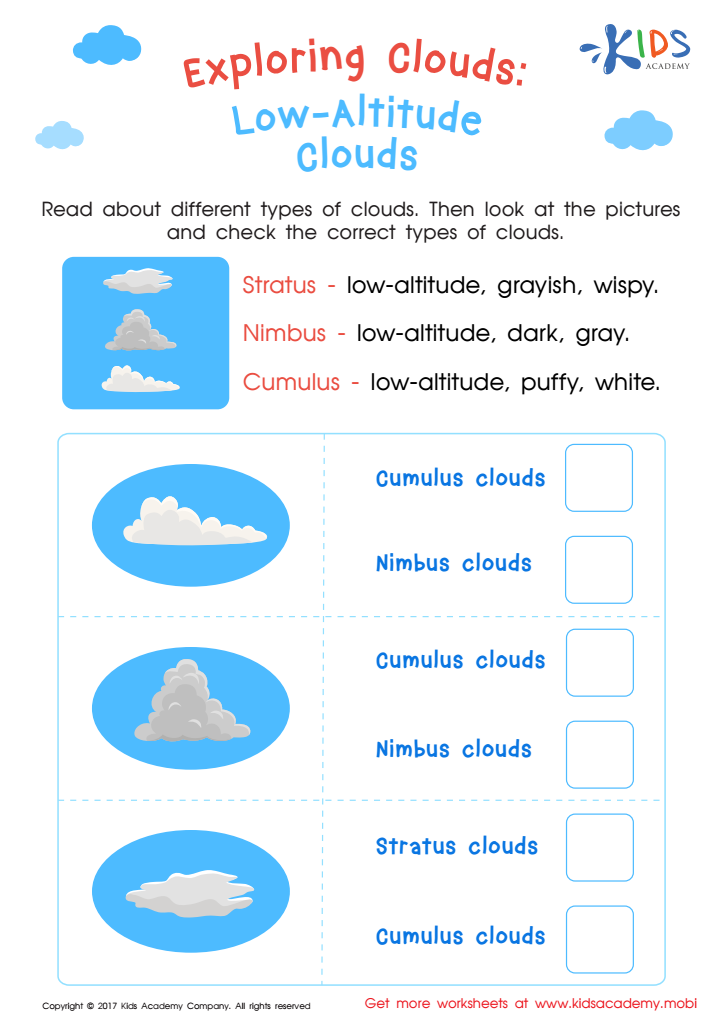
Exploring Clouds: Low Altitude Clouds Printable


.jpg)




Understanding weather is vital for children aged 3-6, as it plays a significant role in their cognitive and emotional development. For parents and teachers, engaging young learners with basic weather concepts fosters curiosity about the world around them. Learning about weather enhances critical thinking skills, as children explore cause-and-effect relationships, such as why rain makes things wet or how wind moves leaves.
Moreover, weather education promotes vocabulary development. Words like "sunny," "rainy," and "stormy" enrich their language skills and communication abilities. By discussing seasonal changes, children learn to observe their environment, helping them become more aware and connected to nature.
Additionally, teaching weather concepts lays the groundwork for essential safety knowledge. Understanding when to dress appropriately or when to seek shelter can empower children to make safer choices. It also provides an opportunity for collaborative learning, enhancing social skills through group discussions and activities.
Through storytelling, songs, and hands-on experiments, weather education can be fun and interactive, making lessons memorable. Overall, arming young learners with a foundational understanding of weather prepares them for future scientific learning and fosters an enduring appreciation for the natural world. Parents and teachers should prioritize this essential aspect of early education.







