Knowledge application Normal Physical Science Worksheets for Ages 3-6
3 filtered results
-
From - To
Explore our engaging "Knowledge Application Normal Physical Science Worksheets" designed for young learners aged 3-6. These worksheets aim to introduce basic physical science concepts in a fun and accessible way, fostering curiosity about the world around them. Through creative activities and easy-to-understand questions, children will enhance their understanding of key scientific principles, develop critical thinking skills, and apply their knowledge in practical scenarios. Ideal for both home and classroom use, these worksheets encourage exploration and hands-on learning, making science exciting for early learners. Empower your child's scientific journey and help them build a strong foundation with our thoughtfully designed resources!
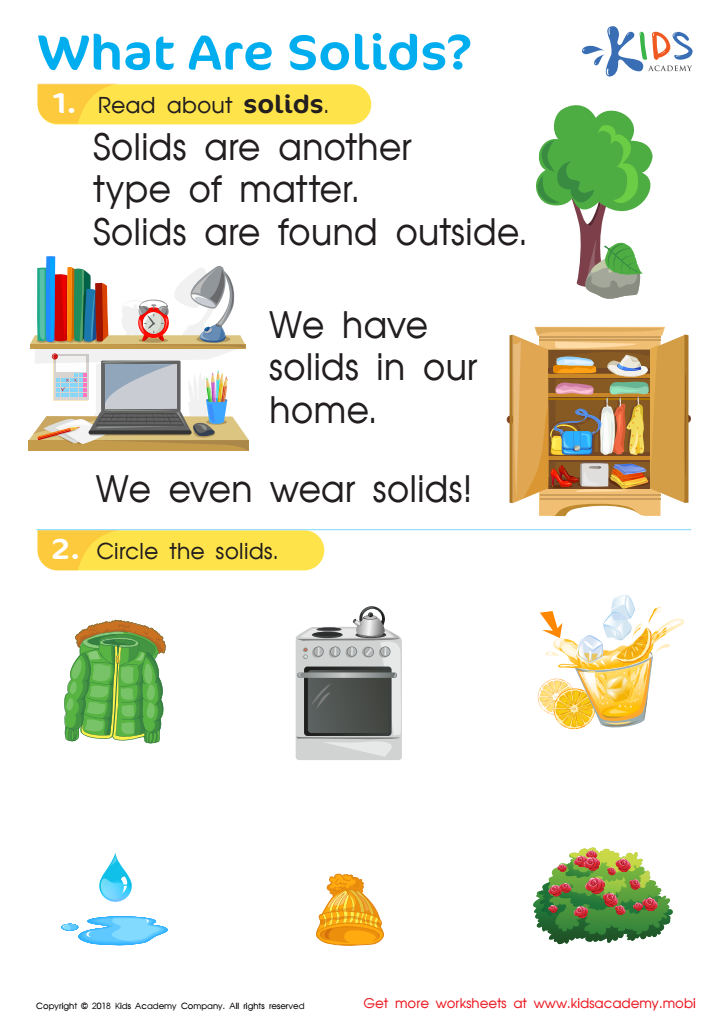
What Are Solids? Worksheet
 Assign to My Students
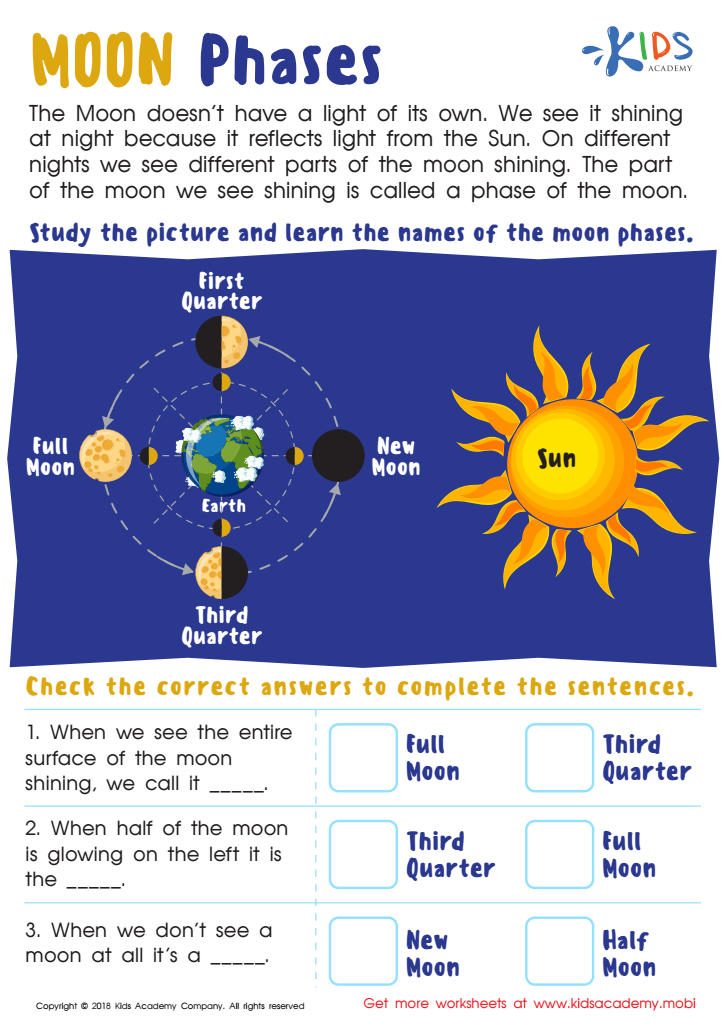
Moon Phases Worksheet
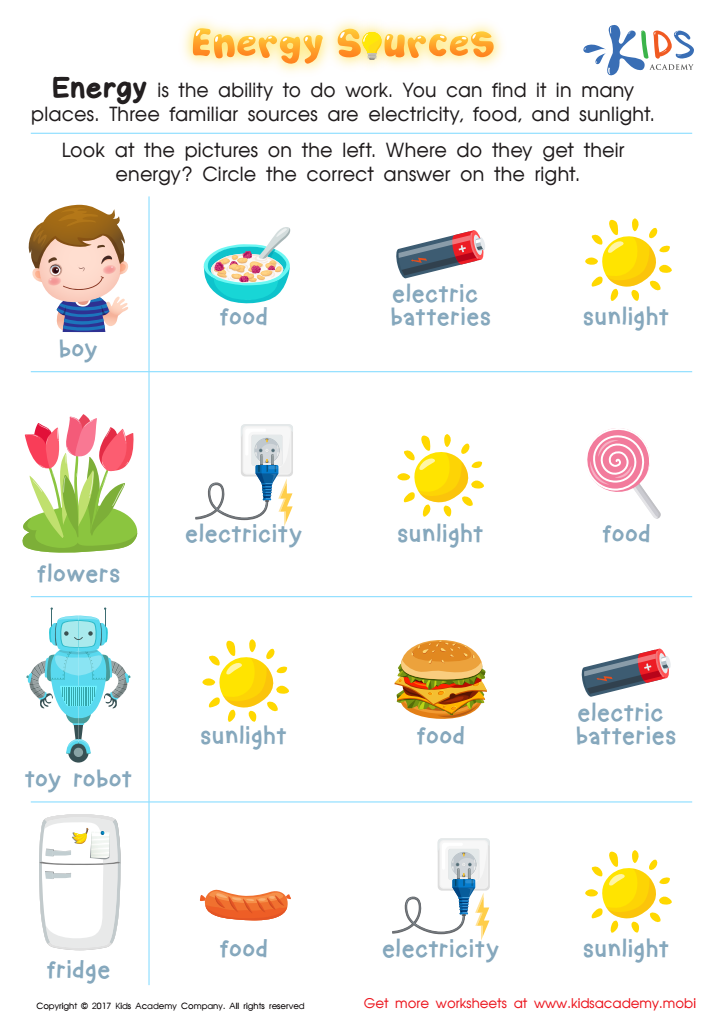
Energy Sources Printable



.jpg)




Knowledge application in Normal Physical Science for ages 3-6 lays the foundation for critical thinking and problem-solving skills essential for lifelong learning. At this early stage, children are natural explorers, eager to understand the world around them. Engaging with physical science concepts fosters their curiosity, encouraging them to ask questions and seek answers through observation and experimentation.
Parents and teachers should care about this aspect of education as it promotes an understanding of basic scientific principles, such as gravity, force, and matter, making these abstract concepts tangible through play and hands-on activities. By embedding these ideas in their everyday experiences, children develop a comprehensive understanding of how things work, which is crucial for cognitive development.
Furthermore, early exposure to physical science cultivates resilience and adaptability as children learn to navigate trial and error. It equips them with the necessary tools to think critically and make informed decisions, laying the groundwork for academic success in later years. When parents and teachers prioritize knowledge application in physical science, they not only enhance children's learning experiences but also nurture innovators and informed citizens who can tackle future challenges. Ultimately, supporting early scientific learning can help create a generation that values inquiry and exploration.







