Understanding seasons Normal Seasons Worksheets for Ages 3-6
4 filtered results
-
From - To
"Understanding Seasons Normal Seasons Worksheets for Ages 3-6" offers fun, engaging, and educational activities to help young learners grasp the concept of seasons. Tailored for preschoolers, these printable worksheets use colorful visuals and simple explanations to teach children about the different weather patterns, activities, and changes in nature associated with each season. Through hands-on exercises designed for early learning skills, kids will easily recognize and differentiate between spring, summer, fall, and winter. Perfect for parents and educators, these resources ensure foundational understanding while sparking curiosity and fostering a love for learning about the world around them.
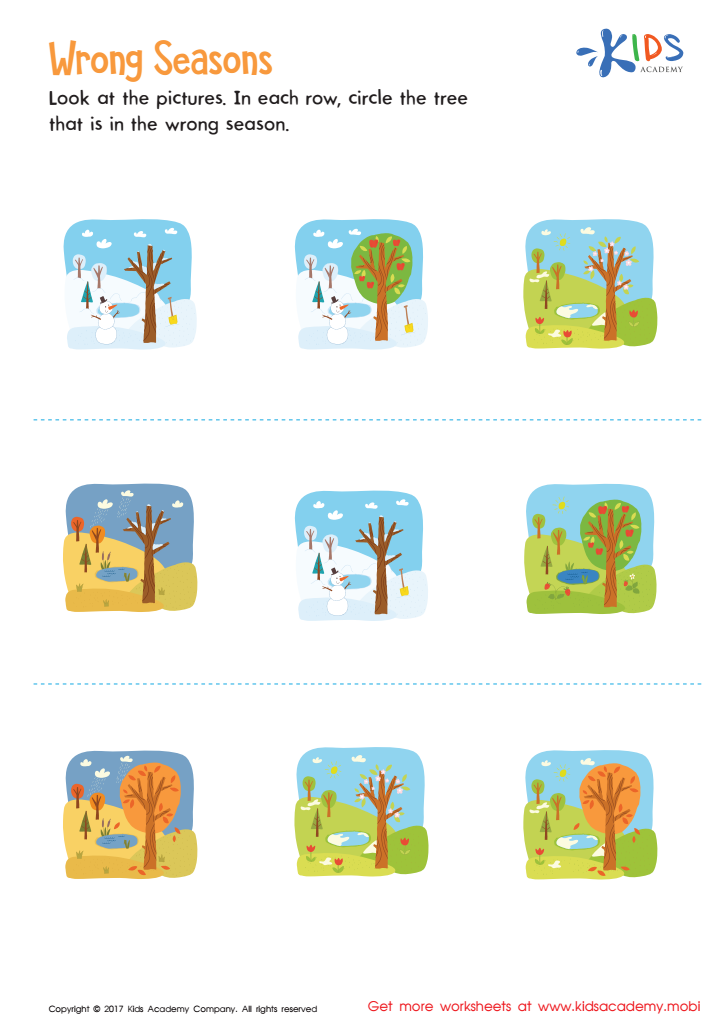
Wrong Seasons Worksheet
 Assign to My Students
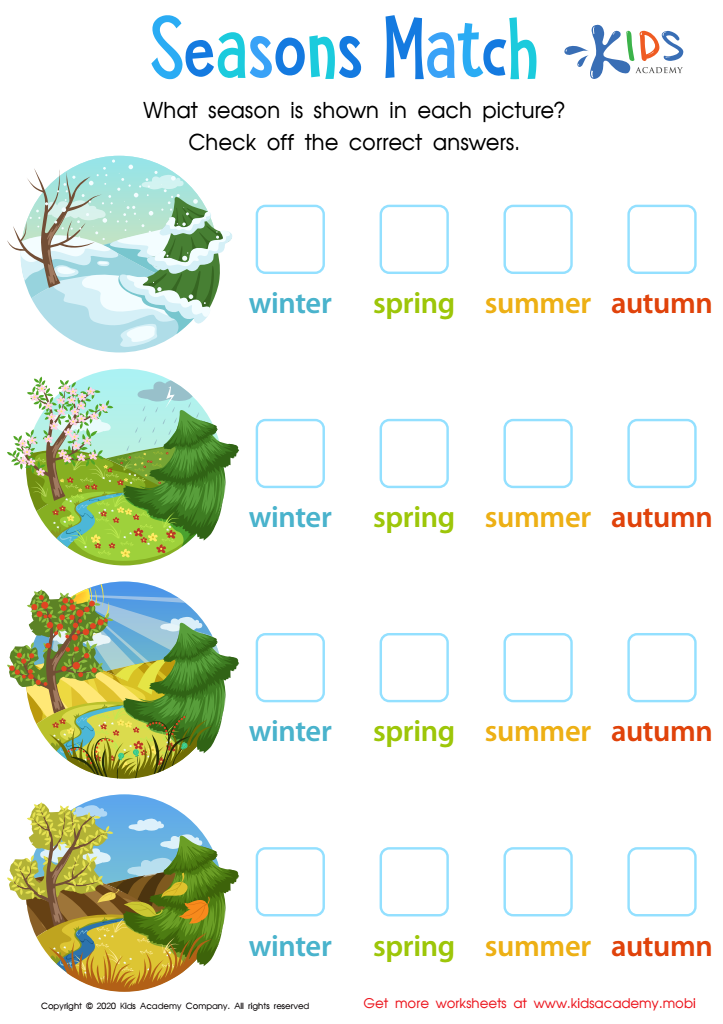
Seasons Match Worksheet
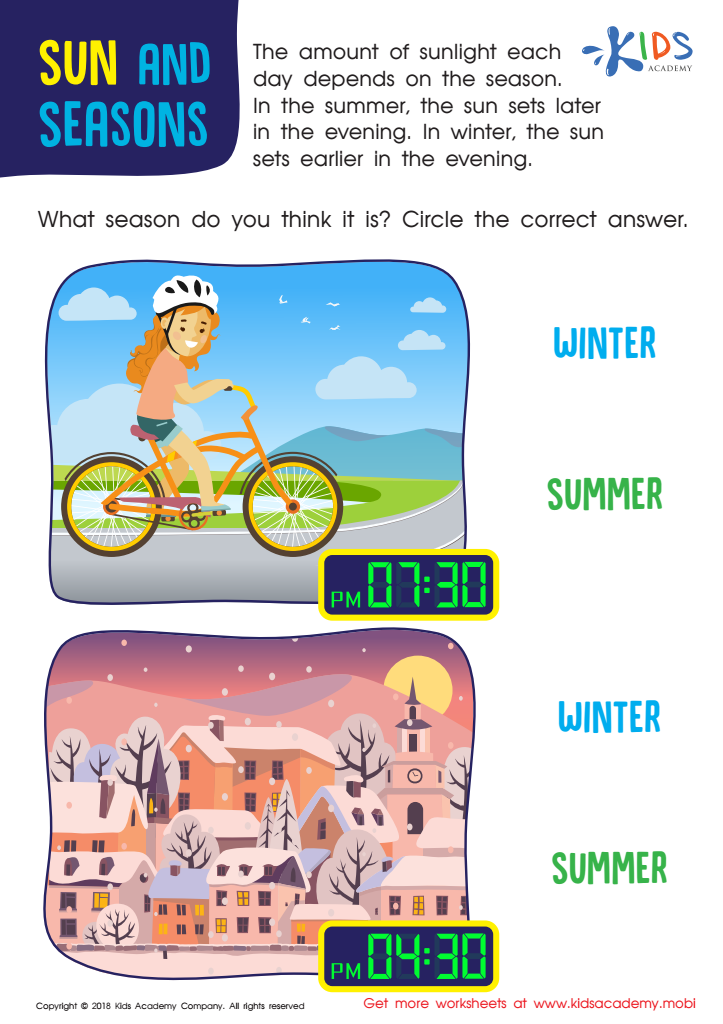
Sun and Seasons Worksheet
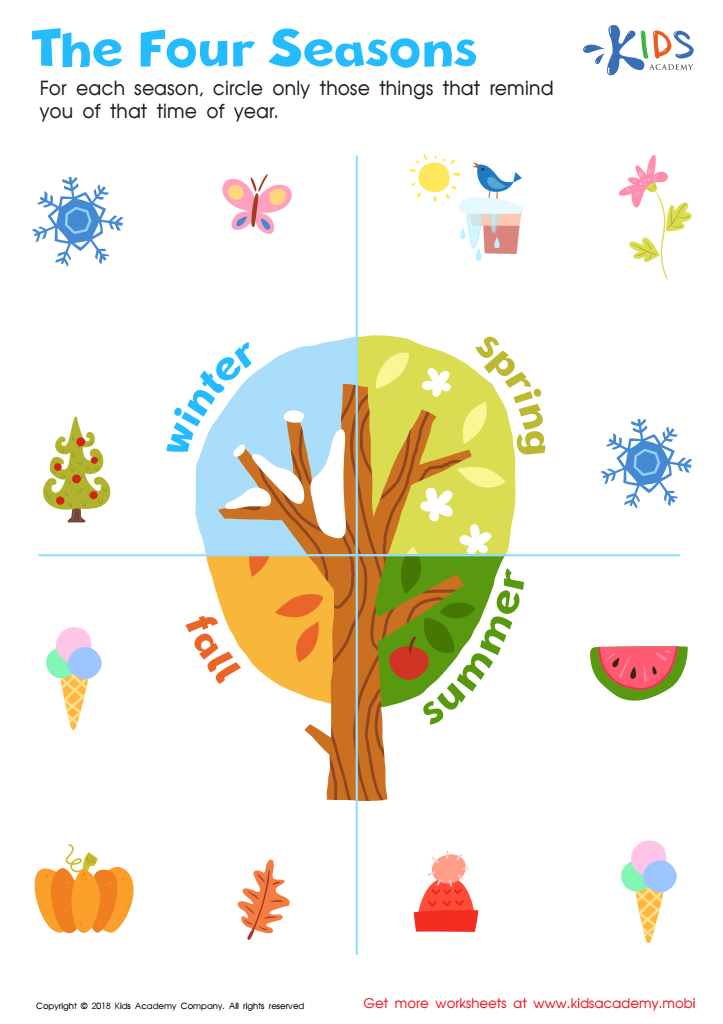
The Four Seasons Worksheet


%20(1).jpg)

Understanding seasons is fundamental for young children aged 3-6 as it fosters their cognitive, language, and socio-emotional development. Firstly, grasping the concept of seasons helps kids comprehend the world around them, enriching their awareness and curiosity about nature. This early knowledge can lay a foundation for later scientific learning.
Moreover, talking about seasons enhances vocabulary and language skills. Words like "summer," "winter," "temperature," and "weather" become part of everyday dialogues, improving children's communication abilities. Teachers and parents can use season-related stories, songs, and activities to make this learning engaging.
Routine and predictability associated with seasonal changes help children develop a sense of time and the passage of days, weeks, and months. Recognizing season-related events, such as holidays or family traditions, supports their emotional growth and understanding of cultural practices.
Additionally, recognizing seasons allows children to adapt their play and outdoor activities, leading to better physical health. Knowing it’s winter might mean dressing warmly and understanding why snow happens, while summer could mean more water play and appreciating the sun.
In essence, understanding seasons is more than just identifying hot and cold weather; it’s about connecting children to the natural world, boosting their education and well-being through practical, daily observation and experience.







