Reading readiness Normal Beginning Sounds Worksheets for Ages 3-8
3 filtered results
-
From - To
Unlock your child's potential with our "Reading Readiness Normal Beginning Sounds Worksheets" designed specifically for ages 3-8. These engaging worksheet activities help young learners master the essential skills needed for reading by focusing on identifying beginning sounds. Each worksheet is crafted to make learning fun and interactive, featuring vibrant illustrations and straightforward exercises to keep kids motivated. As they practice, children will boost their phonemic awareness and gain confidence in their reading abilities. Our resources are perfect for both home and classroom use, ensuring your little ones are fully prepared to embark on their literacy journey. Start their reading adventure today!
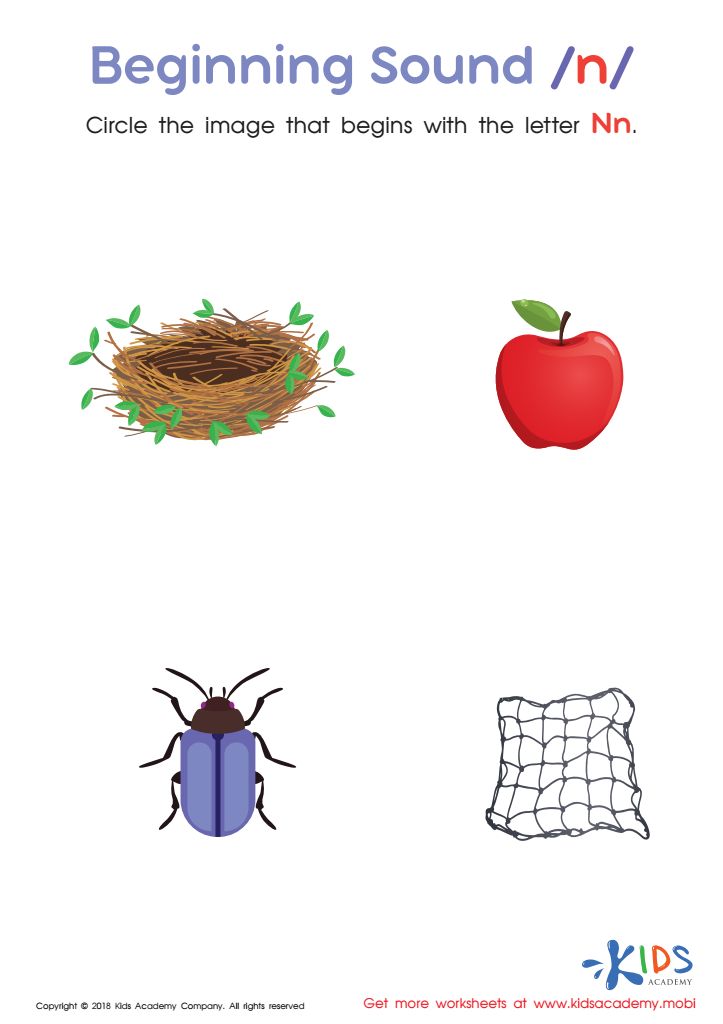
Beginning Sound «n» Worksheet
 Assign to My Students
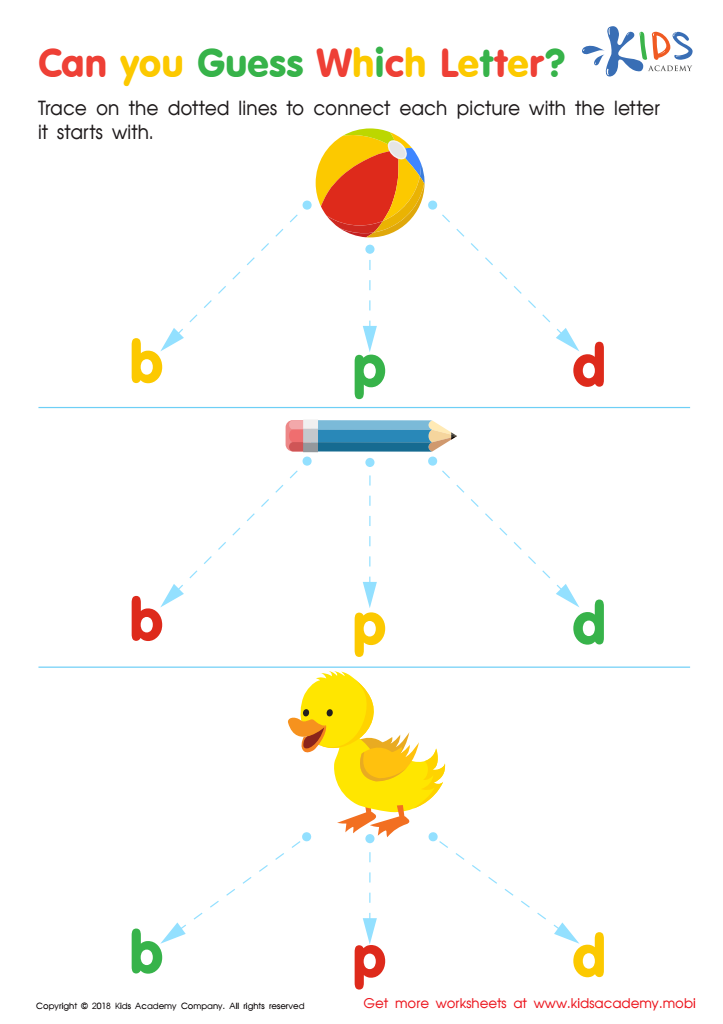
Can you Guess Which Letter? Worksheet
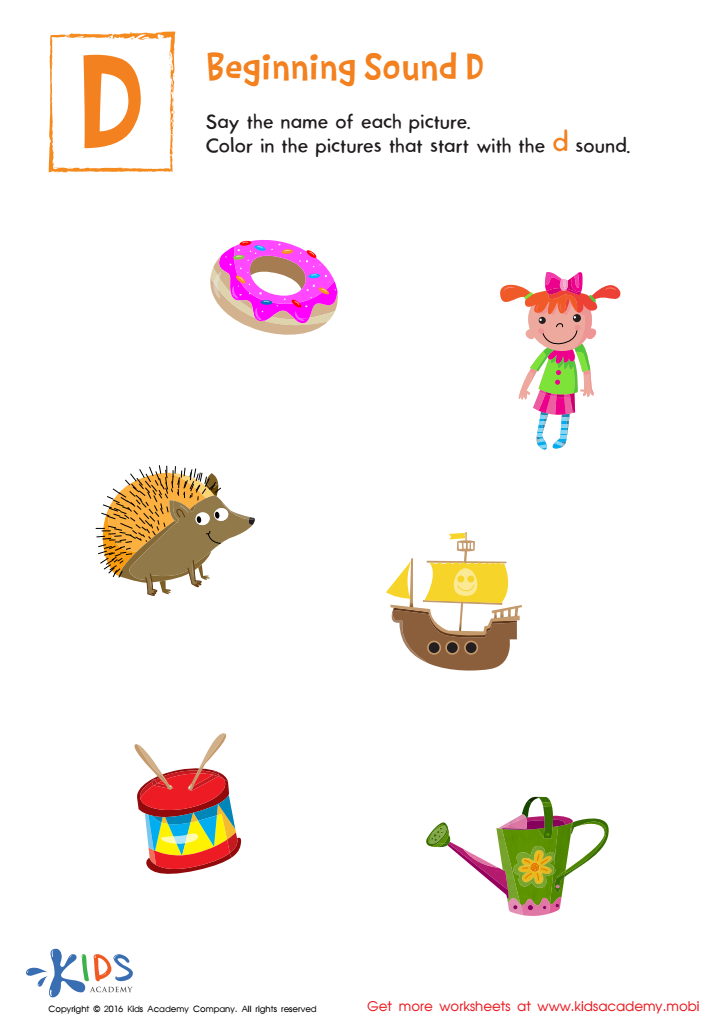
Beginning Sound D Worksheet








Reading readiness and the understanding of normal beginning sounds are crucial for children aged 3-8 as they set the foundation for literacy development.
At this stage, children develop phonemic awareness, which is the ability to identify and manipulate individual sounds in words. Starting with normal beginning sounds, children not only learn to differentiate sounds but also to associate them with letters, an essential skill for reading fluency. When parents and teachers focus on teaching these sounds, they promote a child’s ability to decode words, leading to improved reading comprehension and a love for reading.
Additionally, learning these sounds fosters language development, enhancing vocabulary and communication skills. This is particularly important in early education, where children are constantly absorbing new information. Engaging with activities that emphasize recognition of beginning sounds can make learning fun and interactive, helping children stay motivated.
Moreover, children who achieve reading readiness often experience greater academic success, as reading is the gateway to learning in all subjects. Ultimately, prioritizing normal beginning sounds in early education helps bridge the gap between speaking and reading, laying a critical foundation for lifelong learning and a passion for literacy. Thus, parents and teachers play a pivotal role in nurturing this critical skill.







