Enhance your child's writing skills with our Writing Practice Normal Alphabet Worksheets designed specifically for ages 3-8. These engaging and interactive worksheets make learning the alphabet fun and effective, allowing young learners to practice letter formation and improve their handwriting. Each worksheet guides children in recognizing and writing both upper and lower case letters, promoting essential literacy skills. Ideal for home or classroom use, our worksheets cater to various learning styles and include colorful illustrations to keep kids motivated. Introduce your child to the world of writing and help them build a strong foundation for future success today!

Check out this FREE Trial Lesson on Alphabet for age 3-8!

A

Favorites
With answer key
Interactive
  • 3-8
  • Writing practice
  • Alphabet
  • Normal
Short Vowel /a/ Worksheet

Short Vowel /a/ Worksheet

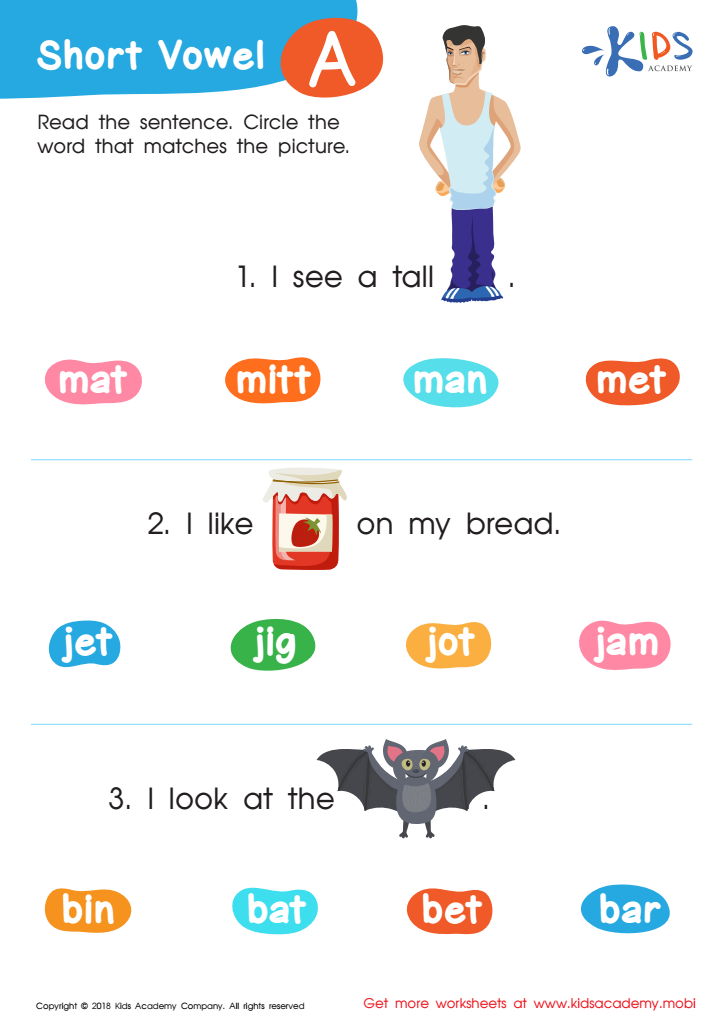
This free PDF helps new readers use sight words and pictures to read basic sentences. Then, they use accompanying word choices to find the correct word with the short a vowel sound. A key early reading skill, discriminating between short vowel sounds can be tricky in monosyllabic words, so use this PDF to help your reader reinforce it.
Short Vowel /a/ Worksheet
Worksheet
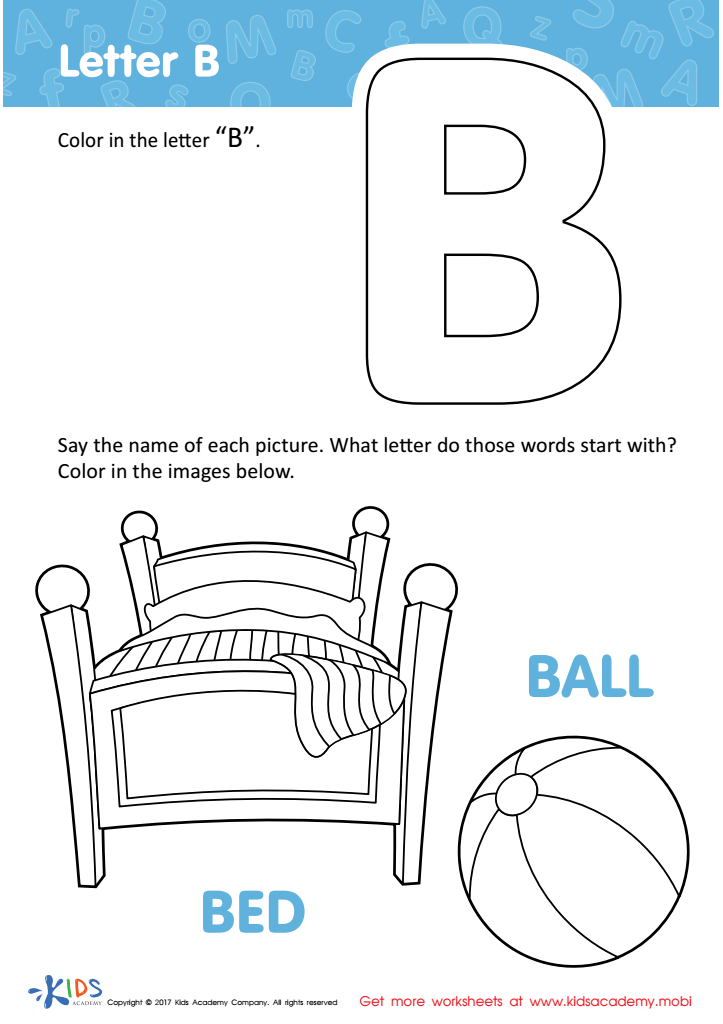
Letter B Coloring Page

Letter B Coloring Sheet

Kids will love coloring this page that features things they like - balls, bubbles, bugs and bedtime - all words starting with "B"! It's a great way to introduce the alphabet and increase their exposure to letters and sounds. Let them have fun and learn at the same time!
Download (PDF)
Assign to My Students
Letter B Coloring Sheet
Worksheet
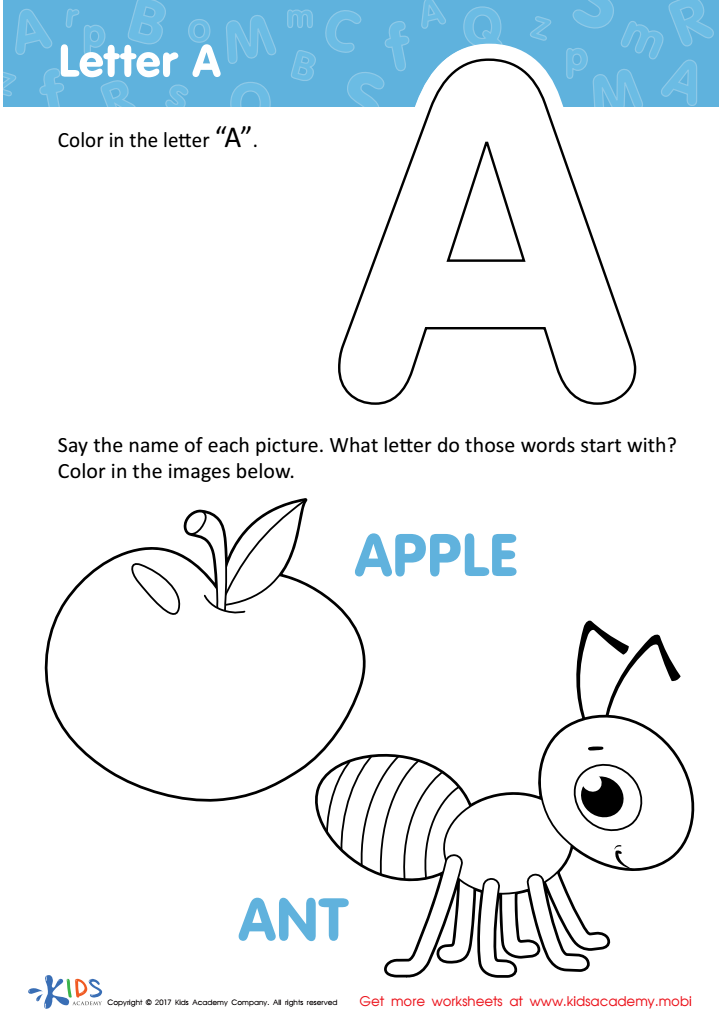
Letter a Coloring Page

Letter A Coloring Sheet

This letter "A" coloring page is great for introducing kids to the alphabet! Let them exercise their creativity while they learn to recognize letters and sounds - it's a fun and easy way to help them get started.
Download (PDF)
Assign to My Students
Letter A Coloring Sheet
Worksheet
Letter H worksheets
Letter H worksheets

Letter H Tracing Page

Trace the letter "H", then practice writing its lowercase form. Finally, choose your favorite form of transport and ride away! Get our worksheets to make learning fun and easy.
Letter H Tracing Page
Worksheet
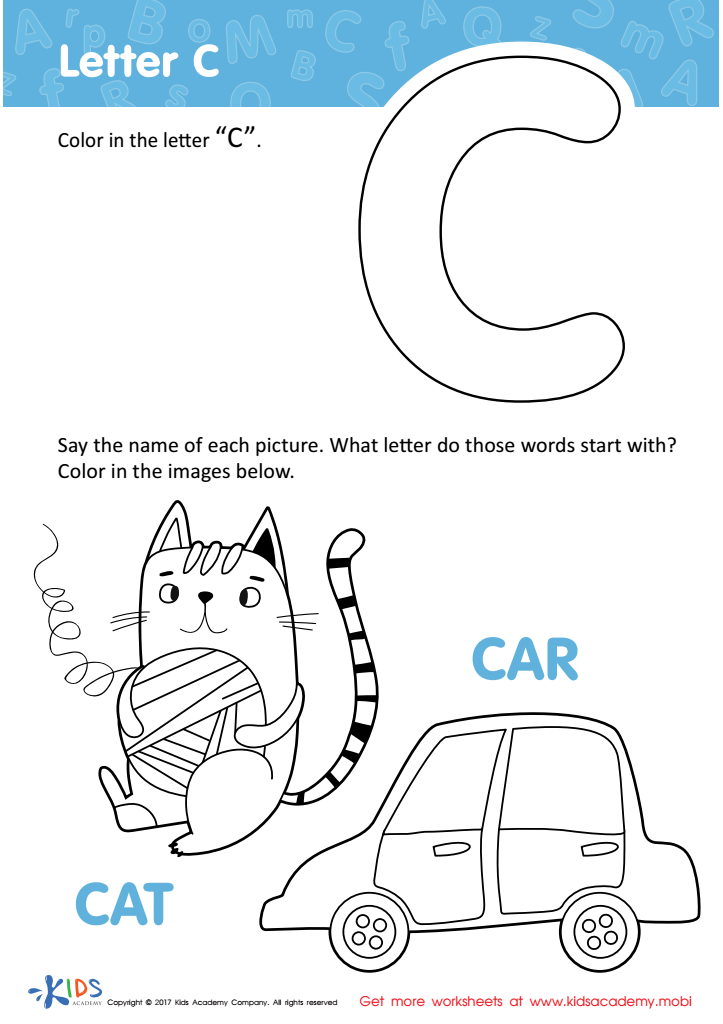
Letter C Coloring Page

Letter C Coloring Sheet

Introduce kids to the letter 'C' with this fun coloring page! Exposing little ones to letters, words, and sounds helps them learn long before they can read. Start with simple words like 'cat' and 'car' - these are great first sight words for young children.
Download (PDF)
Assign to My Students
Letter C Coloring Sheet
Worksheet
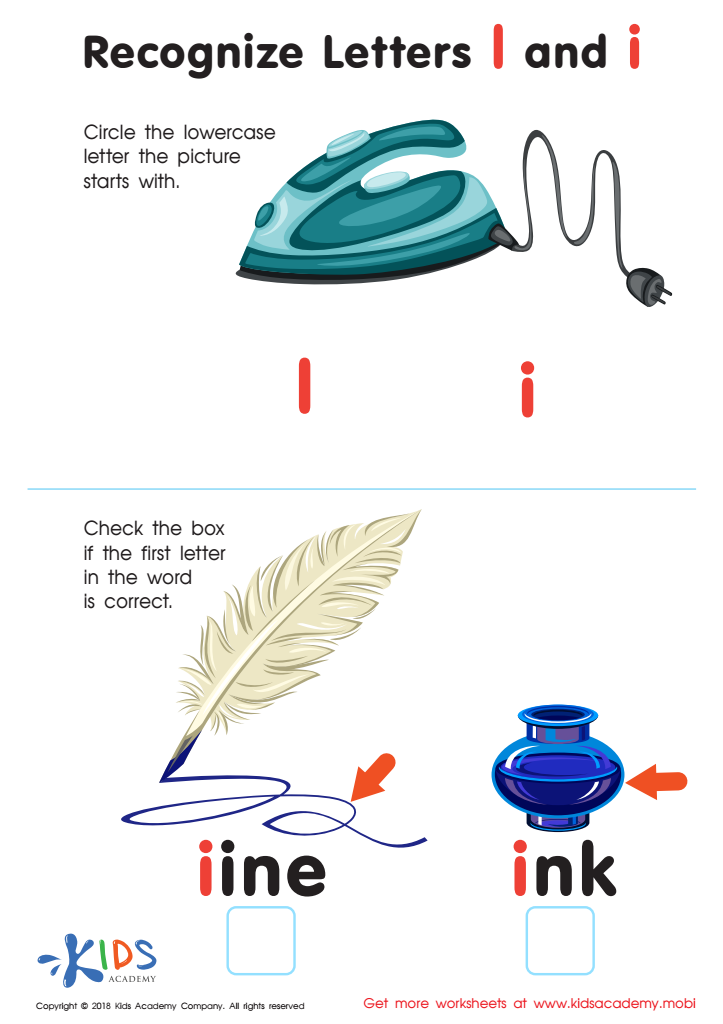
Recognize Letters l and i Worksheet

Recognize Letters l and i Worksheet

Help your child become familiar with uppercase and lowercase letters. Have them look at the pictures in the worksheet and circle the lowercase letter the picture starts with. For example: which one is the lowercase "i", the capital "I" or the small "i"?
Recognize Letters l and i Worksheet
Worksheet
Letter H and I Sounds Worksheet


Letter H and I Sounds Worksheet

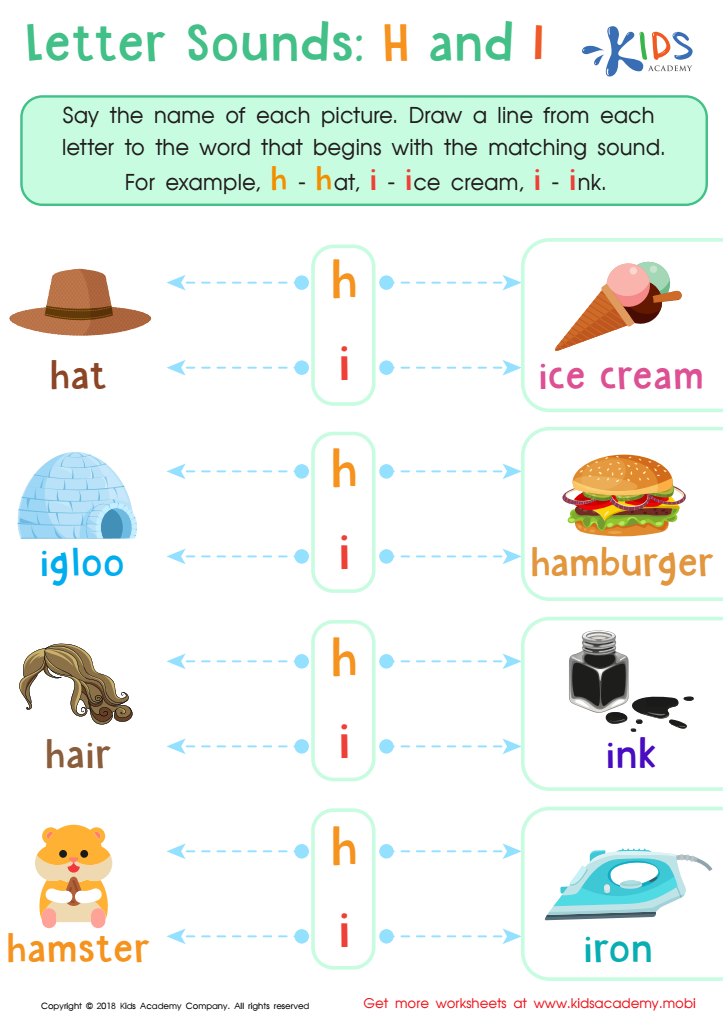
Preschoolers will have fun and develop reading and writing skills at the same time! They'll use pictures to recognize familiar words and differentiate between 'H' and 'I' sounds. Then they'll trace lines to connect each sound to the picture, improving their fine-motor skills. Bright and cheerful visuals make learning a breeze!
Letter H and I Sounds Worksheet

Worksheet


Writing practice using the normal alphabet is crucial for children aged 3-8 for several reasons. First, developing fine motor skills is essential at this stage, and practicing writing helps enhance hand-eye coordination and dexterity. By forming letters, children exercise the small muscles in their hands, which is foundational for other tasks like buttoning shirts or using utensils.

Second, writing fosters cognitive development and literacy skills. Understanding letter formation assists children in recognizing shapes, sounds, and the connection between letters and words. This foundational knowledge supports reading readiness, allowing children to decode and encode words effectively.

Additionally, writing provides an avenue for self-expression. Kids at this age often have vibrant ideas and emotions but lack the verbal skills to express them. Writing becomes a medium through which they can communicate their thoughts, fostering creativity and boosting confidence.

Finally, routine writing practice cultivates a sense of discipline. Setting aside time to write instills habits that contribute to academic success as children progress through school. Engaging in regular writing fosters a love for the language, ultimately enhancing their educational journey and lifelong learning skills. Therefore, it is essential for both parents and teachers to encourage and prioritize writing practice in young children.