Fine motor skills development Normal Letter Recognition Worksheets for Ages 3-8
3 filtered results
-
From - To
Enhance your child's fine motor skills while fostering letter recognition with our engaging worksheets designed specifically for ages 3-8. These activities not only promote hand-eye coordination and dexterity but also make learning the alphabet fun and interactive. Each worksheet includes a variety of exercises to trace, color, and identify letters, ensuring your child develops essential skills in a playful manner. Perfect for home or classroom use, our resources empower young learners to build confidence in their writing abilities while enjoying a hands-on approach to literacy. Explore our collection today and watch your child thrive in both fine motor and letter recognition skills!
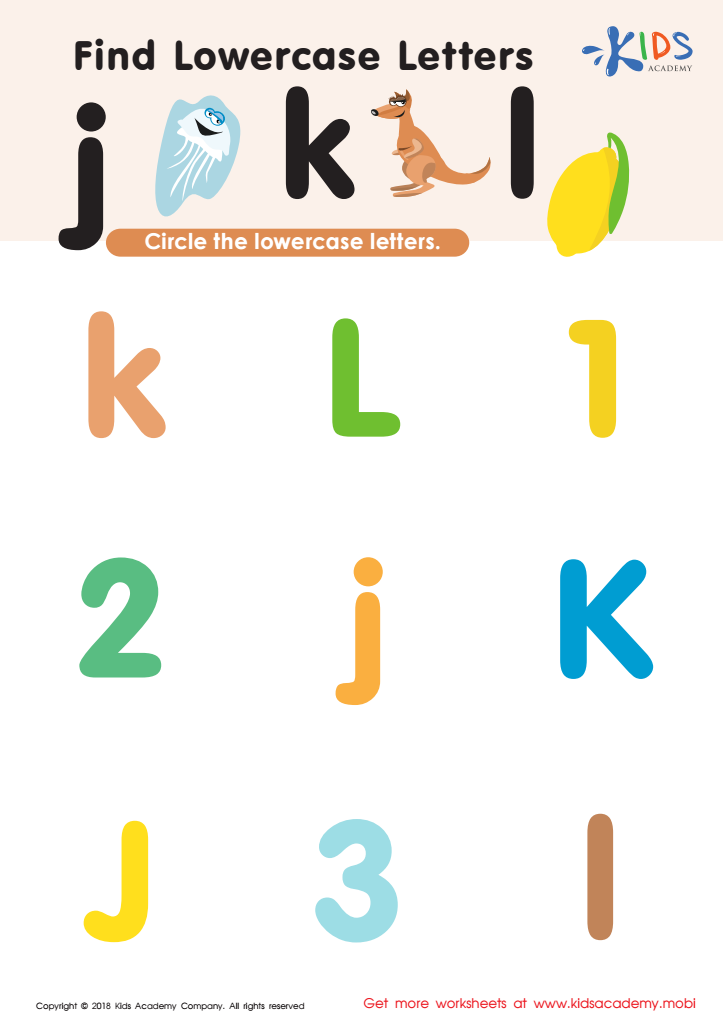
Find Lowercase Letters j k l Worksheet
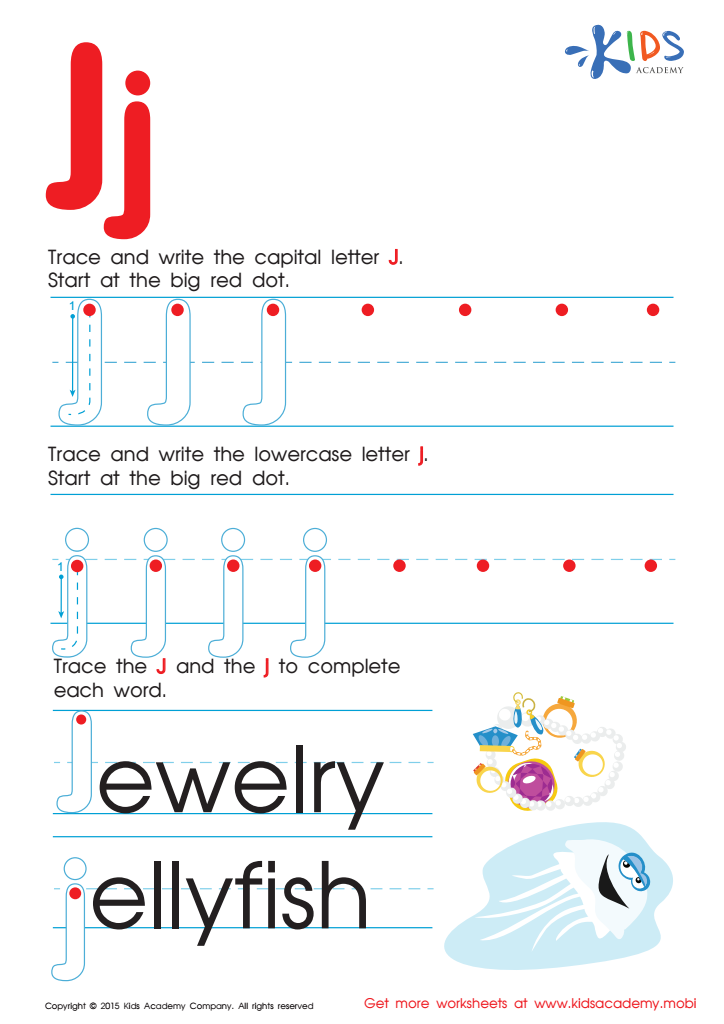
Letter J Tracing Page
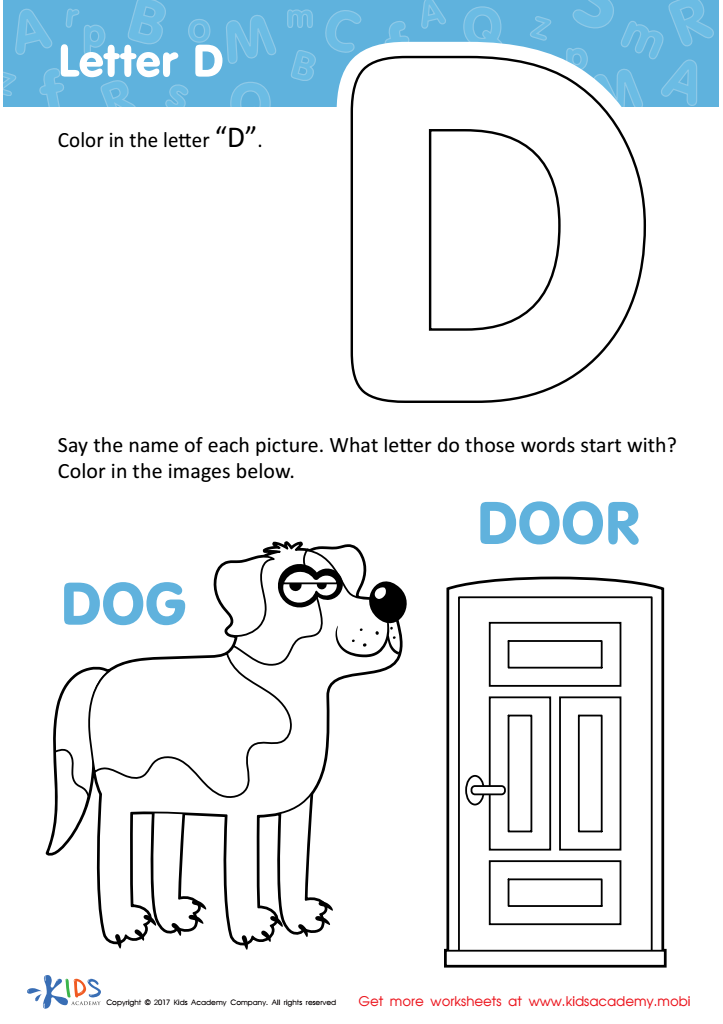
Letter D Coloring Sheet
 Assign to My Students








Fine motor skills development and letter recognition are crucial aspects of early childhood education that significantly impact literacy and overall academic success. For children aged 3-8, fine motor skills—such as cutting, drawing, and writing—enable them to manipulate objects and develop dexterity, which is essential for writing letters and numbers. Strong fine motor skills promote confidence in a child’s ability to engage with learning materials, paving the way for more effective writing and drawing experiences.
Simultaneously, normal letter recognition helps children identify and differentiate letters, laying the foundation for reading and writing skills. Recognizing letters allows children to explore and understand language through reading experience. It also enhances their phonemic awareness — crucial for reading fluency and comprehension later on.
Parents and teachers should be proactive in fostering these skills through interactive play, arts, and collaborative activities that include letter recognition exercises. Early encouragement in these areas creates a strong learning environment, enhancing children’s cognitive development and preparing them for more complex academic tasks in the future. Ultimately, ensuring that children develop fine motor skills and proficient letter recognition provides them with essential tools, fosters independence, and builds a love for learning during their formative years.








