
Handwriting practice Normal Letter Sounds Worksheets for Ages 3-8
4 filtered results
Difficulty Level
Grade
Age
-
From - To
Subject
Activity
Standards
Discover the perfect resources for enhancing early literacy and fine motor skills with our Handwriting Practice Normal Letter Sounds Worksheets for ages 3-8. Designed by educational experts, these engaging and interactive worksheets help young learners connect phonetic letter sounds with their written form, reinforcing both reading and writing abilities. Ideal for preschool through early elementary, each worksheet focuses on individual letter sounds, featuring traceable letters and fun activities to keep children motivated. Cultivate a love for learning and watch as your child’s confidence blossoms with these essential handwriting practice worksheets. Accessible, fun, and effective - start their educational journey today!
Favorites
With answer key
Interactive
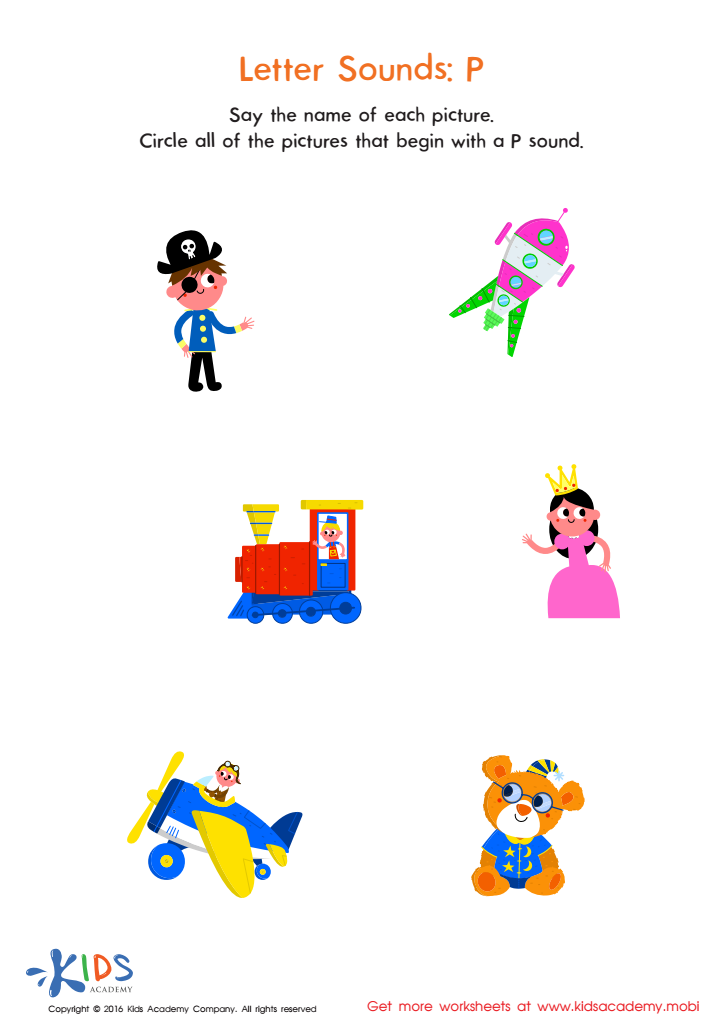
Letter P Sound Worksheet
Think P! Kids practice phonics with this fun letter P worksheet. With delightful illustrations, they'll sound out simple words and get closer to reading.
 Assign to My Students
Letter P Sound Worksheet
Worksheet
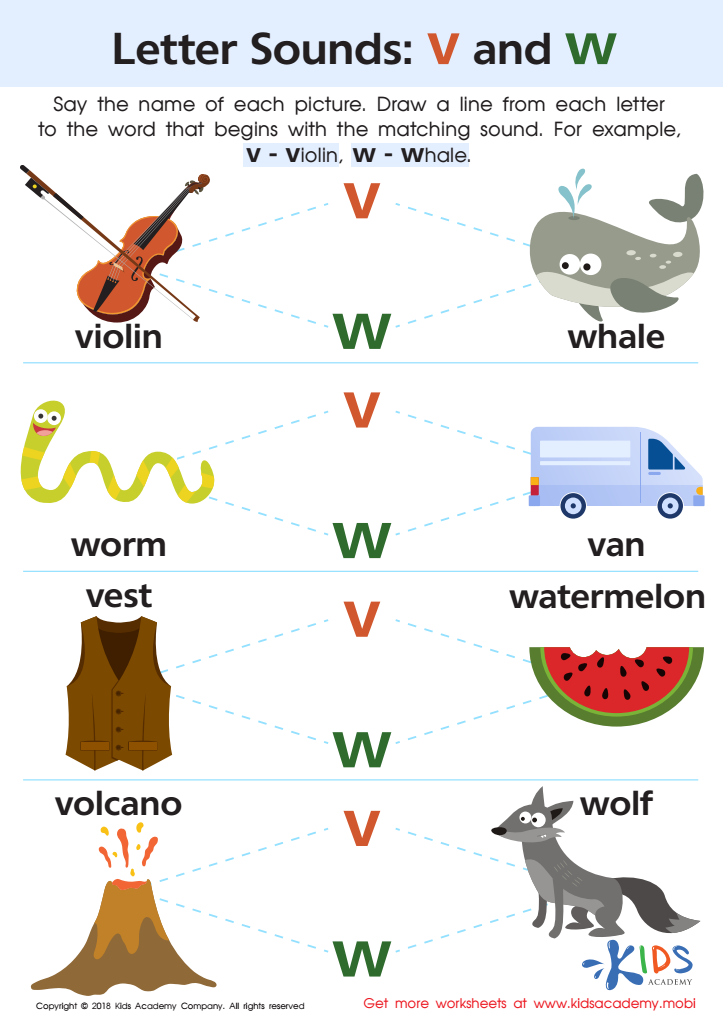
Letter V and W Sounds Worksheet
Help your child master the sounds of W & V while completing this fun phonics worksheet. Have them trace the dotted line from letter to picture while saying words like "worm", "violin" and "van" aloud to notice how each word begins with either W or V. Listen and pay attention to the pronunciation to complete the practice.
Letter V and W Sounds Worksheet
Worksheet
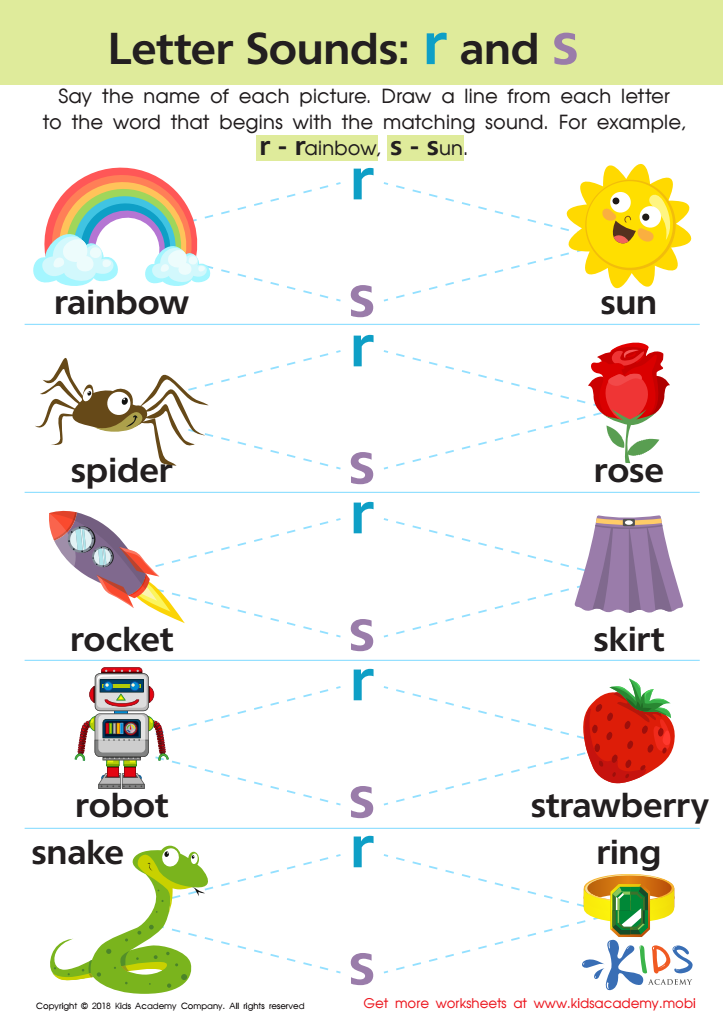
Letter R and S Sounds Worksheet
Kids Academy's phonics worksheet is full of fun and color! Help your child name the pictures and read the words under each one. Does it begin with an R or S? Then, use a pencil to trace the dotted line from the letter to its image. It's a great way to practice phonics skills!
Letter R and S Sounds Worksheet
Worksheet
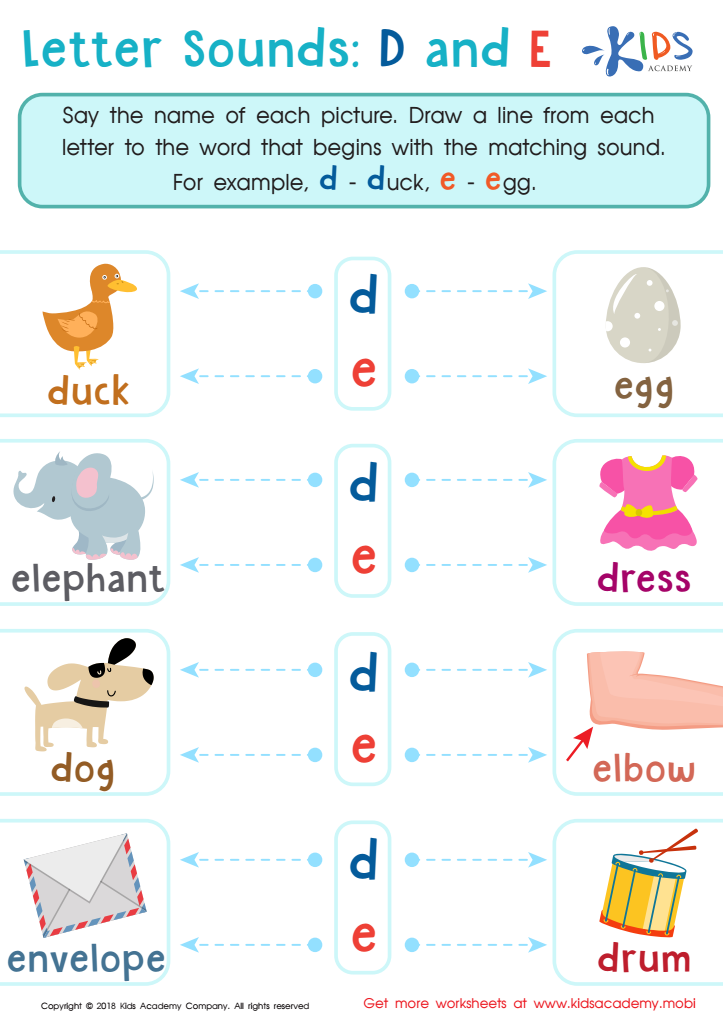
Letter D and E Sounds Worksheet
Kids can use picture clues and visual discrimination to name cheerful pics and isolate the beginning sound. This free PDF worksheet will help them develop phonological awareness, differentiate between "D" and "E", and hone fine-motor skills. It'll also boost their confidence as they become readers.
Letter D and E Sounds Worksheet
Worksheet
Join Kids Academy for Free
Who is primarily going to use this learning content?








Handwriting practice and mastering normal letter sounds are critical components in early childhood education, specifically for ages 3-8. These foundational skills contribute significantly to a child's overall academic development. For starters, handwriting practice enhances fine motor skills, hand-eye coordination, and overall dexterity. When children consistently write the alphabet, they develop muscle memory, making it easier to produce letters fluidly and legibly. This skill is vital as clear writing directly impacts their ability to effectively communicate their ideas and knowledge in later grades.
Additionally, learning and practicing normal letter sounds—also known as phonemic awareness—fosters literacy skills. When children know what sounds each letter makes, they can begin to decode and spell words, an essential process for reading development. Understanding phonics bridges the gap between written and spoken language, laying the groundwork for proficient reading skills and fostering a love of reading.
For teachers, incorporating these practices ensures a well-rounded, multimodal approach to learning that engages various senses and learning styles. For parents, supporting these skills at home provides consistency and reinforcement, bolstering the child's confidence and enthusiasm for learning. Ultimately, the combination of handwriting and phonetic practice works in tandem to build a strong foundation for lifelong literacy and academic success.






