Phonics recognition Normal Letter Sounds Worksheets for Ages 3-8
5 filtered results
-
From - To
Unlock your child's reading potential with our Phonics Recognition Normal Letter Sounds Worksheets designed for ages 3-8. These engaging, printable worksheets introduce children to the fundamental sounds of the alphabet, laying the groundwork for proficient reading skills. Through fun activities, kids will learn to recognize, differentiate, and pronounce each letter sound, enhancing their phonemic awareness. Perfect for preschool through early elementary students, our worksheets offer diverse exercises to keep young learners motivated and excited about learning. Foster a love for reading from an early age with our expertly crafted phonics recognition resources. Download now and watch your child's skills soar!
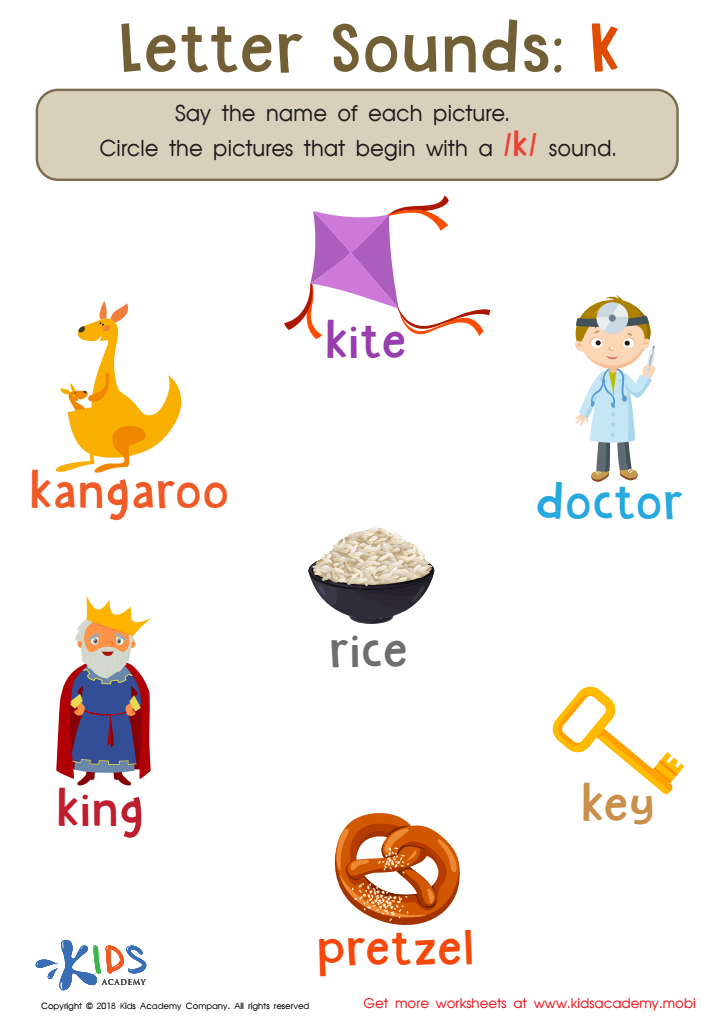
Letter K Sounds Worksheet
 Assign to My Students
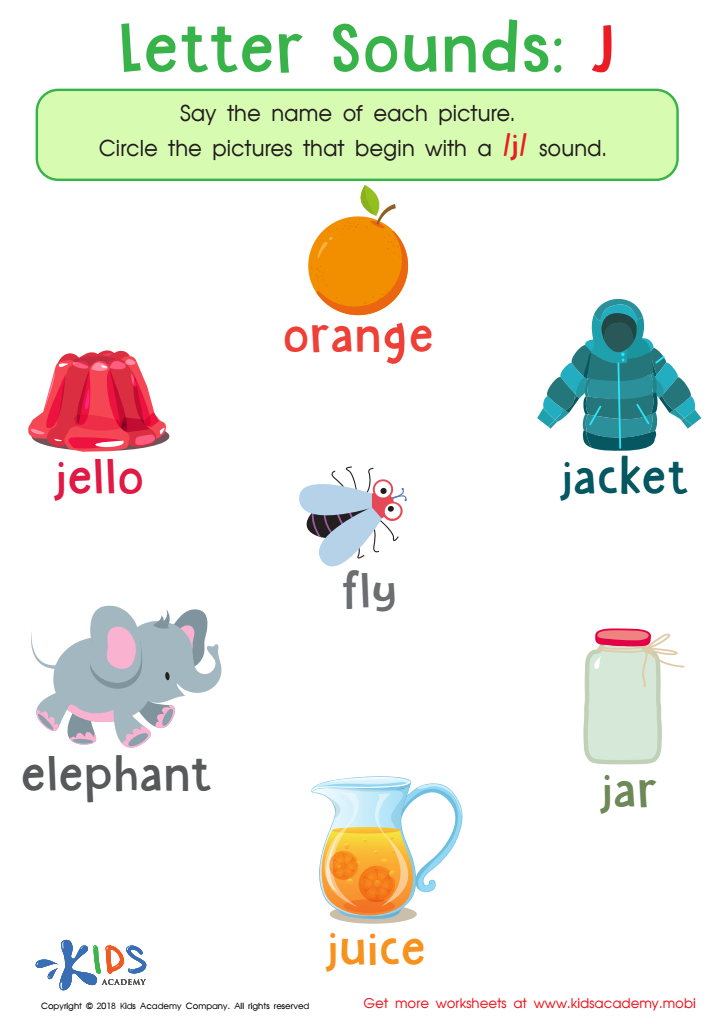
Letter Sounds: J Printable Worksheet
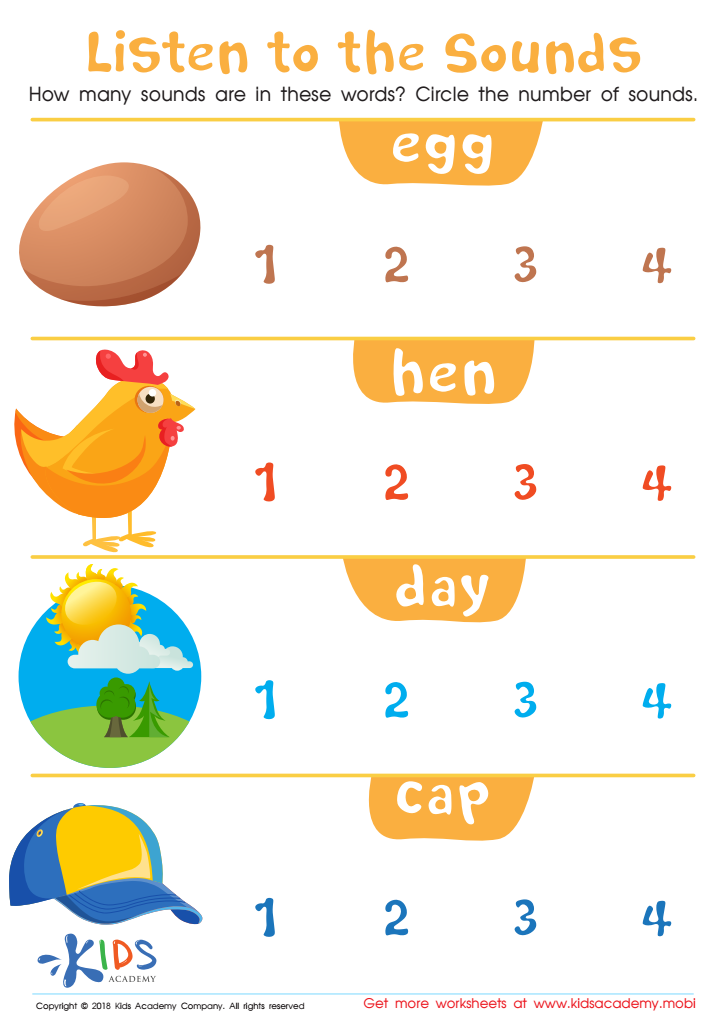
Listen to the Sounds Worksheet
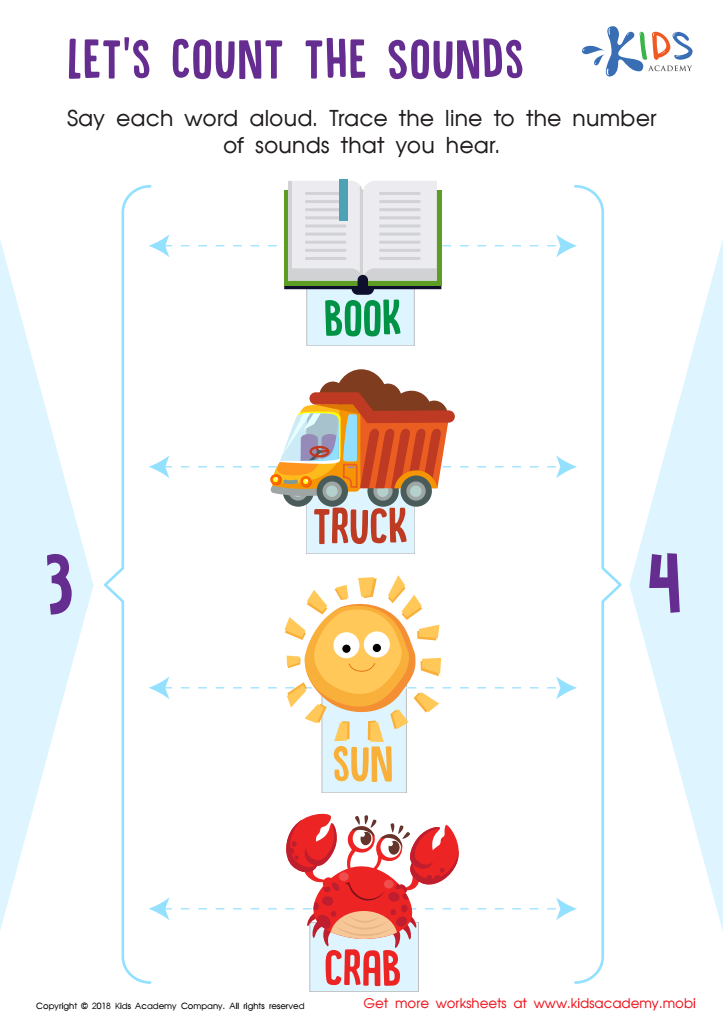
Let's Count the Sounds Worksheet
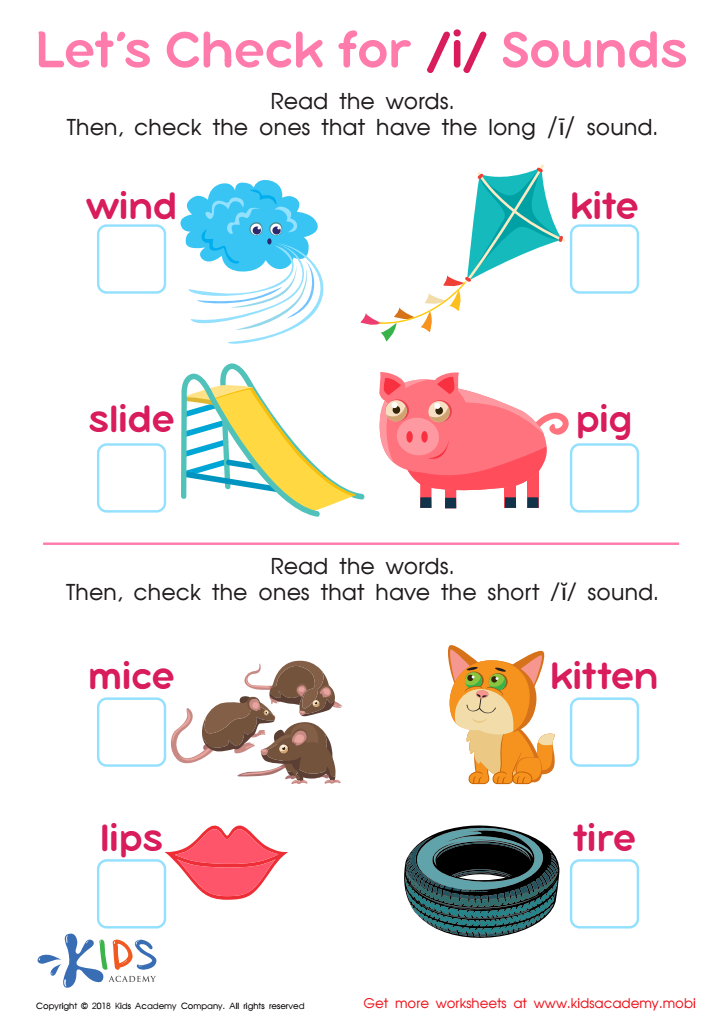
Let's Check for «i» Sounds Worksheet








Phonics recognition of normal letter sounds is fundamental for children aged 3-8 as it forms the cornerstone of their early literacy development. At these formative stages, their brains are highly receptive to language acquisition, which profoundly influences their future reading and writing capabilities. For parents and teachers, investing time and effort into phonics education yields substantial long-term benefits.
Firstly, phonics teaches children the relationships between letters and sounds, which is critical for decoding new words. This decoding skill is vital for reading fluency and comprehension. When children grasp phonics, they can independently tackle unfamiliar words, enhancing their confidence and interest in reading.
Moreover, phonics instruction promotes spelling accuracy. Understanding sound-letter correspondence allows children to spell words correctly by hearing and recognizing individual sounds. This foundational skill supports their writing, enabling them to express their thoughts more effectively and accurately.
Effective phonics instruction also equips children with strategies to be lifelong learners. As they progress academically, the ability to decipher complex texts becomes crucial. Early investments in phonics mean that children are less likely to struggle as texts become more challenging.
In summary, phonics recognition for ages 3-8 sets the stage for essential literacy skills that underpin future educational success and personal development. Therefore, it's incumbent on parents and teachers to prioritize phonics to facilitate well-rounded and confident learners.






