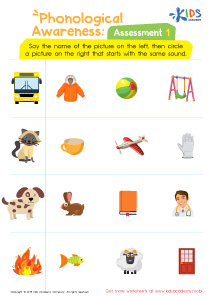
Vocabulary enhancement Normal Vowels and Consonants Worksheets for Ages 3-8
3 filtered results
-
From - To
Enhance your child's vocabulary with our engaging Normal Vowels and Consonants Worksheets, specifically designed for children ages 3-8. These printable materials make learning fun and effective by focusing on basic alphabet concepts, helping youngsters identify, pronounce, and use vowels and consonants correctly. Our worksheets foster foundational literacy skills crucial for early language development and boost confidence in reading and writing. Easy to use at home or in school, they're perfect for parents and teachers aiming to provide a solid start in vocabulary mastery. Unlock your child’s potential today with our expertly crafted resources!
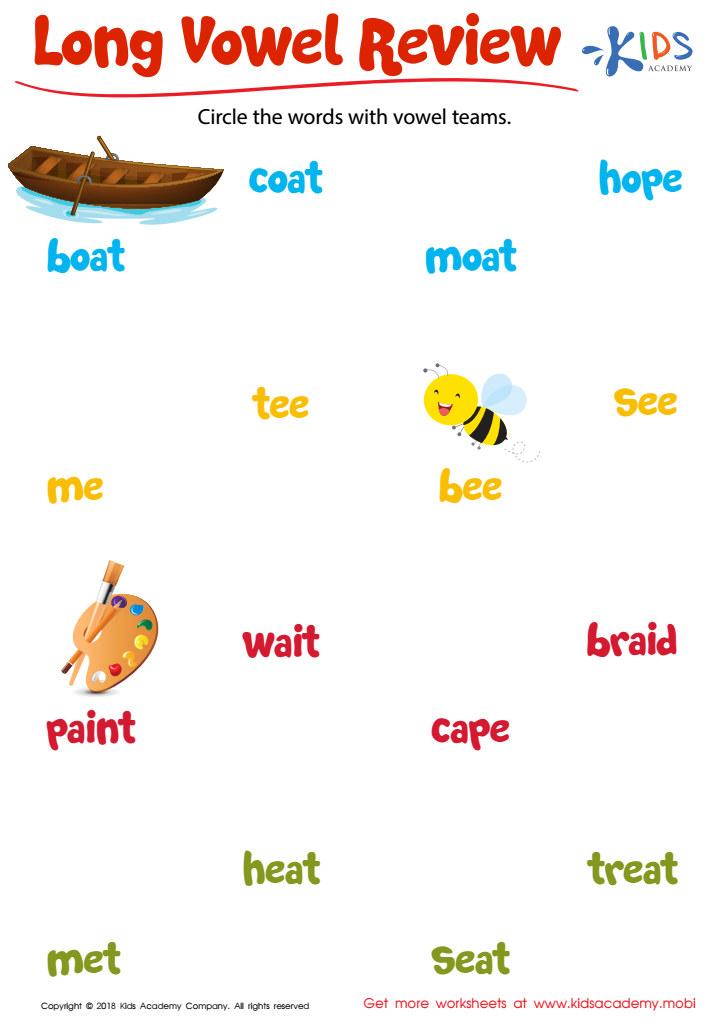
Long Vowel Review Worksheet
 Assign to My Students
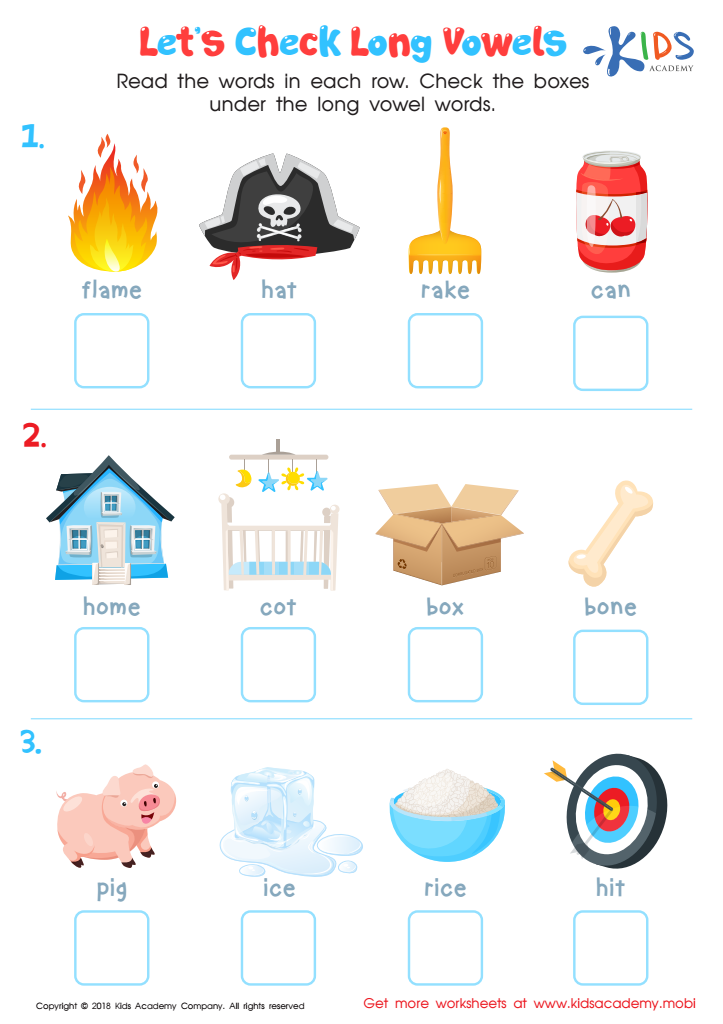
Let's Check Long Vowels: Assessment Worksheet
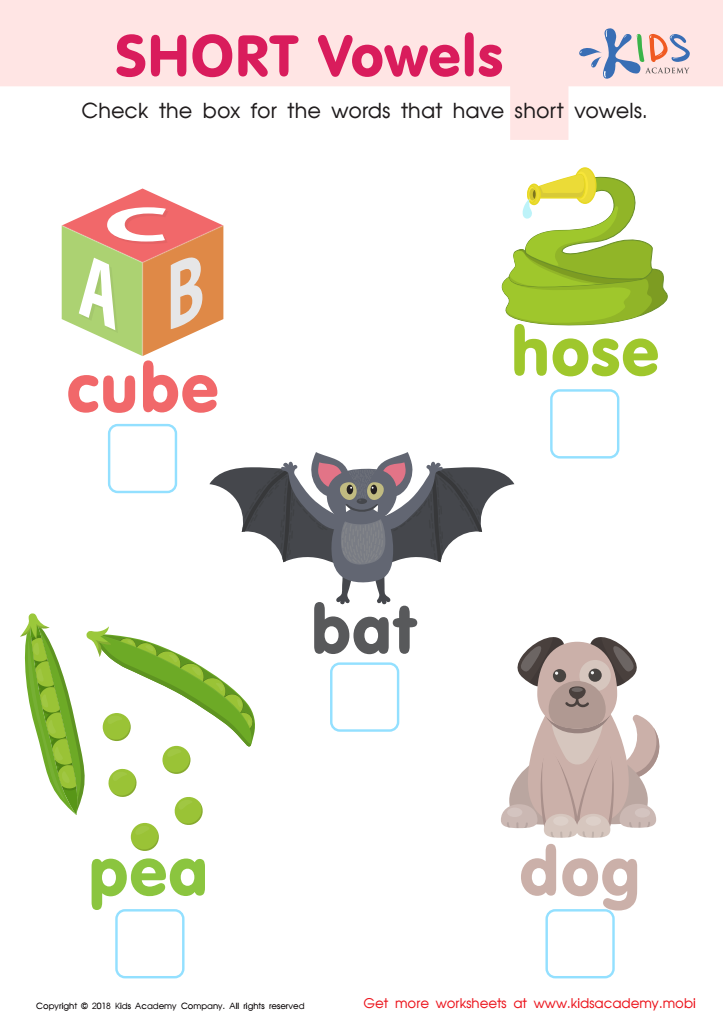
short vowels Worksheet



Parents and teachers play a crucial role in a child's early linguistic development, and focusing on vocabulary enhancement, including understanding normal vowels and consonants, for ages 3-8 is pivotal. During this formative stage, children are in a critical period of cognitive and language development, meaning that effective language skills can have long-term benefits.
Integrating normal vowels and consonants into reading and speaking activities helps children grasp the basic building blocks of language. This foundational understanding fosters phonemic awareness, a key predictor of proficient reading skills. Strong vocabulary and pronunciation skills enable children to express themselves more clearly, boosting their confidence and facilitating better social interactions.
Furthermore, a robust vocabulary allows children to communicate their thoughts and emotions more effectively, leading to improved cognitive development. It also opens up opportunities for critical thinking and better academic performance. As children explore new words and sounds, their brains make vital neural connections that support their overall development.
By prioritizing vocabulary enhancement, parents and teachers ensure children acquire a solid linguistic foundation. This not only aids in academic success but also prepares them for more intricate language tasks in the future. In sum, early investment in vocabulary and phonemic skills yields significant social, academic, and cognitive benefits that support lifelong learning and communication.