Mathematical reasoning Normal Rounding Worksheets for Ages 3-8
3 filtered results
-
From - To
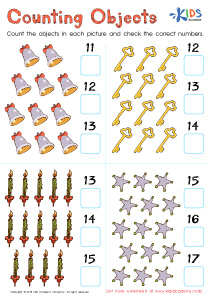
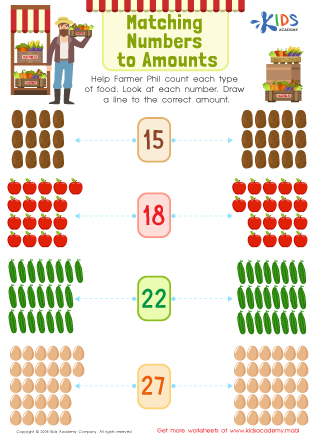
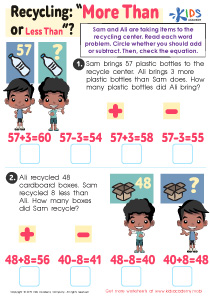
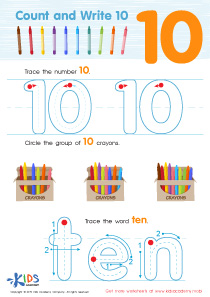
Enhance your child's mathematical reasoning with our engaging Normal Rounding Worksheets designed for ages 3-8. Perfect for early learners, these worksheets introduce the fundamental concept of rounding numbers in a fun and interactive way. Each activity promotes critical thinking and helps develop essential skills, ensuring a solid foundation in mathematics. With colorful illustrations and easy-to-follow instructions, children will enjoy practicing rounding while building their confidence in math. Our resources leverage the joy of learning, making it an ideal choice for parents and educators. Join us in nurturing your child's love for math through these supportive and educational worksheets!
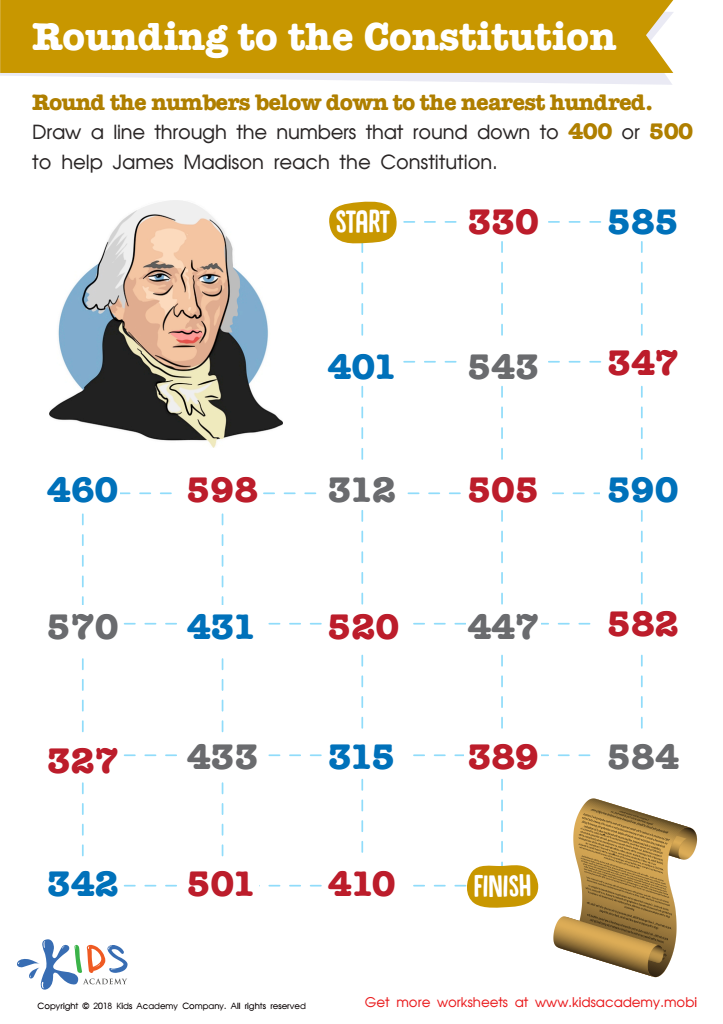
Rounding to the Constitution Worksheet
 Assign to My Students
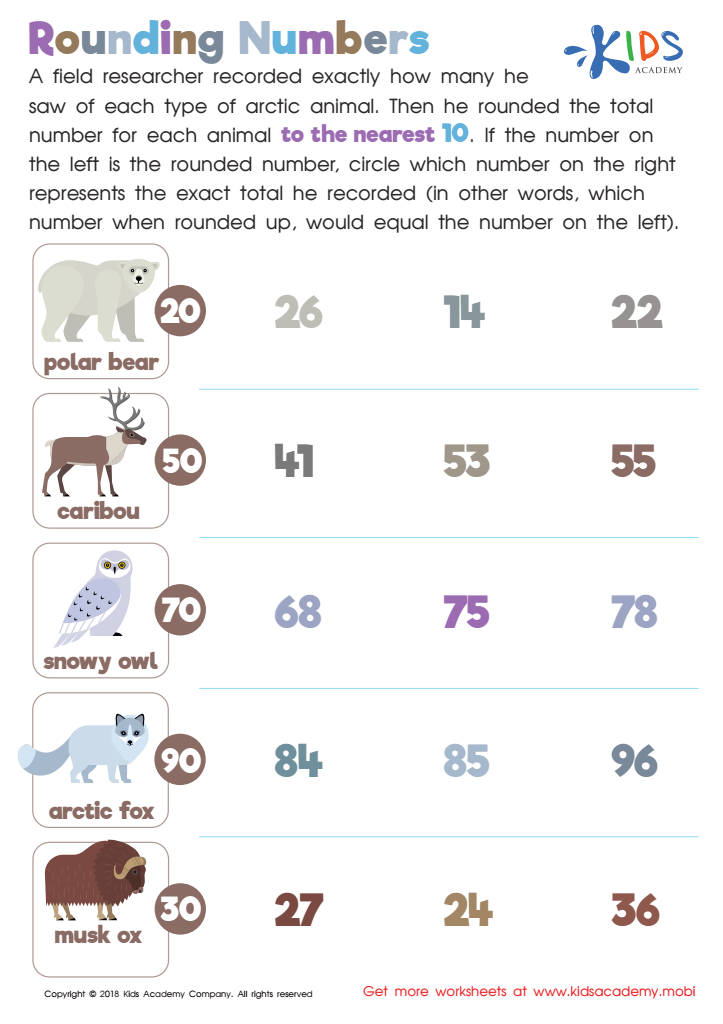
Rounding Numbers Worksheet
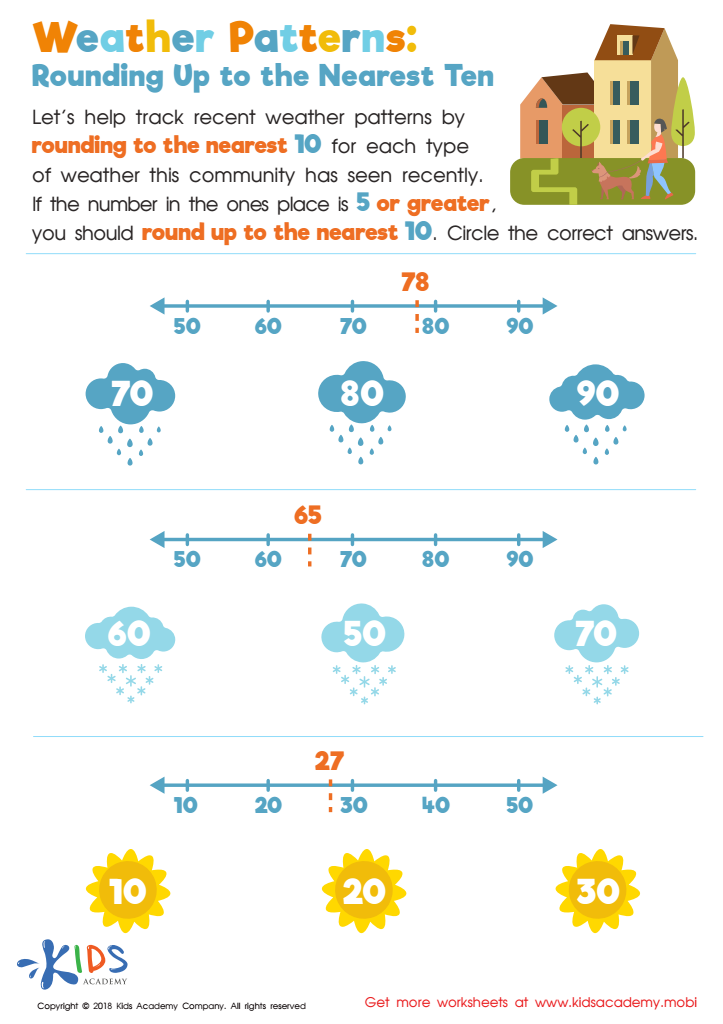
Weather Patterns Worksheet






Mathematical reasoning and normal rounding are essential concepts for children aged 3-8, forming a foundational skill set that impacts future academic success. Firstly, understanding rounding helps young learners grasp the idea of approximating numbers, making mathematics more intuitive and relatable. At this age, children develop numeracy, and the ability to round numbers aids them in making quick decisions and estimations in daily situations—whether sharing toys or measuring ingredients for a recipe.
Additionally, mathematical reasoning encourages critical thinking, as children learn to justify and discuss their rounding choices. This process promotes problem-solving skills that stretch beyond mathematics into other subjects. Engaging with rounding activities can enhance cognitive development, making learning fun and interactive, fostering a growth mindset that embraces challenges.
Furthermore, early exposure to these concepts prepares children for more complex mathematical operations in later grades. Parents and teachers play a pivotal role in this development; by incorporating rounding games and relatable scenarios, they establish a strong mathematical foundation that cultivates both confidence and interest in the subject. Overall, prioritizing mathematical reasoning and normal rounding lays the groundwork for lifelong learning and enthusiasm for mathematics, empowering children to become competent problem solvers in an increasingly numerically driven world.