
Reading Improvement Normal Building Vocabulary Worksheets for Ages 3-8
5 filtered results
Difficulty Level
Grade
Age
-
From - To
Subject
Activity
Standards
Discover the joy of reading with our engaging Vocabulary Worksheets designed for children aged 3-8! Our Reading Improvement Normal Building Vocabulary worksheets enhance language skills and foster a love for learning. Each activity is thoughtfully crafted to introduce new words, reinforce comprehension, and develop critical thinking. Perfect for both home and classroom use, these worksheets provide fun and interactive exercises tailored to young learners. From matching words to pictures to completing simple sentences, children will build their vocabulary and boost their reading confidence in a playful way. Join us and watch your child's reading skills flourish through imagination and creativity!
Favorites
With answer key
Interactive
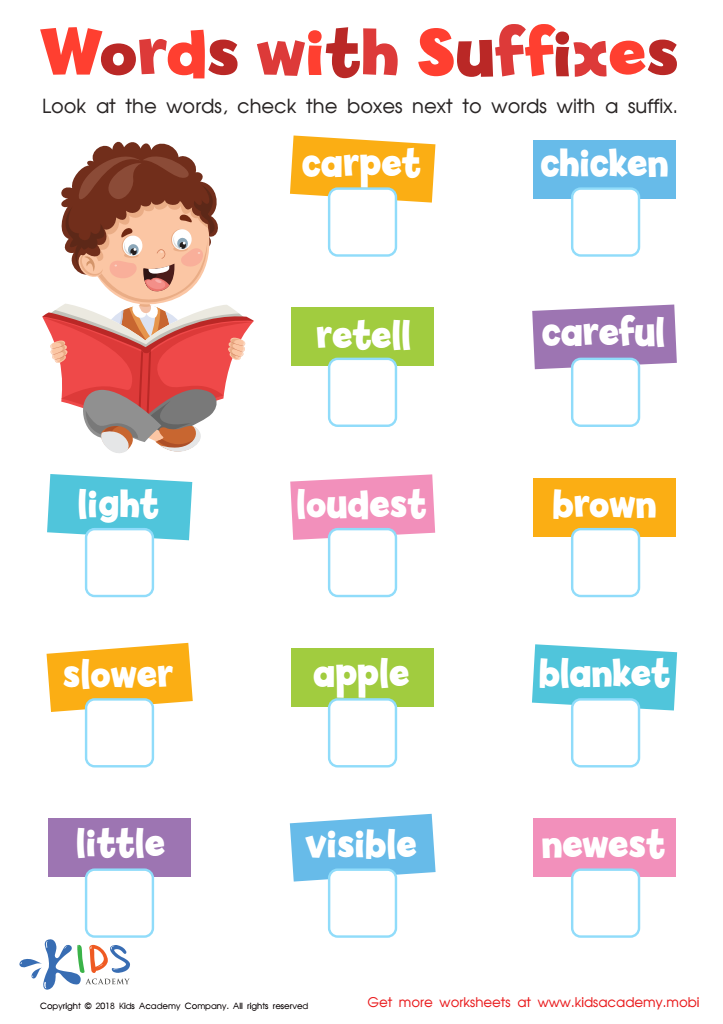
Reading: Words With Suffixes Worksheet
Help your students understand suffixes and build reading fluency with this worksheet. Have them read each word, then choose the ones with a suffix. Practicing this will lead to better comprehension and more confident reading. Save it for future use in language and reading classes.
 Assign to My Students
Reading: Words With Suffixes Worksheet
Worksheet











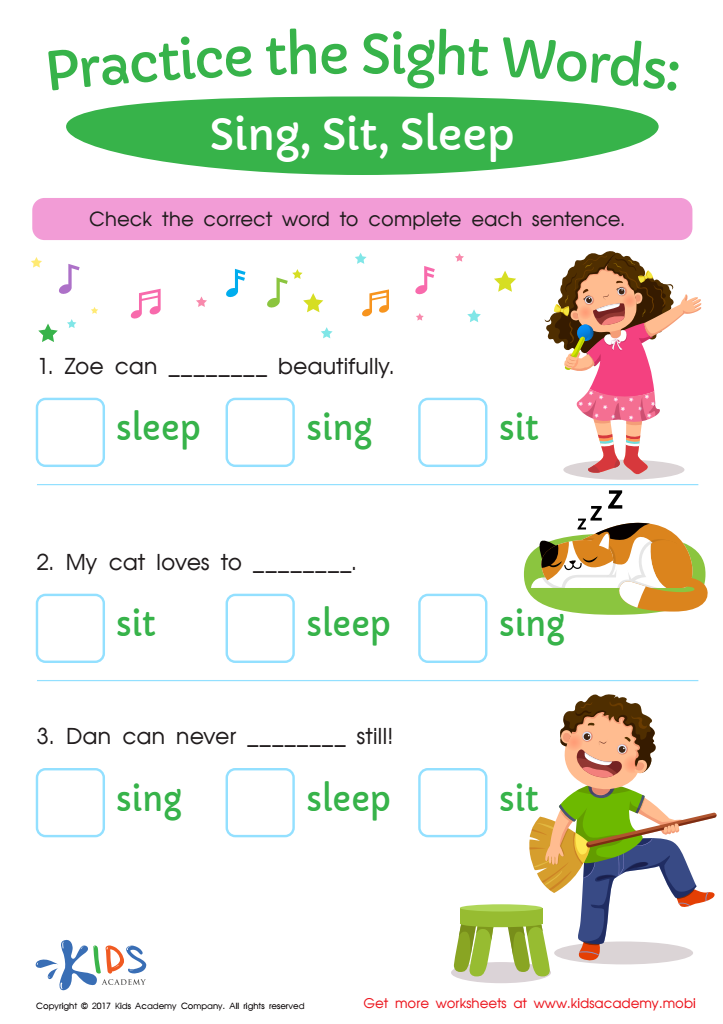
Sing, Sit, Sleep Sight Words Worksheet
Practice sight words with this printable worksheet featuring sing, sit, sleep! Confusing at first, these words can be mastered with the help of simple sentences and fun illustrations.
Sing, Sit, Sleep Sight Words Worksheet
Worksheet
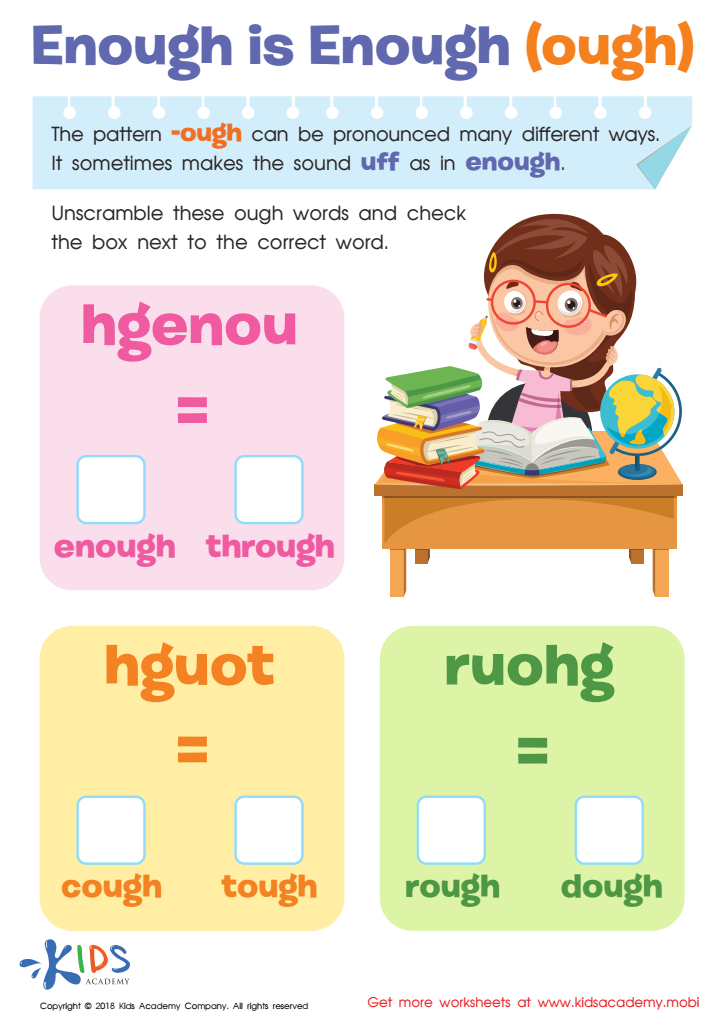
Enough Is Enough (ough) Worksheet
As your students learn more about reading and pronouncing words, they can explore how some word patterns can be said differently. The 'ough' pattern, for instance, can be pronounced several ways. 'Enough' has the 'uff' sound. Provide your students with examples of words pronounced similarly and help them unscramble 'ough' words on this worksheet, ticking the box for the correct word.
Enough Is Enough (ough) Worksheet
Worksheet
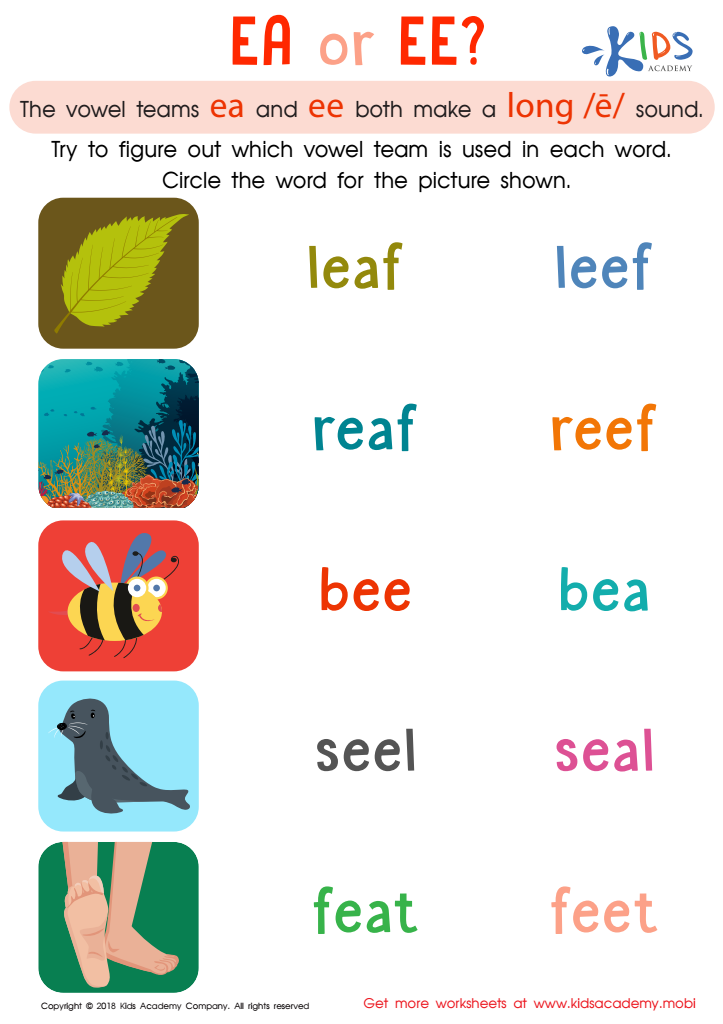
Reading: EA and EE Worksheet
Confused by the long E sound's varying spellings? Give students practice with this printable. It will improve their reading and spelling skills by helping them identify the correct spellings for words with the /ee/ and /ea/ vowel teams. Clear up the confusion and sharpen their skills.
Reading: EA and EE Worksheet
Worksheet
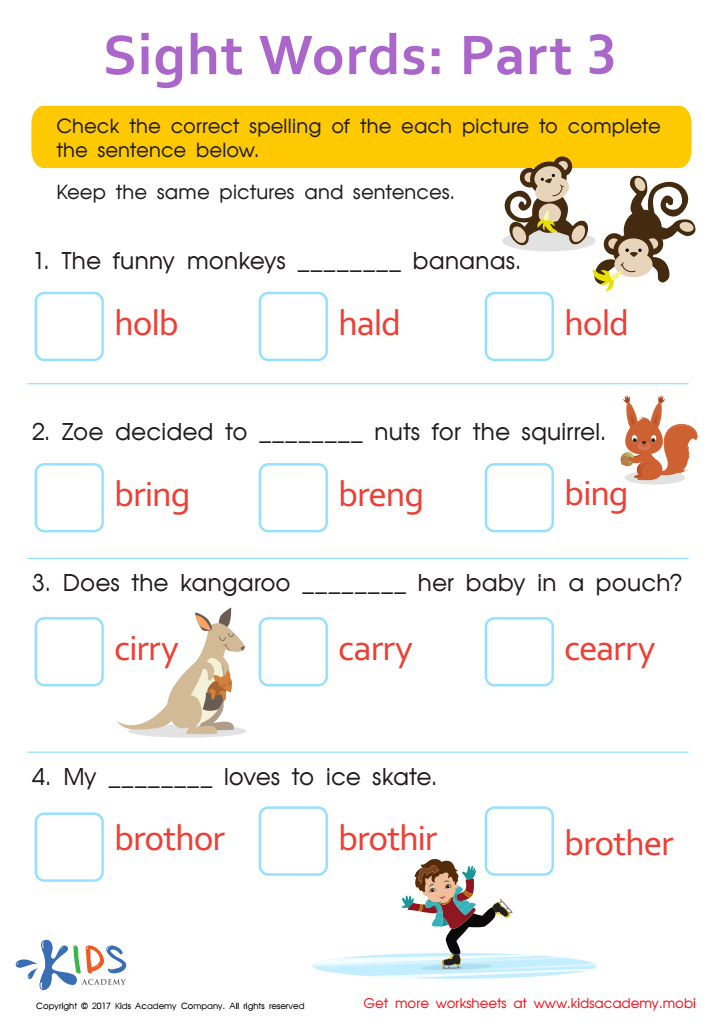
Hold, Bring, Carry, Brother Sight Words Worksheet
This sight words worksheet has fun illustrations to engage kids. They must read each sentence, then fill in the missing word, selecting from: hold, bring, carry, brother!
Hold, Bring, Carry, Brother Sight Words Worksheet
Worksheet
Join Kids Academy for Free
Who is primarily going to use this learning content?





.jpg)


Parents and teachers play a crucial role in nurturing a child's literacy skills, particularly in the early years between ages 3-8. One significant aspect of this development is vocabulary building, which forms the foundation for reading improvement. A rich vocabulary enhances a child’s ability to comprehend texts, express themselves, and develop critical thinking skills.
First, a strong vocabulary opens the door to better reading comprehension. Children who can recognize and understand a broader range of words are better equipped to grasp the meaning of stories and informational texts, leading to a more enjoyable and fruitful reading experience.
Second, vocabulary acquisition aids communication skills. Children who articulate their thoughts clearly from an early age gain confidence and become more engaged in conversations.
Additionally, early vocabulary development is linked to long-term academic success. Research shows that children with rich vocabularies are more likely to excel in school and beyond.
Finally, incorporating vocabulary building activities—like reading aloud, engaging in conversations, and playing word games—can create a dynamic learning environment. Thus, prioritizing reading improvement and vocabulary building is essential for parents and teachers and contributes significantly to the overall development of children’s literacy and communication skills.








