Spatial awareness Normal Reading Worksheets for Ages 3-8
3 filtered results
-
From - To
Enhance your child's spatial awareness skills with our engaging reading worksheets designed for ages 3-8. Our specially crafted activities focus on helping young learners understand relationships between objects, locations, and directions, crucial for their cognitive development. With vibrant illustrations and age-appropriate tasks, these worksheets make learning fun and interactive. Children will practice identifying spatial concepts through exciting exercises that nurture their reading abilities and comprehension. Perfect for parents and educators, these resources support foundational skills essential for academic success. Explore our collection to boost your child's confidence in learning while sharpening their spatial awareness in a playful way!
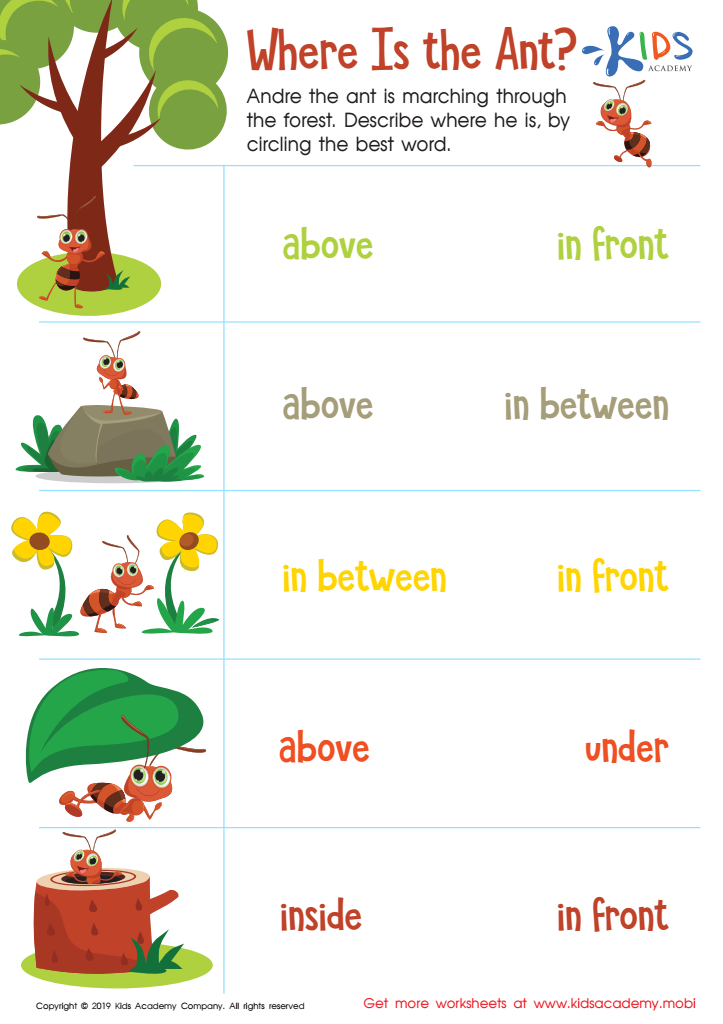
Where Is the Ant? Worksheet
 Assign to My Students
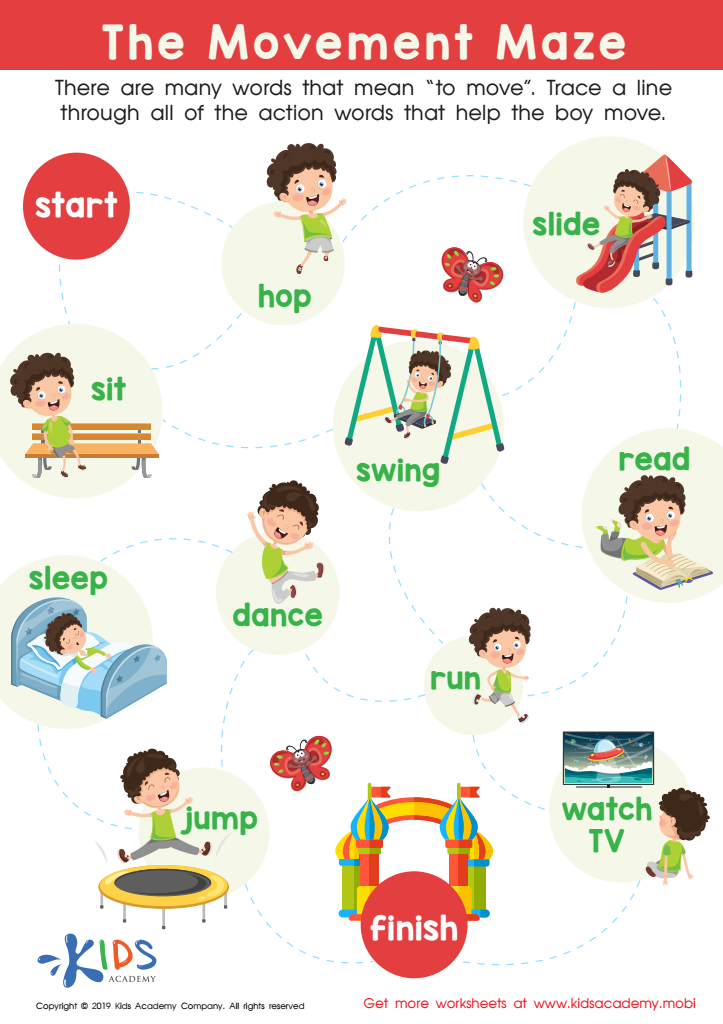
The Movement Maze Worksheet
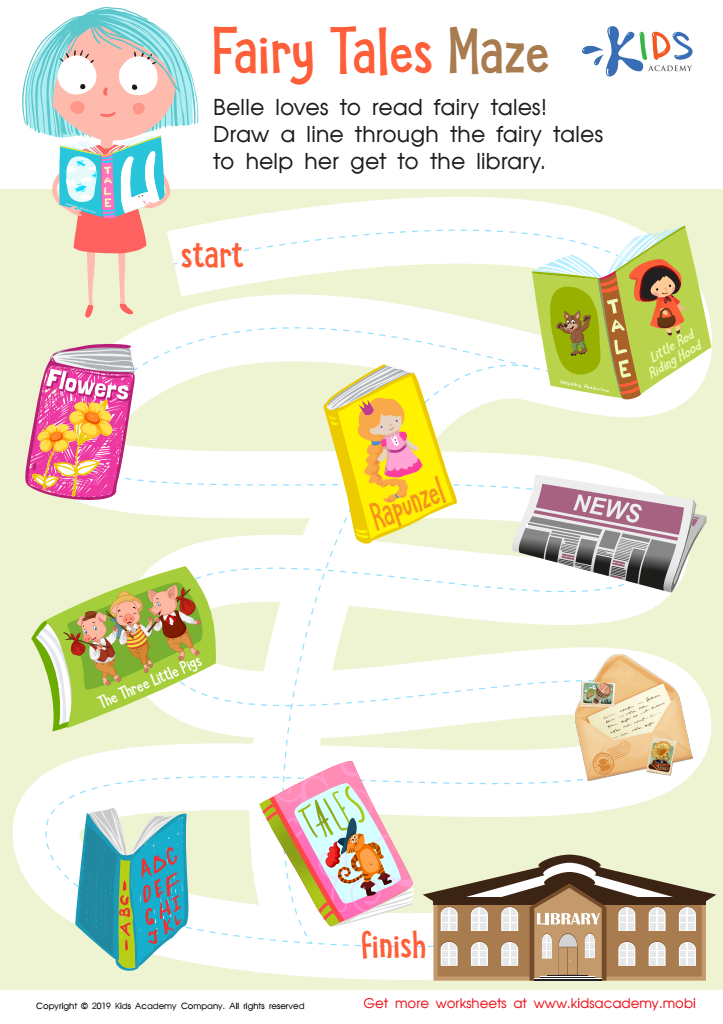
Fairy Tales Maze Worksheet







Spatial awareness is crucial for children aged 3-8 as it lays the foundation for various cognitive and motor skills. Parents and teachers should prioritize this aspect of development because it directly influences a child's ability to navigate their environment and understand relationships between objects. Strong spatial awareness aids in tasks like reading maps, solving puzzles, and even playing sports, fostering essential skills for later learning.
When children engage in spatial activities, such as building with blocks, drawing, or playing spatial-influenced games, they develop critical thinking and problem-solving abilities. This early exposure helps improve their abilities in math and reading, where spatial reasoning plays a significant role—particularly in geometry and understanding graphs.
Moreover, fostering spatial awareness can prevent potential learning difficulties down the line and boosts confidence as children master new challenges. By creating rich learning experiences—involving outdoor exploration, hands-on activities, or incorporating spatial language—parents and teachers cultivate a supportive environment. Ultimately, investing in developing spatial awareness during these formative years helps children prepare for academic success and nurtures their sense of independence in their interactions with the world.








