Understanding perspectives Normal Reading Worksheets for Ages 3-8
3 filtered results
-
From - To
Unlock the power of understanding perspectives with our engaging Normal Reading Worksheets designed for children ages 3-8. These thoughtfully crafted resources help young learners develop critical thinking and empathy by exploring different viewpoints through fun stories and interactive exercises. Each worksheet encourages kids to share their thoughts, infer meanings, and comprehend narratives beyond their personal experiences. Ideal for classroom activities or at-home learning, our worksheets focus on essential reading skills while making learning enjoyable. Foster a love for reading and enhance comprehension abilities in your child today! Download our worksheets and watch your young readers thrive as they explore diverse perspectives!
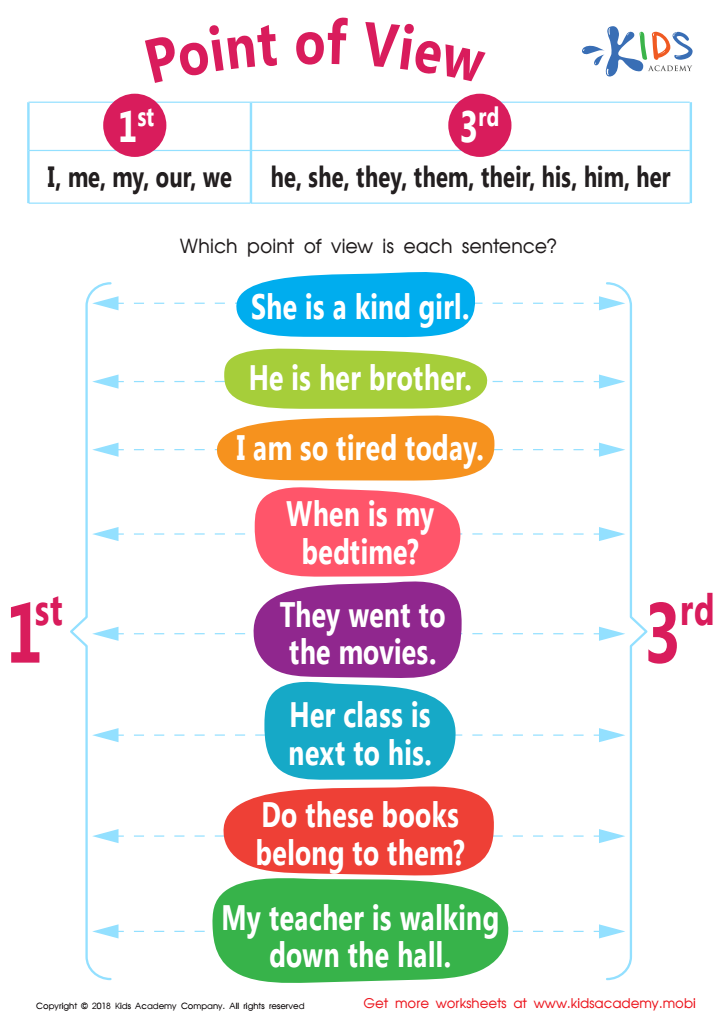
Point of View Worksheet
 Assign to My Students
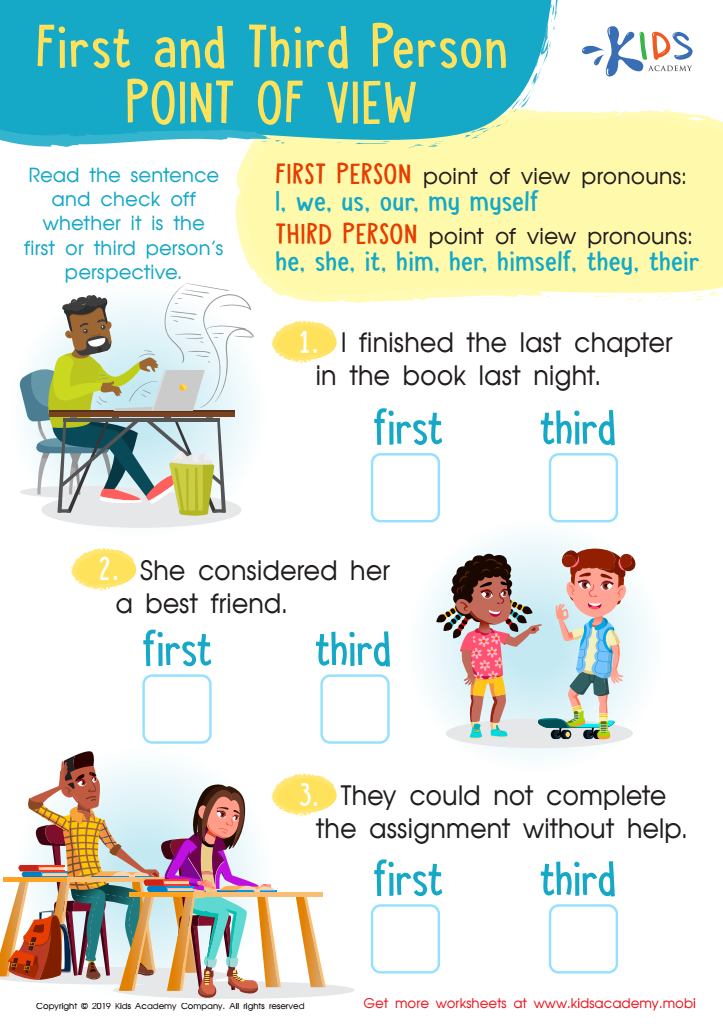
First and Third Person Point of View Worksheet
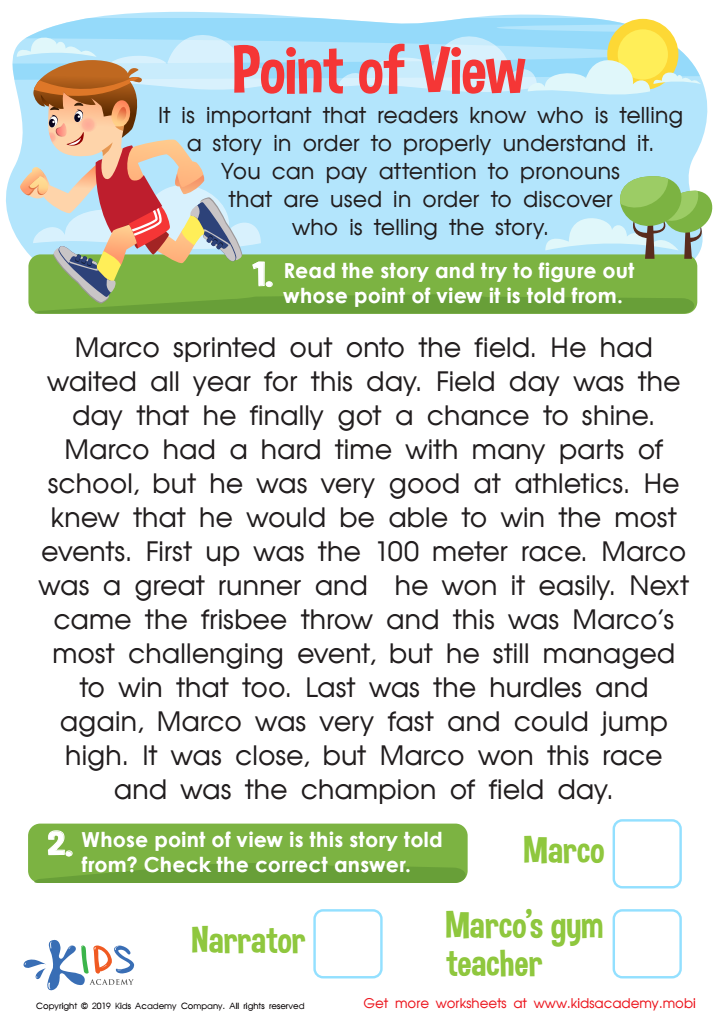
Point of View Worksheet







Understanding perspectives is crucial for early literacy development in children aged 3-8. At this stage, children are not only learning to read but also to understand the world around them. By fostering an ability to comprehend different perspectives, parents and teachers can help children enhance their empathy, critical thinking, and social skills.
When children comprehend that others may have different thoughts, feelings, and experiences, they learn to interpret stories and texts more deeply. This skill lays the groundwork for creativity, as they begin to envision scenarios from various viewpoints. Additionally, understanding perspectives supports effective communication, as children become more adept at expressing their ideas and considering others’ opinions.
Furthermore, age-appropriate books that introduce diverse characters and situations allow children to explore and relate to various backgrounds and cultures. This exposure encourages inclusivity and respect for differences from a young age.
Parents and teachers play a vital role in guiding discussions about these perspectives during reading activities. By asking open-ended questions and prompting children to share their interpretations, adults can cultivate a richer understanding that goes beyond the basic plot, preparing children for more complex texts and ideas in the future.








