Vocabulary Enrichment Normal Reading Worksheets for Ages 3-8
3 filtered results
-
From - To
Discover our Vocabulary Enrichment Normal Reading Worksheets, specifically designed for children ages 3-8. These engaging and interactive resources help young learners enhance their vocabulary skills while fostering a love for reading. Our worksheets incorporate fun activities that promote word recognition, comprehension, and language development. Tailored to various learning styles, these printable materials ensure that every child can expand their lexicon effectively. From matching games to fill-in-the-blank exercises, each worksheet is crafted to inspire curiosity and boost confidence in early readers. Equip your child with the skills they need to thrive in their academic journey while enjoying the process of learning!
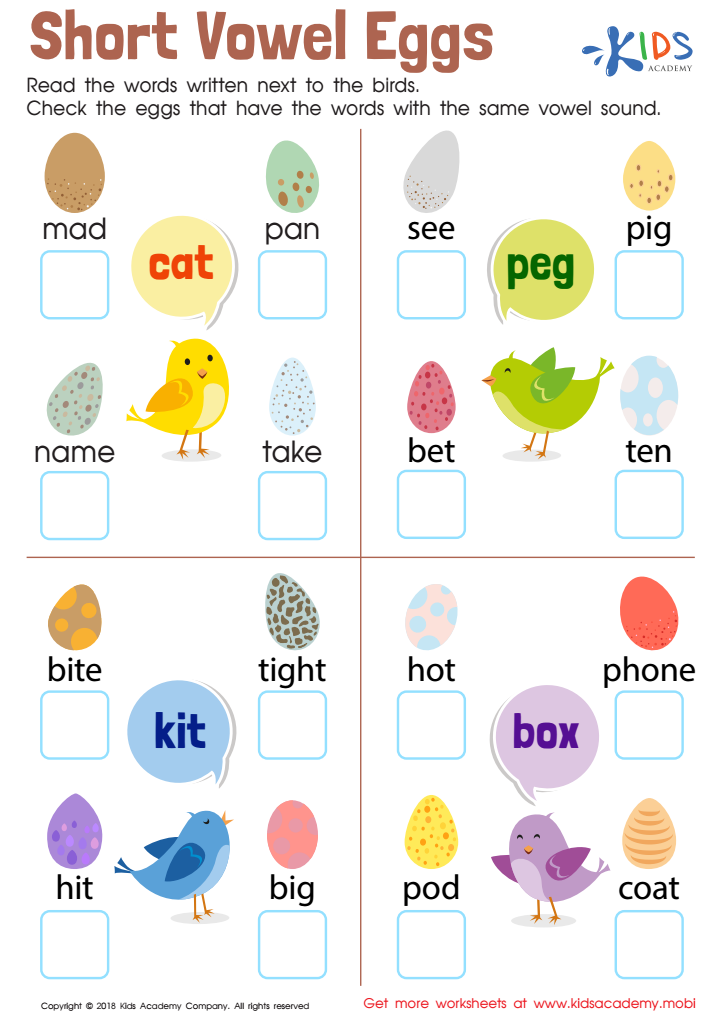
Short Vowel Eggs Worksheet
 Assign to My Students
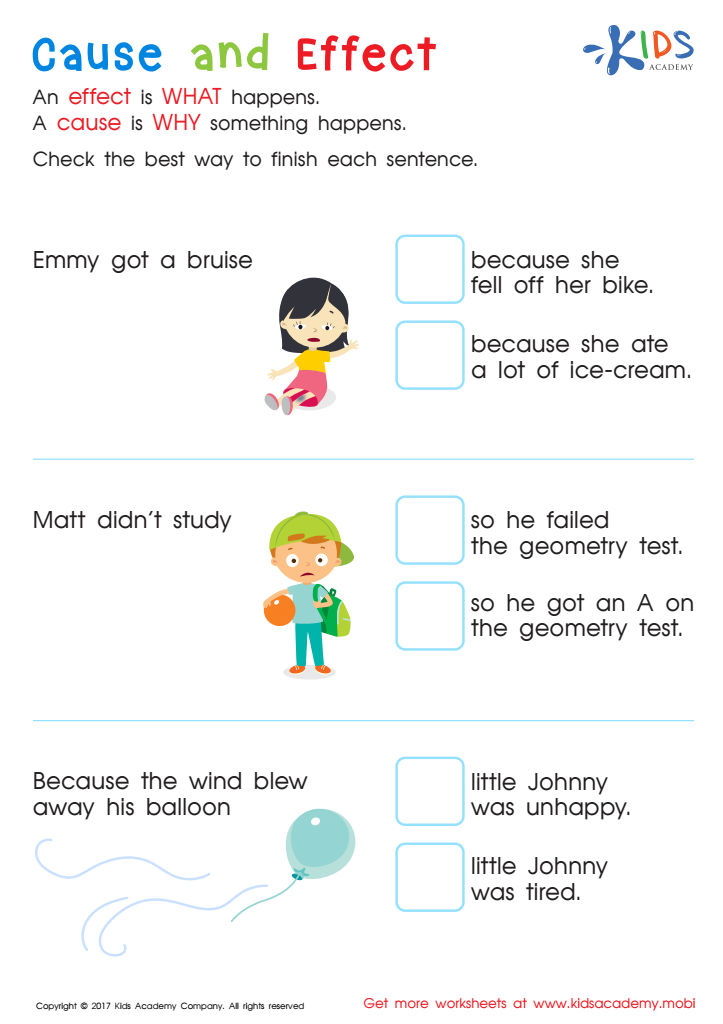
Cause and Effect Worksheet
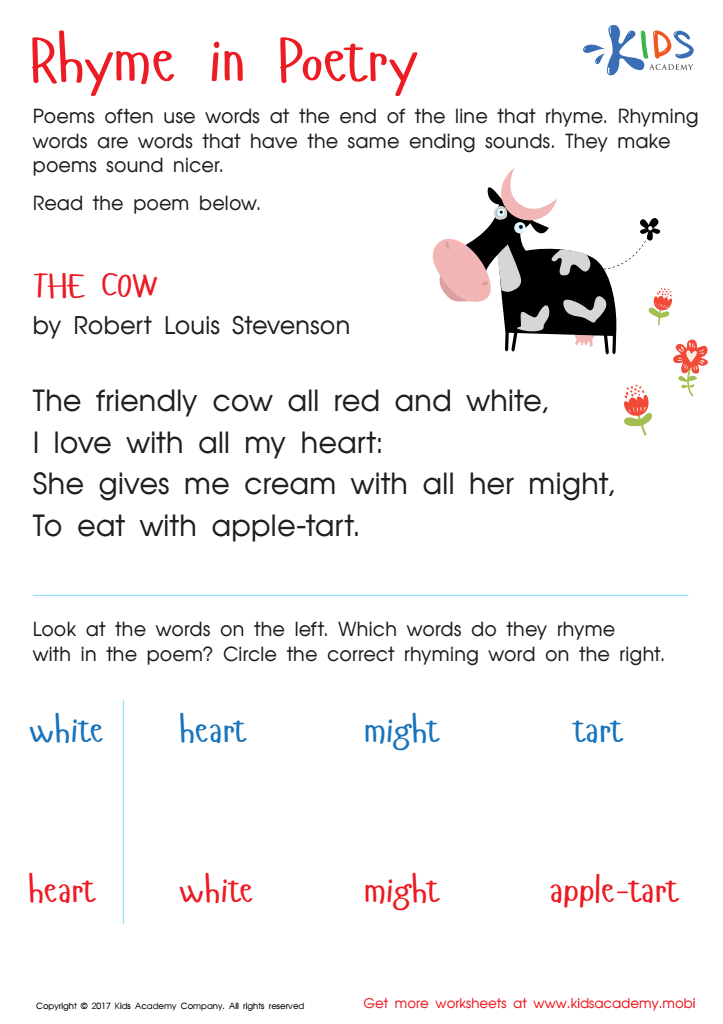
Rhyme In Poetry Worksheet



.jpg)



.jpg)
Vocabulary enrichment during the crucial early years, specifically ages 3-8, plays a significant role in a child's cognitive and language development. Parents and teachers should care about this for numerous reasons. First, a rich vocabulary enhances a child's ability to communicate effectively, express their thoughts, and understand others, which are foundational skills for social interaction and academic success.
Moreover, research indicates that a well-developed vocabulary is closely linked to reading comprehension. Children with larger vocabularies can better understand stories, concepts, and instructions, leading to greater success in school. When children are exposed to diverse words, they also develop critical thinking skills and a curiosity about the world around them.
Additionally, fostering vocabulary enrichment enriches a child's learning experiences. Engaging children with new words through reading, conversations, and educational activities can stimulate their imagination and promote exploration.
For educators and parents, prioritizing vocabulary enrichments, such as through storytelling and interactive discussions, means laying the groundwork for lifelong learning habits. It encourages a love for reading and learning that extends beyond the classroom. In summary, investing in vocabulary enrichment is an investment in a child's future success and confidence in communication and learning.








