Understanding light sources Normal Science Worksheets for Ages 3-8
4 filtered results
-
From - To
Welcome to our engaging "Understanding Light Sources" Normal Science Worksheets for ages 3-8! These meticulously crafted worksheets introduce young learners to the concept of light sources through interactive activities and colorful illustrations. Children will explore various types of light sources—natural and artificial—enhancing their observational skills and scientific curiosity. Ideal for early education classrooms or at-home learning, these worksheets promote critical thinking and help kids connect with the world around them. Discover fun trivia, colored visuals, and simple questions that inspire discussion about light and its importance. Join us on an exciting adventure of discovery as little scientists explore the wonders of light!
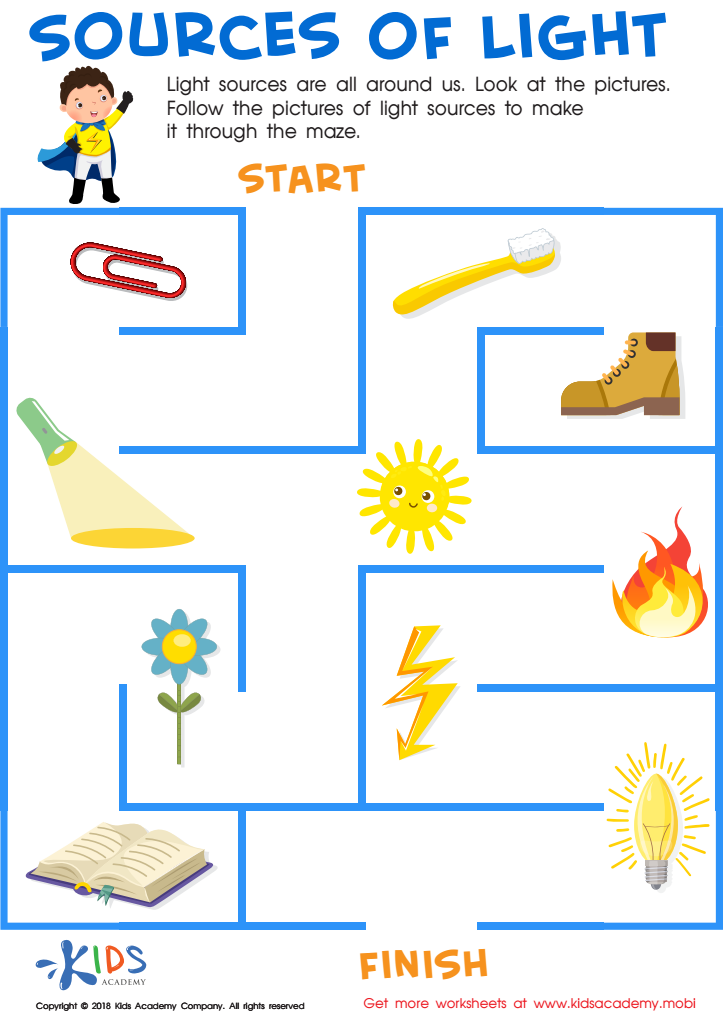
Sources of Light Worksheet
 Assign to My Students
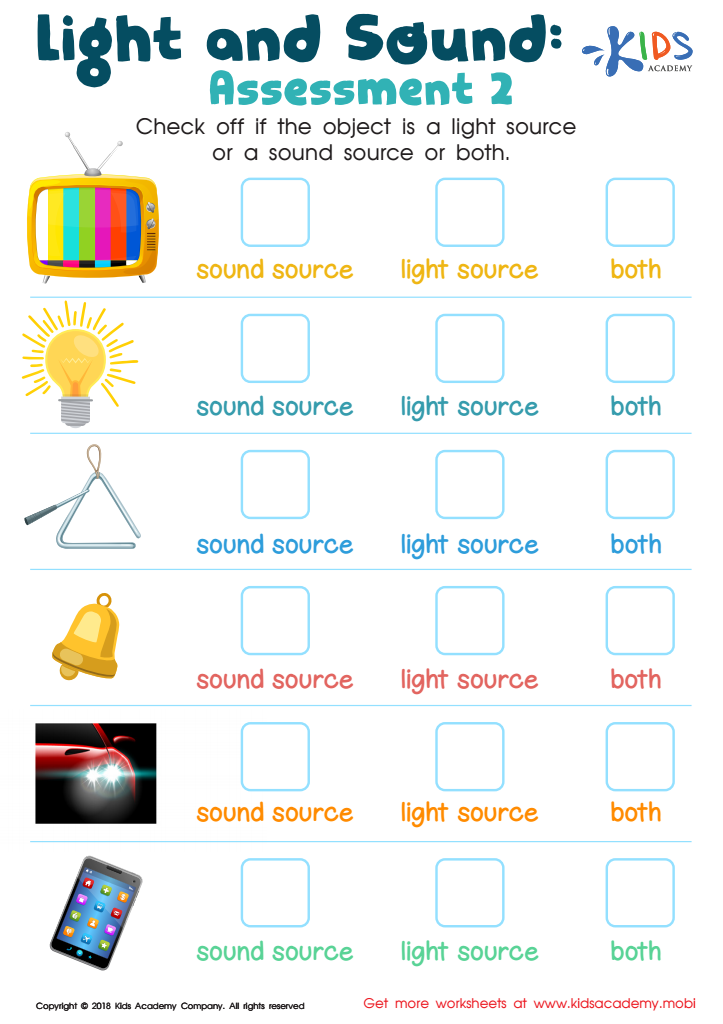
Light and Sound: Assessment 2 Worksheet
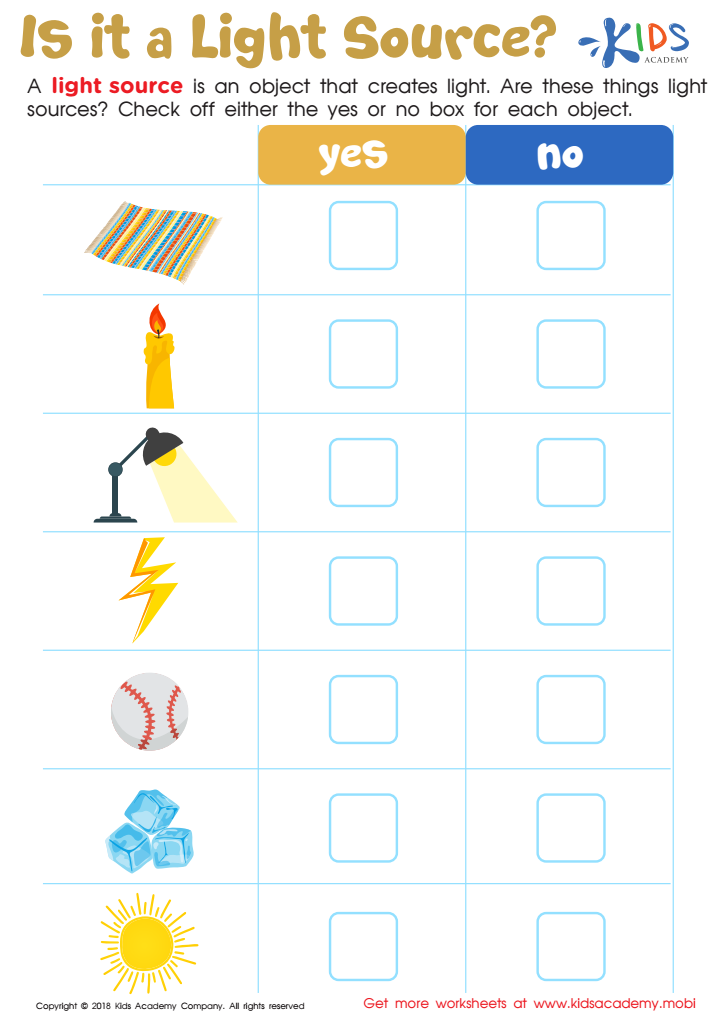
Is It a Light Source? Worksheet
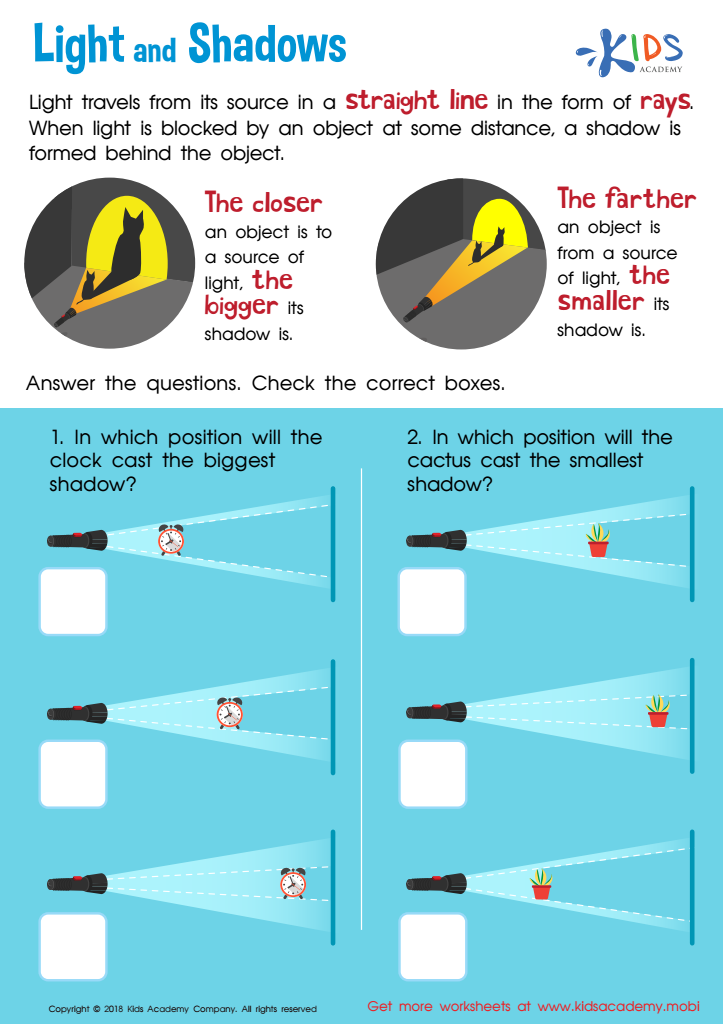
Light and Shadow Worksheet for Grade 3








Understanding light sources is crucial for children aged 3-8 as it lays the foundation for their scientific literacy. During these formative years, children are naturally curious about the world around them, and exploring the concept of light provides ample opportunities for discovery and learning. Parents and teachers should care about this topic because it fosters critical thinking and helps develop observational skills.
By investigating different light sources—such as the sun, lamps, and flashlights—children learn to differentiate between natural and artificial light. This understanding encourages questions and exploration, allowing them to conduct simple experiments, such as observing shadows or reflecting light with mirrors. Such hands-on activities promote active learning and make science enjoyable.
Moreover, understanding light and its sources also translates into real-world applications. For instance, lessons on light can help children grasp basic concepts in energy and sustainability, encouraging them to think about using light efficiently. In a world increasingly dominated by technology, instilling a sense of wonder about natural phenomena fosters curiosity and inspires the next generation of scientists. Engaging with light sources also enhances vocabulary, comprehension, and communication skills, all crucial components of early childhood education.







