Spatial awareness Normal Physical Science Worksheets for Ages 3-8
3 filtered results
-
From - To
Enhance your child's understanding of the world with our Spatial Awareness Normal Physical Science Worksheets for ages 3-8. These engaging activities are designed to develop crucial spatial awareness skills, including recognizing shapes, understanding spatial relationships, and navigating objects in the environment. With vibrant illustrations and age-appropriate challenges, our worksheets make learning fun and interactive. Perfect for young inquisitive minds, these exercises align with core physical science concepts, promoting both cognitive growth and problem-solving abilities. Boost spatial reasoning and set a solid foundation for future learning with our expertly crafted resources. Explore our collection and watch your child’s confidence soar!
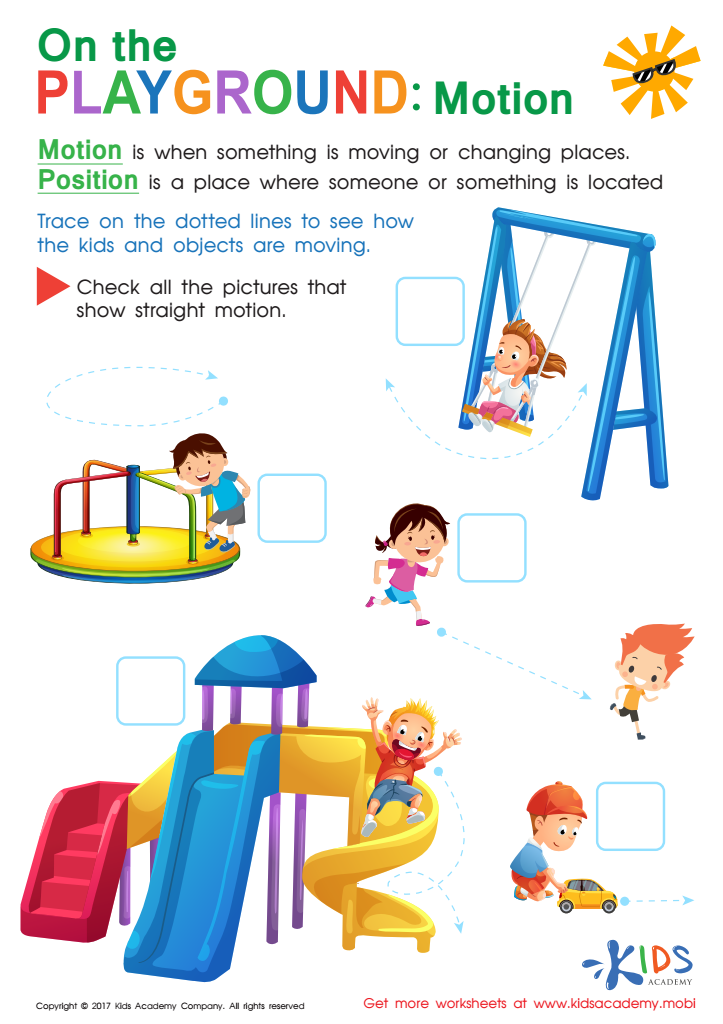
Position and Motion Worksheet
 Assign to My Students
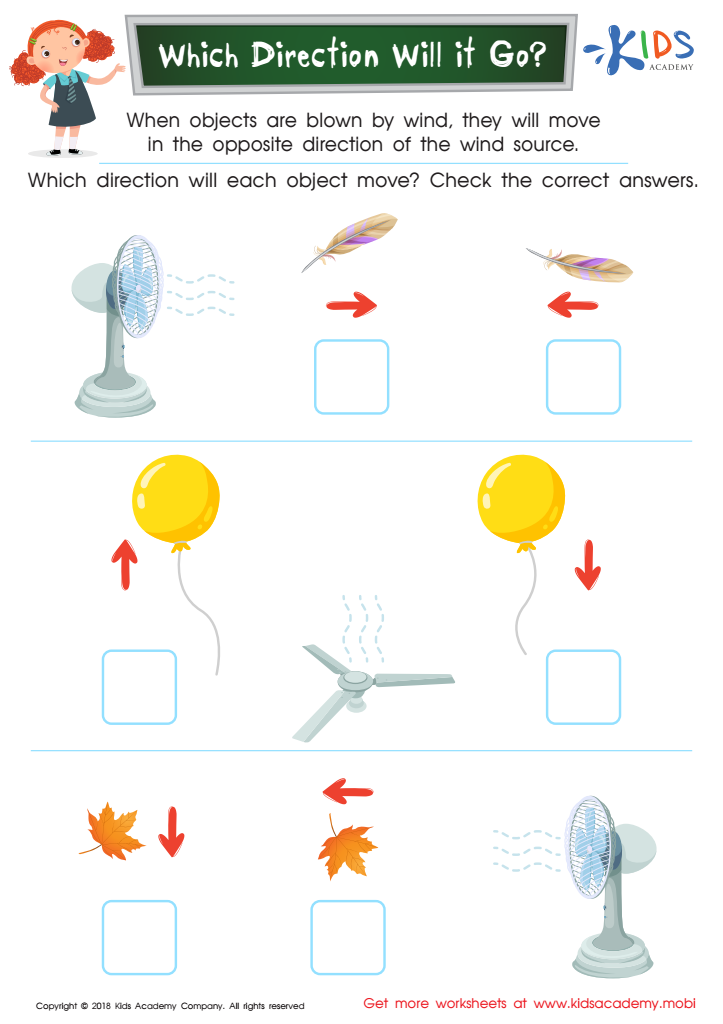
Which Direction Will it Go? Worksheet
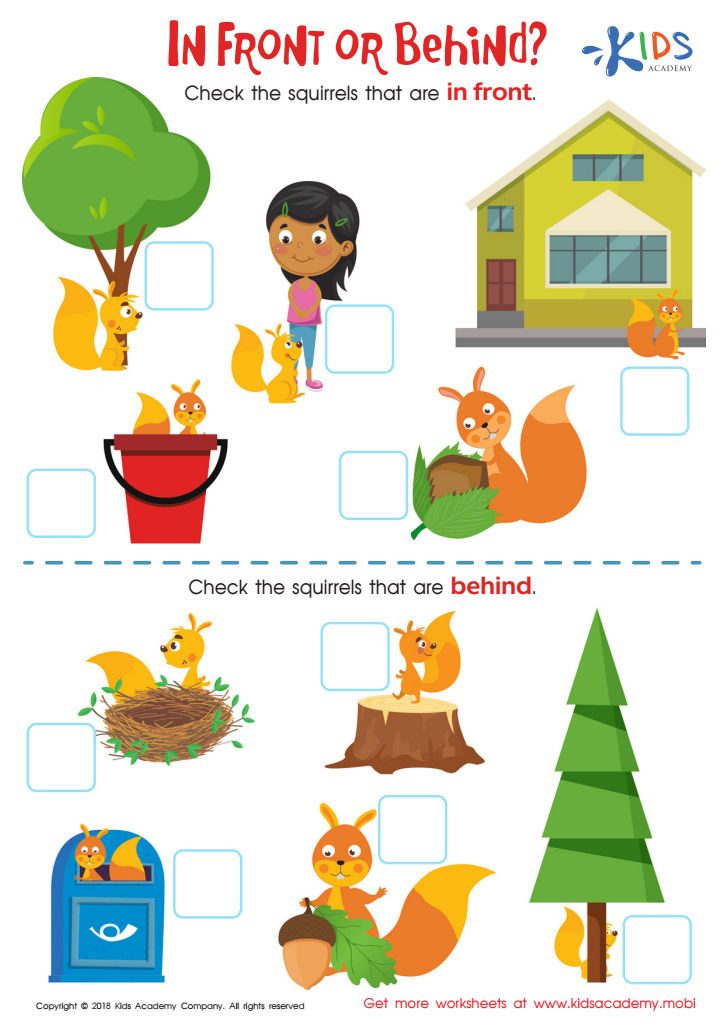
In Front or Behind: Part 2 Worksheet







Spatial awareness and understanding basic physical science concepts play a crucial role in the cognitive and physical development of children aged 3-8. Spatial awareness refers to an individual’s ability to understand and interact with the objects and environment around them. By fostering this skill early, parents and teachers lay a foundation for essential life skills, such as problem-solving and critical thinking.
At a young age, children use spatial awareness to navigate their environment safely. Activities like puzzles, building blocks, and simple map-reading enhance these skills, helping kids understand concepts of size, distance, and positioning. This awareness is also fundamental in subjects such as mathematics, as it aids in grasping geometry, measurement, and transformation of shapes.
In parallel, introducing basic physical science concepts to young children fosters curiosity and encourages exploration. Natural phenomena like gravity, magnetism, and buoyancy can be introduced through playful experimentation. Understanding these principles helps develop an analytical mindset and a better grasp of the world around them.
Therefore, nurturing spatial awareness and physical science understanding is essential. They not only support cognitive development but also enhance fine and gross motor skills. As such, parents and teachers should integrate these elements into learning activities, paving the way for a well-rounded growth that equips children with the tools they'll need for future academic and life challenges.







