Understanding light sources Normal Physical Science Worksheets for Ages 3-8
4 filtered results
-
From - To
Explore our engaging "Understanding Light Sources" Normal Physical Science Worksheets designed for children aged 3-8! These worksheets offer a fun and interactive way for young learners to discover different sources of light, such as the sun, bulbs, and candles. Each activity encourages critical thinking through exciting visuals and hands-on exercises. Perfect for homeschoolers and classroom settings, our worksheets also promote observation skills and encourage discussions about light in everyday life. Spark curiosity and inspire future scientists with this essential resource that makes learning about light simple and enjoyable! Visit our page to download now and illuminate young minds today!
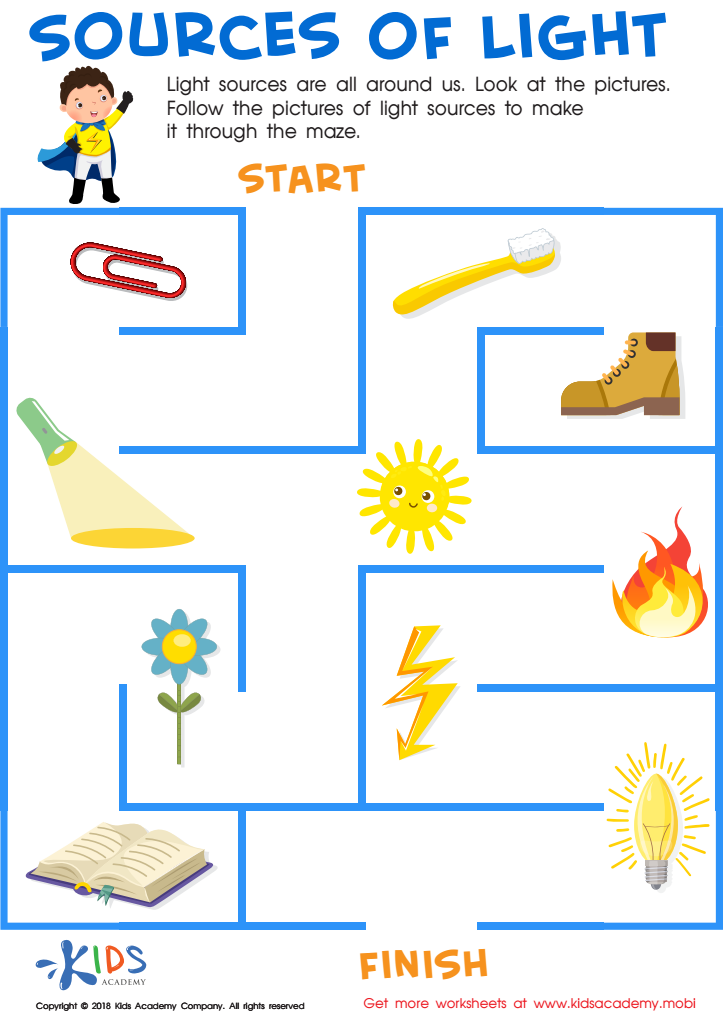
Sources of Light Worksheet
 Assign to My Students
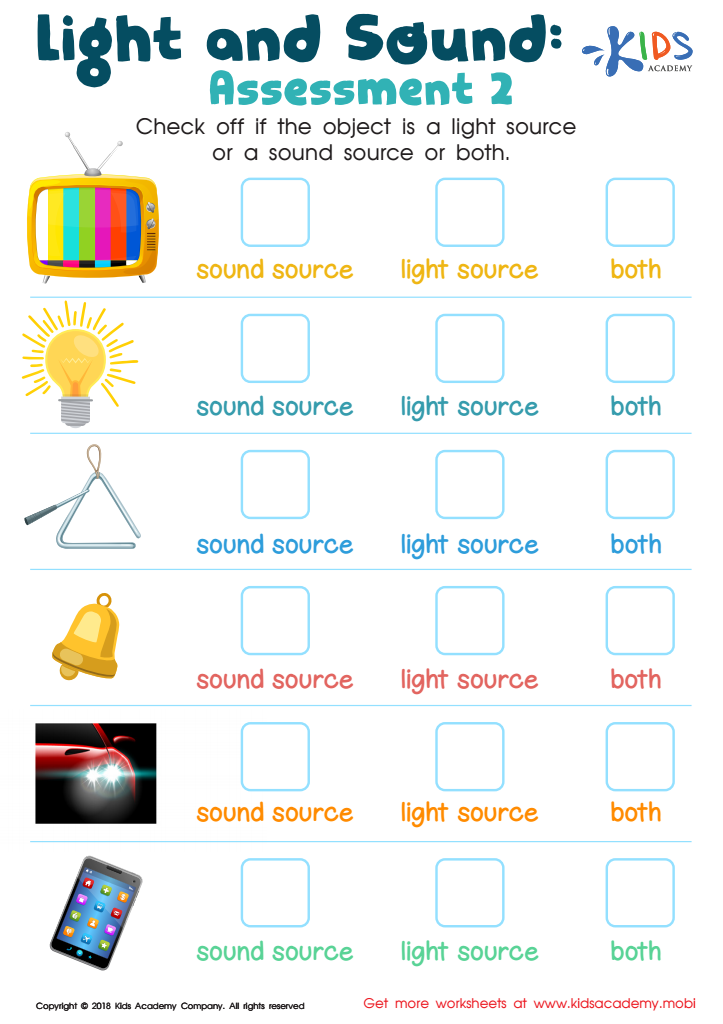
Light and Sound: Assessment 2 Worksheet
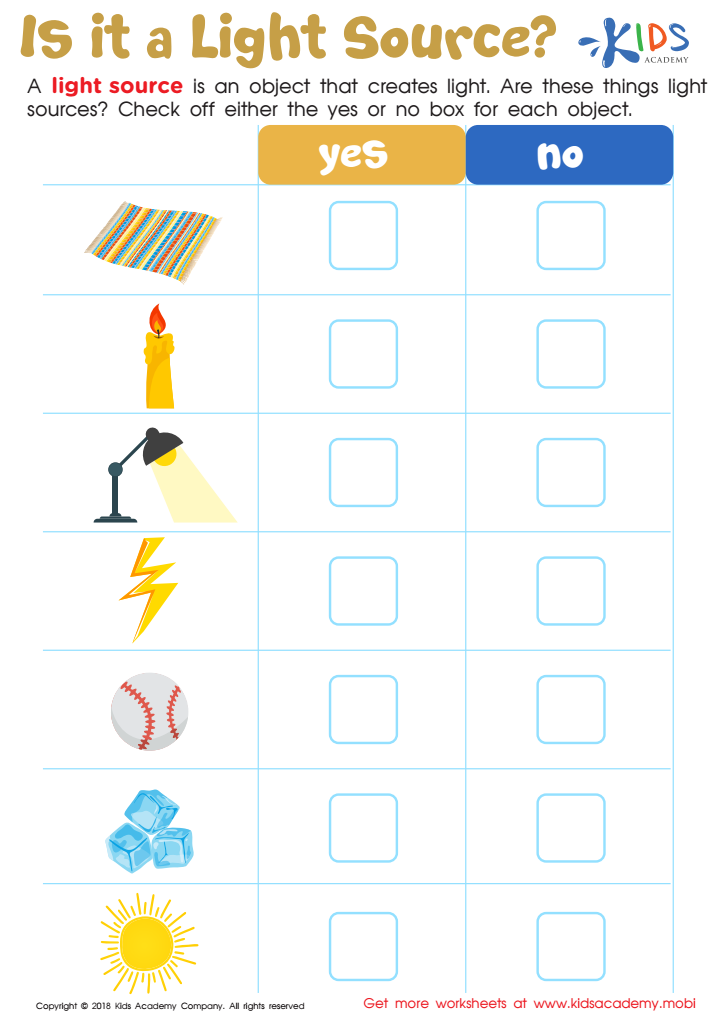
Is It a Light Source? Worksheet
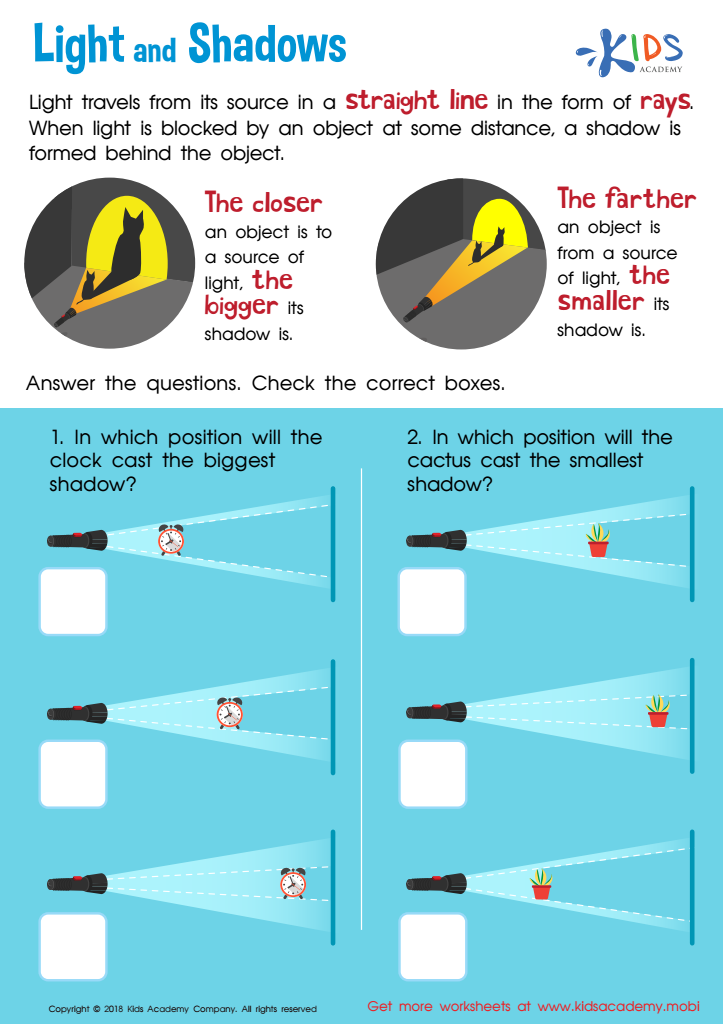
Light and Shadow Worksheet for Grade 3






.jpg)
Understanding light sources is vital for parents and teachers as it lays the foundation for children's comprehension of the world around them. For ages 3-8, young children are naturally curious, and exploring light sources can ignite their interest in science and observational skills. By understanding how different light sources behave naturalistically—whether from the sun, lamps, or candles—children learn to differentiate between primary sources of light and reflective surfaces, deepening their understanding of their environment.
Engaging with light sources encourages interactive learning and experimentation. Activities such as shadow play, using prisms, or exploring colors through light can boost critical thinking, problem-solving, and collaborative skills among young learners. Moreover, such learning fosters a scientific mindset; children begin to ask questions and seek answers through observation and inquiry.
Additionally, incorporating concepts of light in early education can link to broader academic subjects such as physics, art, and environmental science, creating a holistic educational experience. Understanding light also offers practical implications for safety awareness and technological literacy, essential in today’s digital age. In summary, engaging with light sources stands as a crucial stepping stone, paving the way for enhanced cognitive development, curiosity, and a love for learning in young children.







