Understanding moon phases Normal Space Worksheets for Ages 3-8
3 filtered results
-
From - To
Introduce your little ones to the wonders of the night sky with our "Understanding Moon Phases" worksheets tailored for ages 3-8. These engaging activities simplify the complex concepts of lunar phases into fun, digestible exercises, perfect for young astronomers. Our child-friendly worksheets use vivid illustrations and hands-on tasks to help kids grasp the transitions from the new moon to the full moon and everything in between. Designed to spark curiosity and enhance learning, these resources align perfectly with early science curriculums. Boost your child's understanding of space with our expertly crafted, easy-to-follow learning tools from Kids Academy.
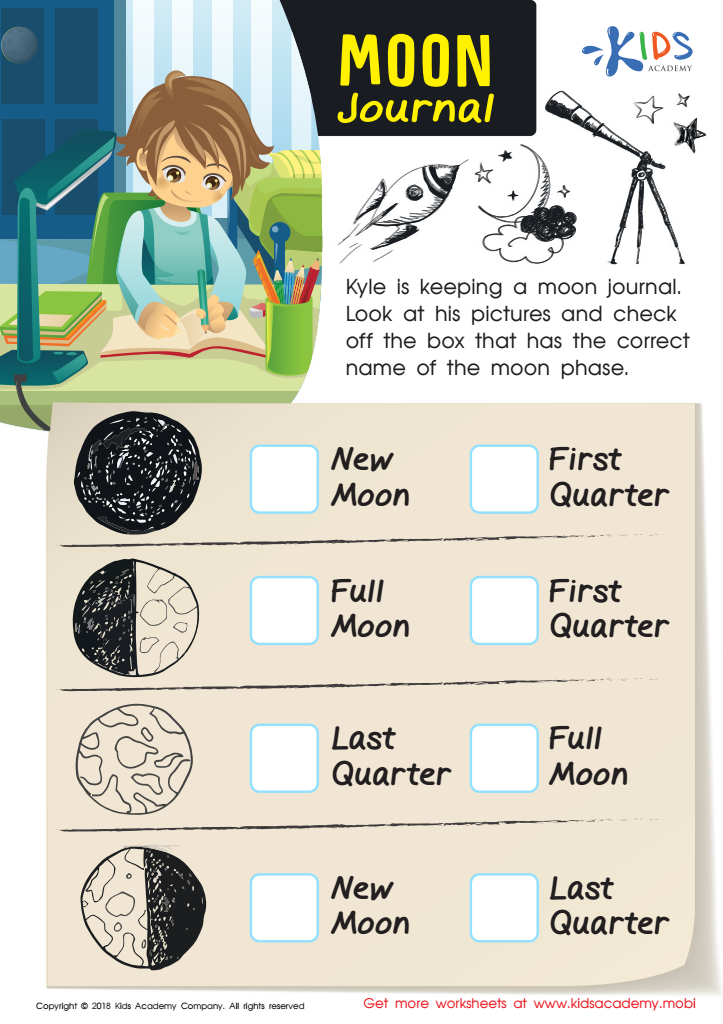
Moon Journal Worksheet
 Assign to My Students
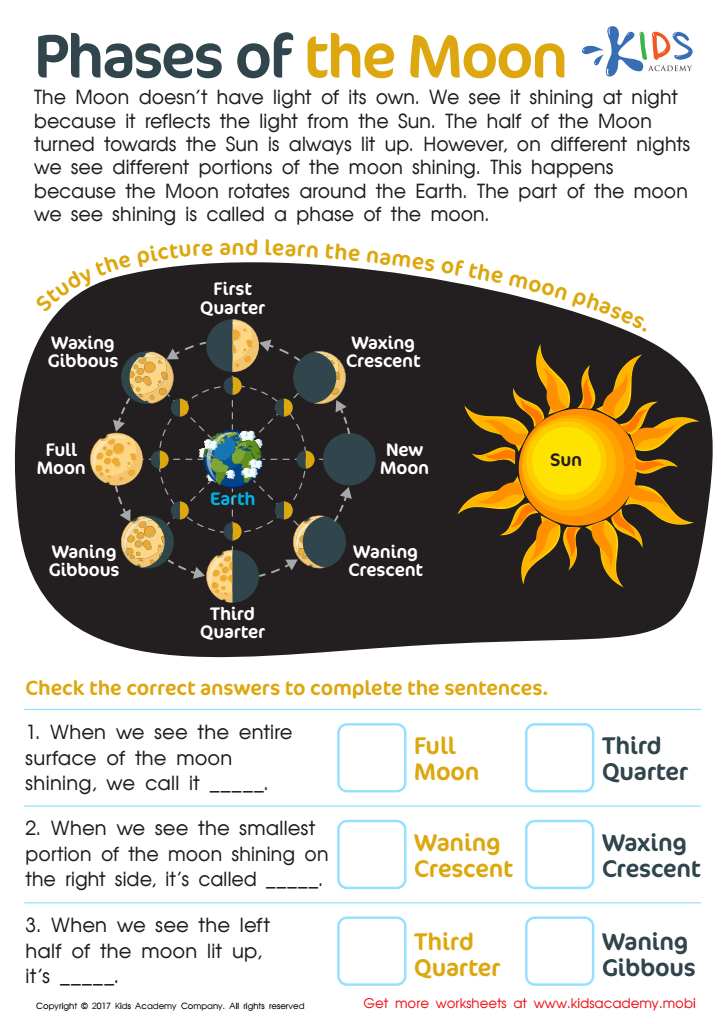
Phases of The Moon Worksheet
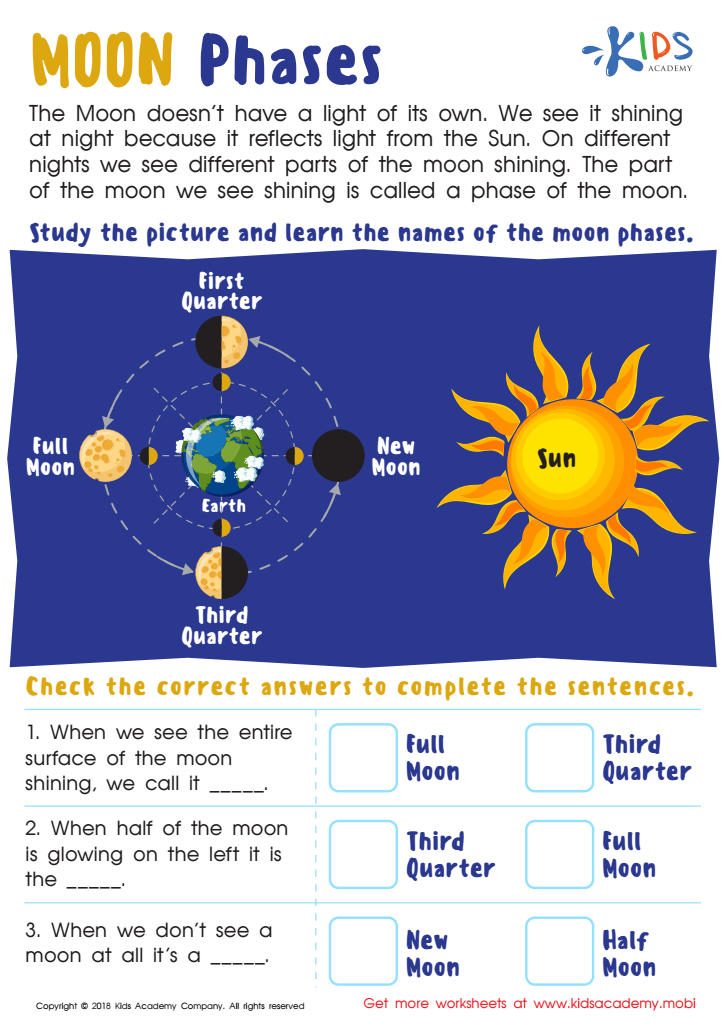
Moon Phases Worksheet






Understanding moon phases is an exciting and valuable learning experience for young children aged 3-8, helping them to appreciate the natural world and fostering a love for science early in life. Parents and teachers should care about this topic because it lays the foundation for scientific inquiry and critical thinking. As children observe the changing shapes of the moon, they learn to make observations and ask questions about what they see, which are crucial skills in scientific exploration.
Engaging with moon phases nurtures curiosity and wonder, motivating children to explore other areas of science and nature. It fosters a sense of connection to the environment, promoting awareness of natural cycles and patterns, and encouraging them to think about their place in the universe.
Moreover, activities related to moon phases support interdisciplinary learning by integrating science, math, arts, and literature. Storytelling and art projects about the moon stimulate creativity, while charting the moon's phases enhances mathematical skills like counting and sequencing.
Incorporating this topic into early education helps develop not just cognitive skills but also a lifelong appreciation for science and nature. It encourages a holistic approach to learning, making academic concepts more tangible and engaging for young minds.







