
Alphabet Learning Normal Letter Recognition Worksheets for Ages 3-9
3 filtered results
Difficulty Level
Grade
Age
-
From - To
Subject
Activity
Standards
Enhance your child's letter recognition skills with our "Alphabet Learning Normal Letter Recognition Worksheets," designed for ages 3-9. These engaging worksheets offer a fun and interactive way for young learners to identify both uppercase and lowercase letters. Featuring a variety of colorful activities, children will match letters, trace them, and practice sounds, fostering their literacy skills in a playful manner. These worksheets promote fine motor skills and build confidence in early learners as they embark on their reading journey. Download and print today to make learning the alphabet an enjoyable experience and set a solid foundation for your child's education!
Favorites
With answer key
Interactive
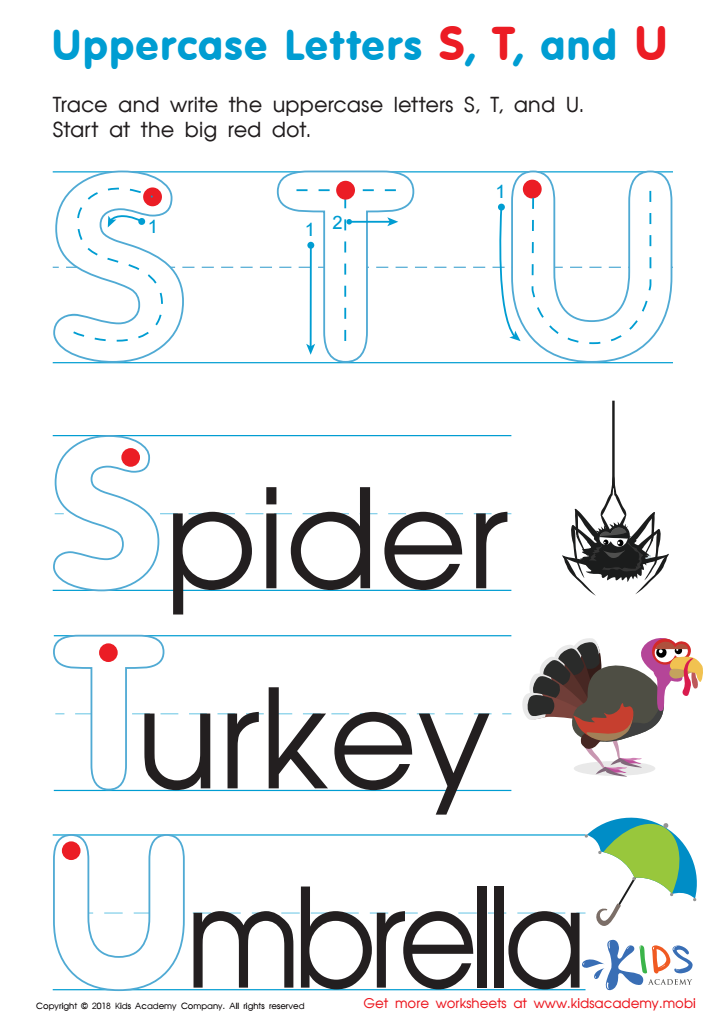
Uppercase Letters S, T, and U Worksheet
Help your kids learn to write upper-case letters with this fun tracing sheet. Start at the big red dot for each letter: S, T, and U. Show them the pictures and ask what letter each word starts with. Guide their hand and watch them learn!
 Assign to My Students
Uppercase Letters S, T, and U Worksheet
Worksheet
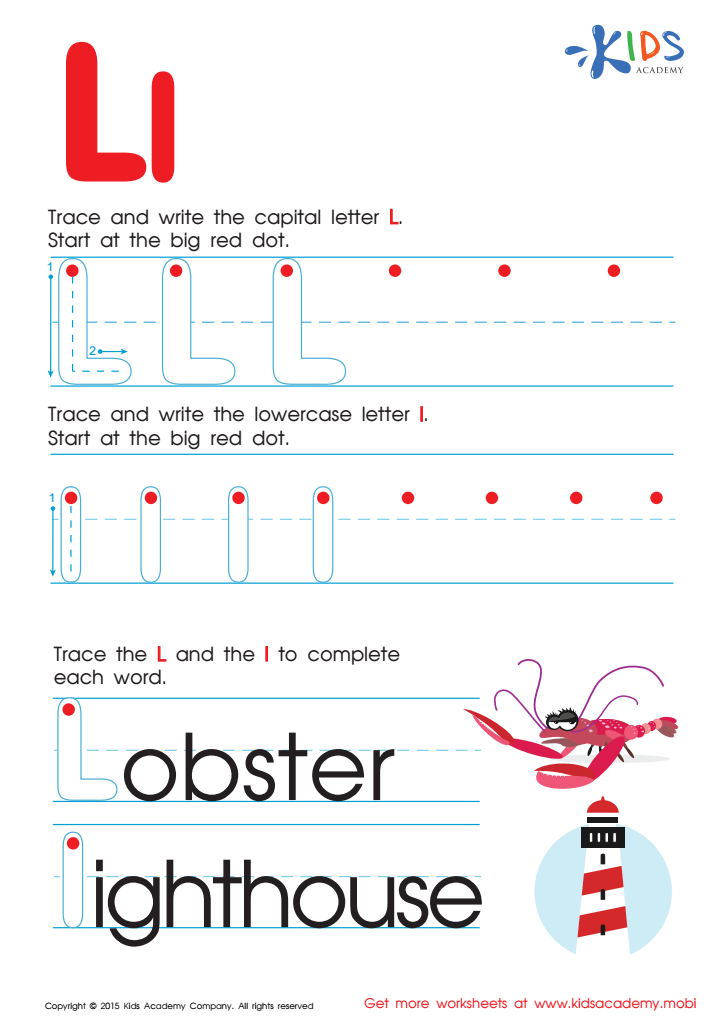
Letter L Tracing Page
Trace uppercase and lowercase letters to practice writing. Pay attention to the lowercase letters, like the "L", that are not as tall as an uppercase "I" or as short as a lowercase "i". Words like "lobster" and "lighthouse" are waiting to be completed. Enjoy!
Letter L Tracing Page
Worksheet
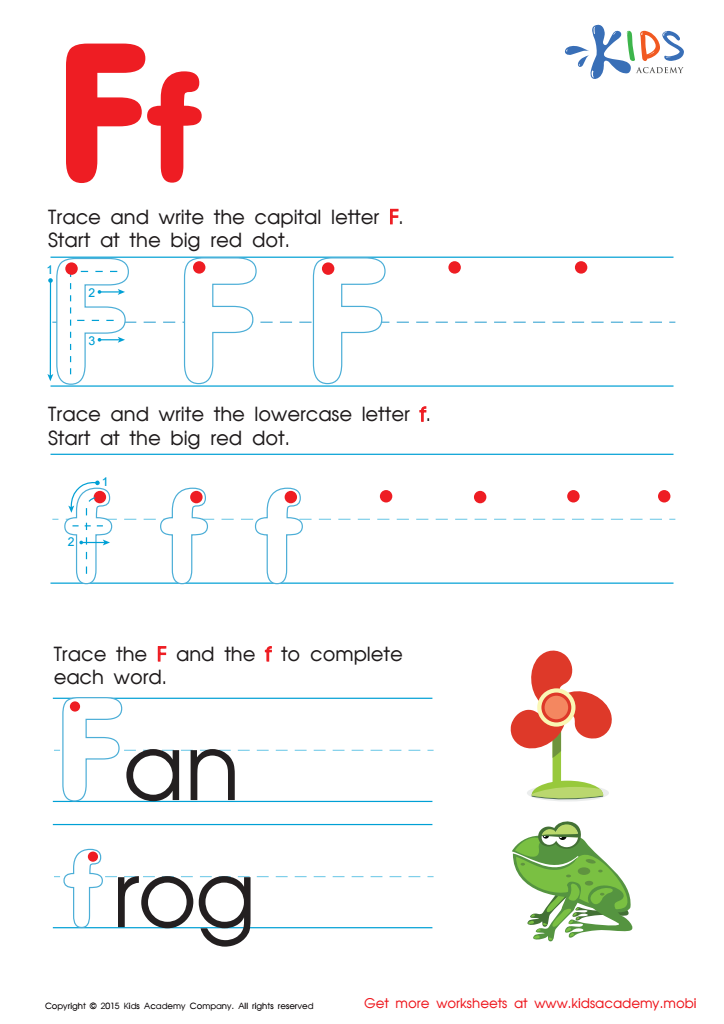
Letter F Tracing Page
Trace "F" with your pencil! Start at the red dot and draw lines — it's fun! Check it out — it looks great! Keep practicing to make it even better. Then, try completing words. Help out the broken fan and funny frog! Get free alphabet worksheets and activities for your kids. Come see our new tracing pages!
Letter F Tracing Page
Worksheet
Join Kids Academy for Free
Who is primarily going to use this learning content?








Alphabet learning and normal letter recognition are crucial cognitive milestones for children aged 3-9. At this early stage, children develop the foundational skills necessary for literacy, which have lasting impacts on their academic success and overall communication abilities. Recognizing letters is the first step towards reading and writing, enabling kids to decode words and construct sentences.
For parents and teachers, fostering letter recognition is vital for several reasons. First, it aids in vocabulary development, as children learn to identify letters and associate them with sounds, ultimately enriching their language skills. Second, early literacy lessons set a positive precedent for ongoing learning. Children who are confident in their alphabet knowledge are more likely to engage in reading activities, promoting a love for literature and lifelong learning.
Moreover, letter recognition plays a significant role in social skills. Children who are proficient in recognizing letters can easily participate in classroom activities, contributing to a positive self-esteem and peer interactions. By prioritizing alphabet learning, parents and educators can help nurture confident, curious, and capable learners who are well-prepared for future academic challenges. Investing in these foundational skills ensures that children are equipped for success in school and beyond.








