
Alphabet understanding Normal Letter Recognition Worksheets for Ages 3-9
5 filtered results
Difficulty Level
Grade
Age
-
From - To
Subject
Activity
Standards
Enhance your child's literacy skills with our Alphabet Understanding Normal Letter Recognition Worksheets, designed specifically for ages 3-9. These engaging, printable worksheets provide a fun and interactive way for young learners to identify and recognize letters. Through colorful activities, children will enhance their phonemic awareness and build a strong foundation for reading. Each worksheet focuses on normal letter recognition, making learning enjoyable and effective. Perfect for parents and educators alike, these resources support early childhood development and encourage a love for learning. Foster your child's confidence in reading and writing today with our comprehensive collection of letter recognition worksheets!
Favorites
With answer key
Interactive
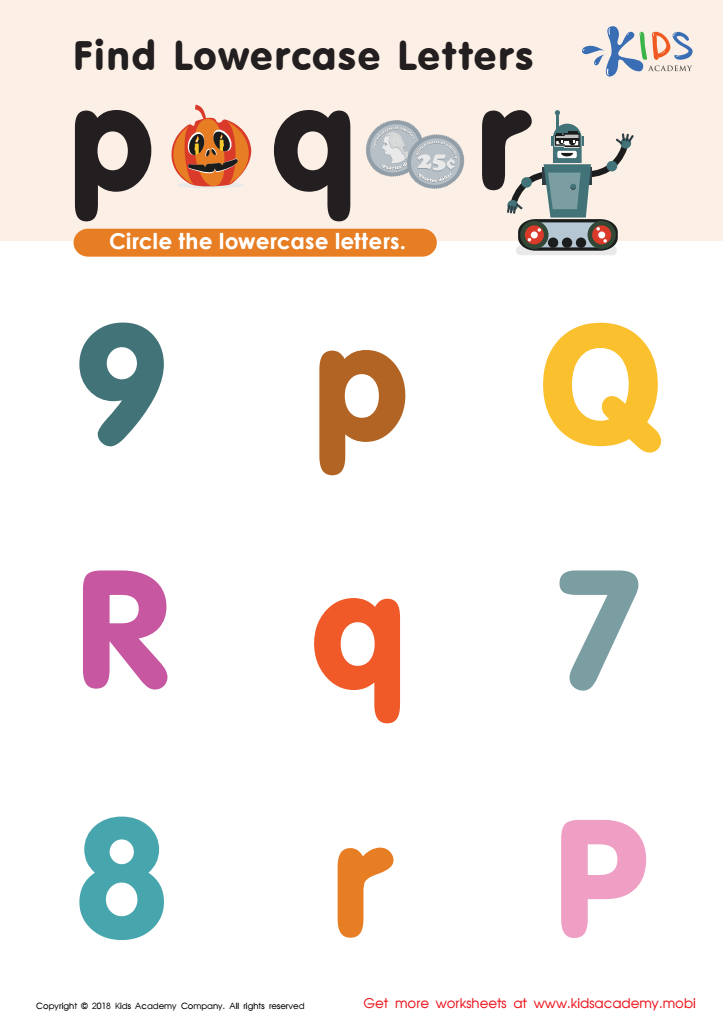
Find lowercase Letters p q r Worksheet
Help your child spot the lowercase letters among the numbers and uppercase letters in this worksheet. It's a great way to teach them to identify and write the lowercase and uppercase letters. Assist them in completing the exercise to give them a better understanding of the alphabets.
 Assign to My Students
Find lowercase Letters p q r Worksheet
Worksheet
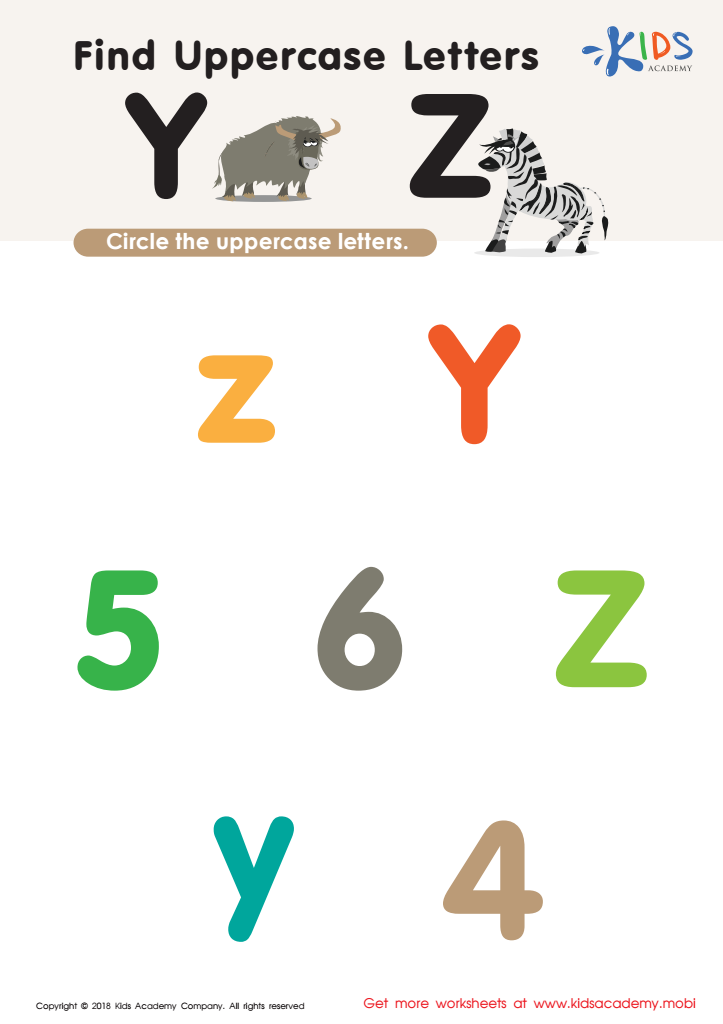
Find Uppercase Letters Y Z Worksheet
Download the worksheet! Help your youngster to learn the alphabet and distinguish uppercase from lowercase letters by having them circle the uppercase ones. It's an important first step towards reading and writing success!
Find Uppercase Letters Y Z Worksheet
Worksheet
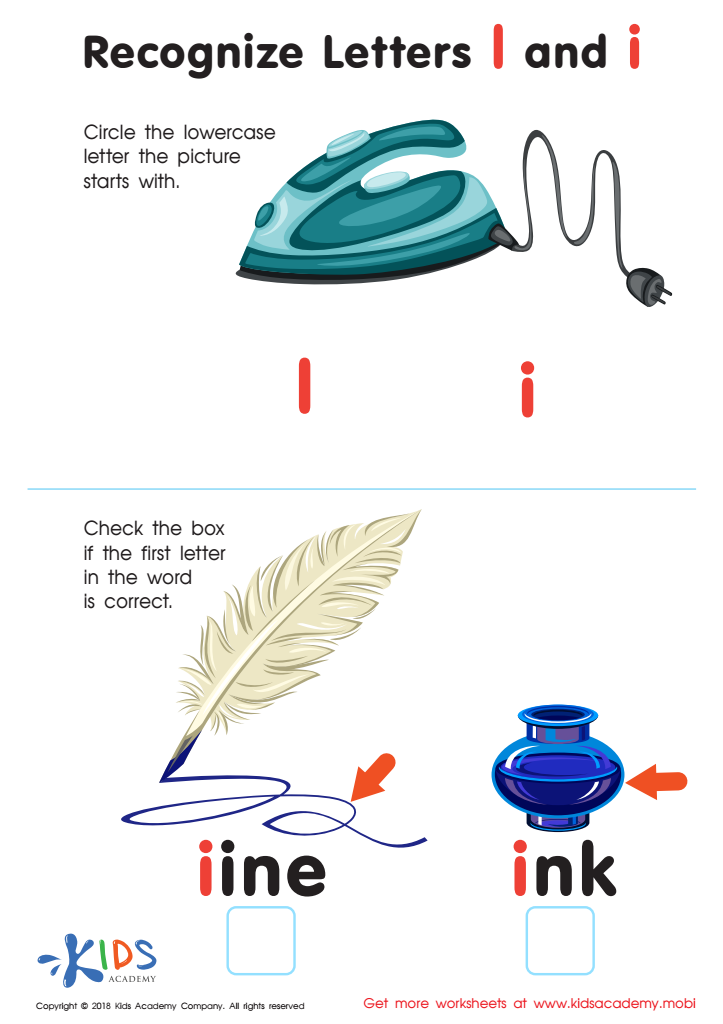
Recognize Letters l and i Worksheet
Help your child become familiar with uppercase and lowercase letters. Have them look at the pictures in the worksheet and circle the lowercase letter the picture starts with. For example: which one is the lowercase "i", the capital "I" or the small "i"?
Recognize Letters l and i Worksheet
Worksheet
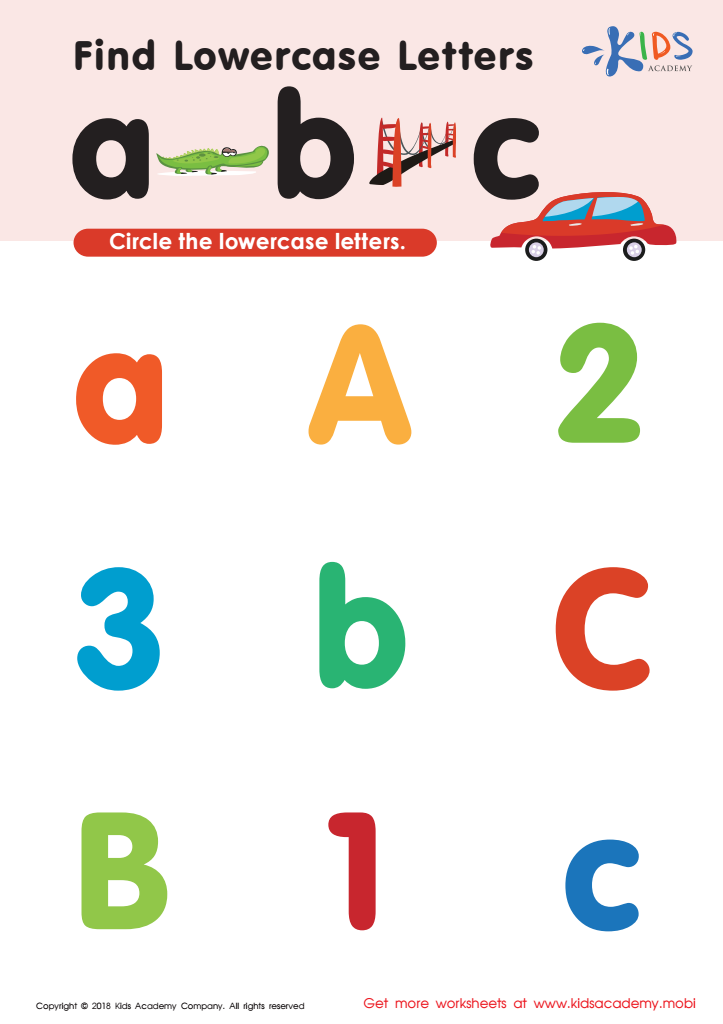
Find lowercase letters a b c Worksheet
Help your child identify lowercase letters with this worksheet. Carefully look at each letter and have your child circle the lowercase ones. This exercise is vital in helping them understand the alphabet and the difference between lower and uppercase letters.
Find lowercase letters a b c Worksheet
Worksheet
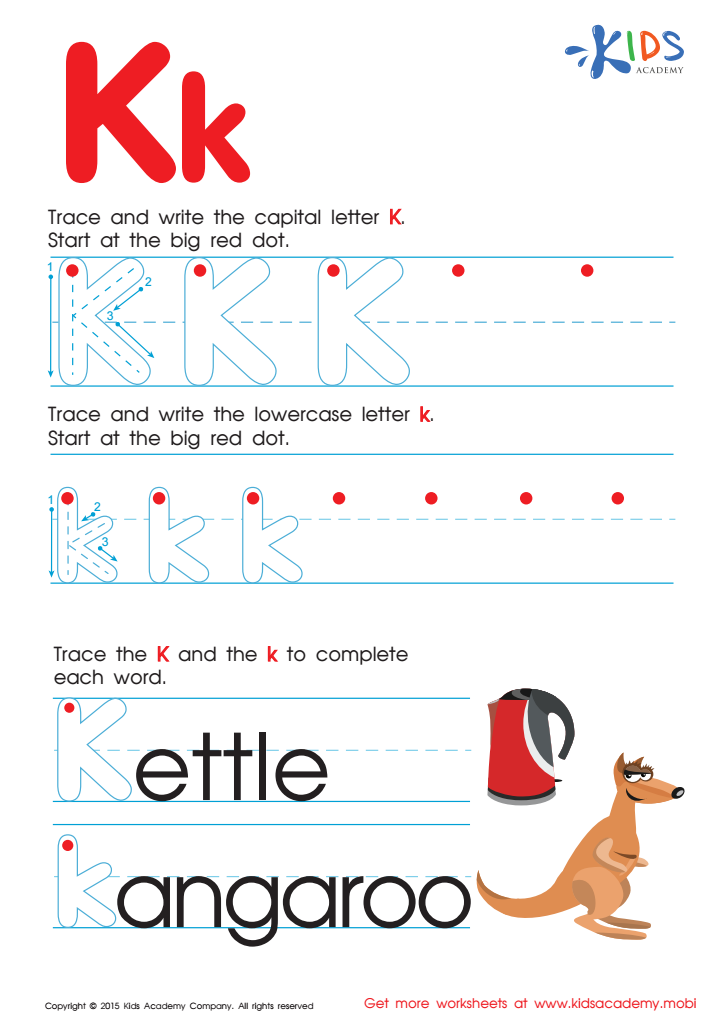
Letter K Tracing Page
Trace and write the letter K; start at the big red dot. Use it to complete words like "Kettle" and "Kangaroo". Visit Kids Academy for more free alphabet worksheets for kindergarten.
Letter K Tracing Page
Worksheet
Join Kids Academy for Free
Who is primarily going to use this learning content?








Understanding letter recognition is fundamental for children aged 3-9 as it lays the groundwork for literacy development. During this early stage, children encounter various letters and sounds that form the basis of reading and writing. Parents and teachers play a pivotal role in nurturing this skill, as strong letter recognition can significantly enhance a child’s reading fluency and comprehension.
Parents should care because their active involvement in teaching letters boosts children's confidence and fosters a positive attitude toward learning. Simple activities, like reading alphabet books or playing letter games, can be fun and engaging, making the learning experience enjoyable. Recognizing letters also aids in building vocabulary, promoting communication skills essential for social interactions and academic success.
Teachers, on the other hand, can integrate letter recognition into daily lessons, offering structured support that helps children understand the relationship between letters and sounds. This understanding is crucial for phonemic awareness, a critical predictor of future reading success.
In essence, prioritizing alphabetic understanding cultivates essential literacy skills, ensuring that children develop the competencies necessary for academic achievement and lifelong learning, ultimately empowering them as confident readers and communicators.








