Fine motor skills development Normal Letter Recognition Worksheets for Ages 3-9
3 filtered results
-
From - To
Enhance your child’s fine motor skills and letter recognition with our engaging worksheets tailored for ages 3-9! Designed to make learning fun, these worksheets offer interactive activities that promote hand-eye coordination and dexterity while familiarizing young learners with the alphabet. From tracing letters to coloring fun images, each activity is structured to boost confidence and foster a love for learning. Perfect for home or classroom use, our resources support early literacy development essential for your child's educational journey. Explore our collection and watch your little ones thrive as they gain essential skills in a playful and creative way!
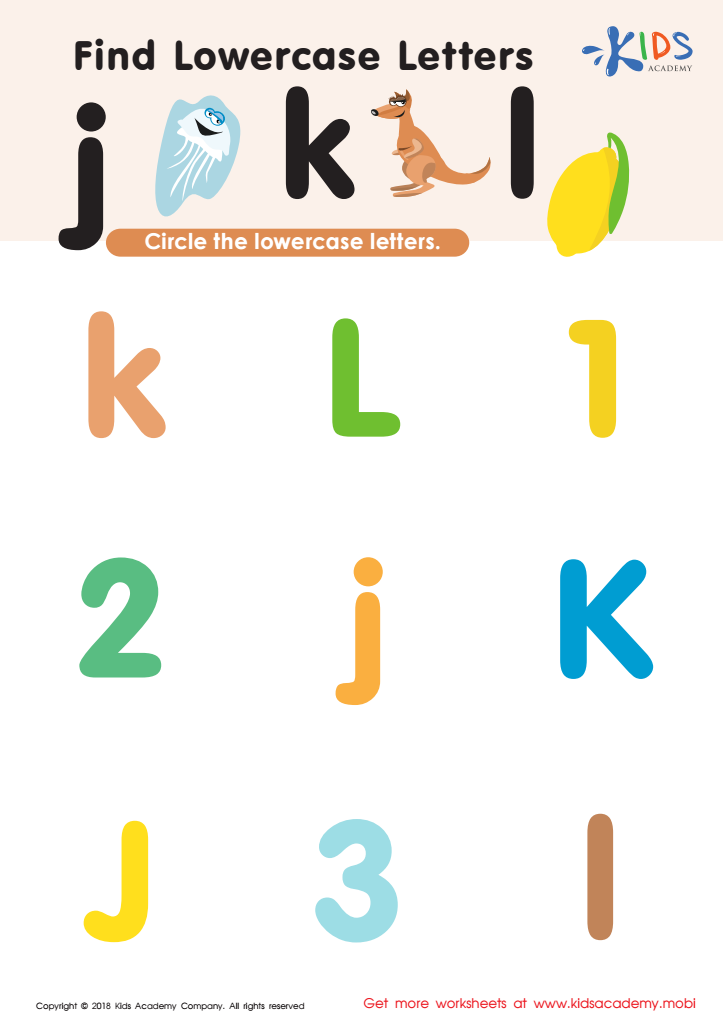
Find Lowercase Letters j k l Worksheet
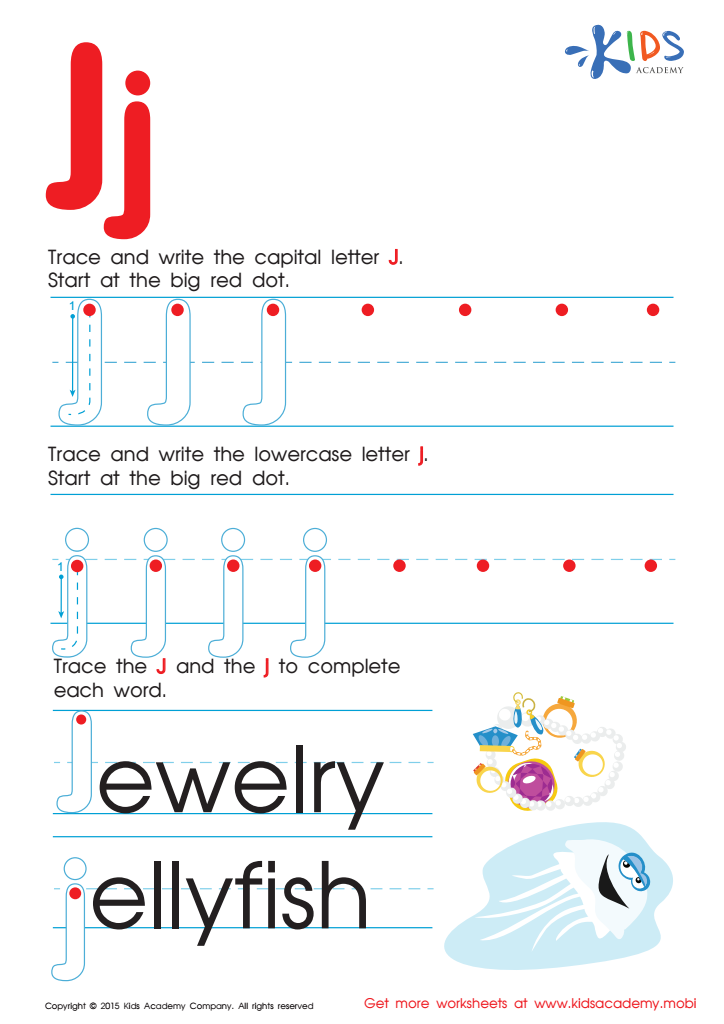
Letter J Tracing Page
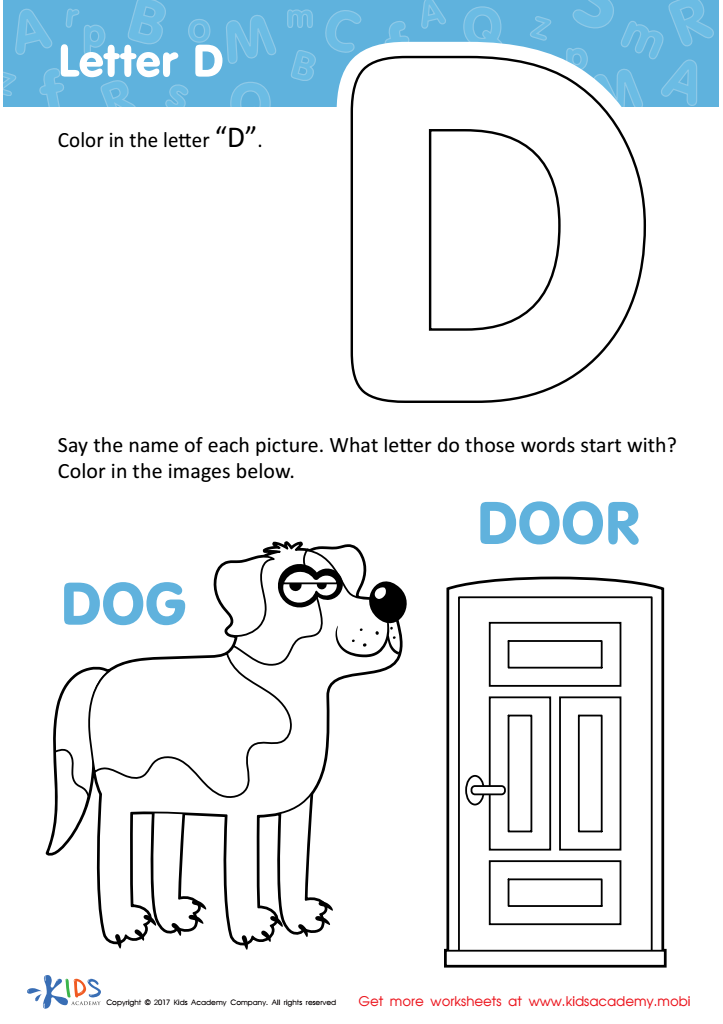
Letter D Coloring Sheet
 Assign to My Students








Fine motor skills development and normal letter recognition are crucial for children aged 3-9, impacting their academic success and daily functioning. Fine motor skills involve the small muscles in the hands and fingers, enabling tasks such as holding a pencil, buttoning clothes, and cutting with scissors. As children practice these skills, they enhance their hand-eye coordination and dexterity, essential for writing and drawing.
Early letter recognition, the ability to identify and name letters, is foundational for literacy development. Recognizing letters helps children understand phonics, spelling, and ultimately reading fluency. When children grasp letter shapes and sounds, they gain confidence in their communication skills, which can foster a love of learning.
By focusing on these areas, parents and teachers can support children's cognitive, emotional, and social development. Engaging activities—like arts and crafts, puzzles, and reading—can strengthen fine motor skills and reinforce letter recognition. This, in turn, prepares children for school, promotes self-esteem, and helps them interact effectively with peers and educators. Overall, prioritizing fine motor skills and letter recognition lays the groundwork for lifelong learning, ensuring that children are well-equipped to face future academic challenges with confidence.








