
Letter tracing skills Normal Letter Recognition Worksheets for Ages 3-9
3 filtered results
Difficulty Level
Grade
Age
-
From - To
Subject
Activity
Standards
Enhance your child's literacy journey with our Letter Tracing Skills Normal Letter Recognition Worksheets, designed specifically for ages 3-9. These engaging worksheets provide a fun and interactive way for young learners to practice recognizing and writing letters. Each worksheet features clear, traceable letters that facilitate skill building in coordination and letter formation. Ideal for preschoolers and early grade school children, our materials reinforce essential pre-writing skills while promoting confidence in literacy. Perfect for both classroom and home use, these worksheets encourage exploration and foster a love for learning. Download now to support your child's exciting educational adventure!
Favorites
With answer key
Interactive
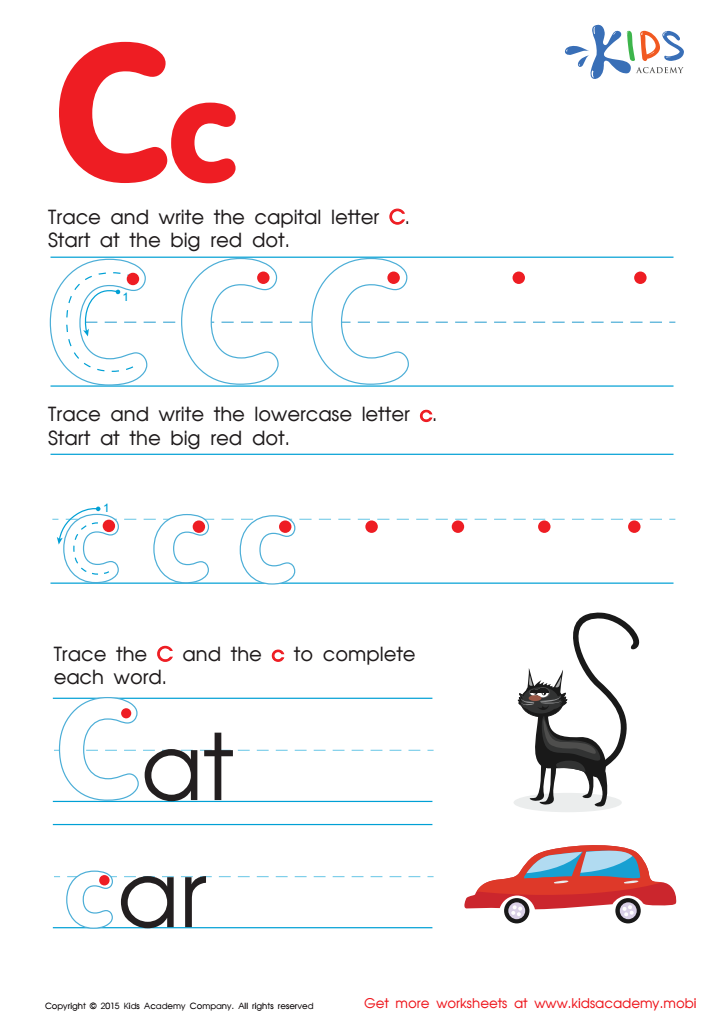
Letter C Tracing Page
Trace and write the letter 'C'! Put the pencil at the red dot then follow the lines – the capital letter first then the lowercase one. Cats love it and so will you! Get more free printables to practice tracing and writing.
Letter C Tracing Page
Worksheet
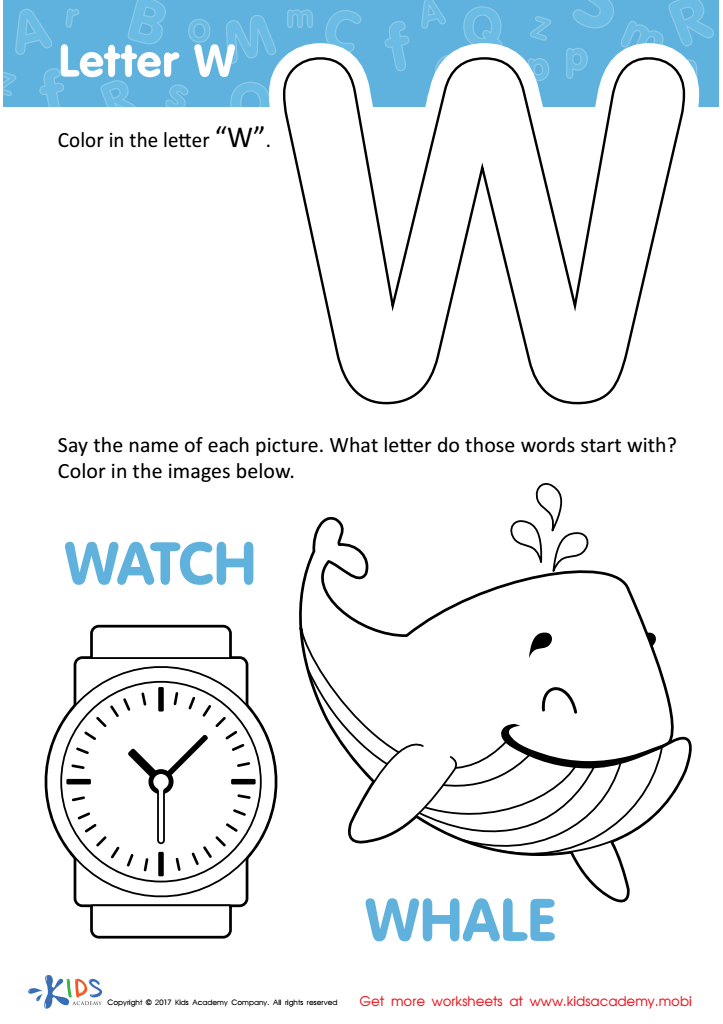
Letter W Coloring Sheet
Let your child have fun with this letter "W" coloring page! They can use their imagination to color the whale and discover the letter and its sound. Give them a helping hand to make it a whale of a time!
Download (PDF)
 Assign to My Students
Assign to My Students
Letter W Coloring Sheet
Worksheet
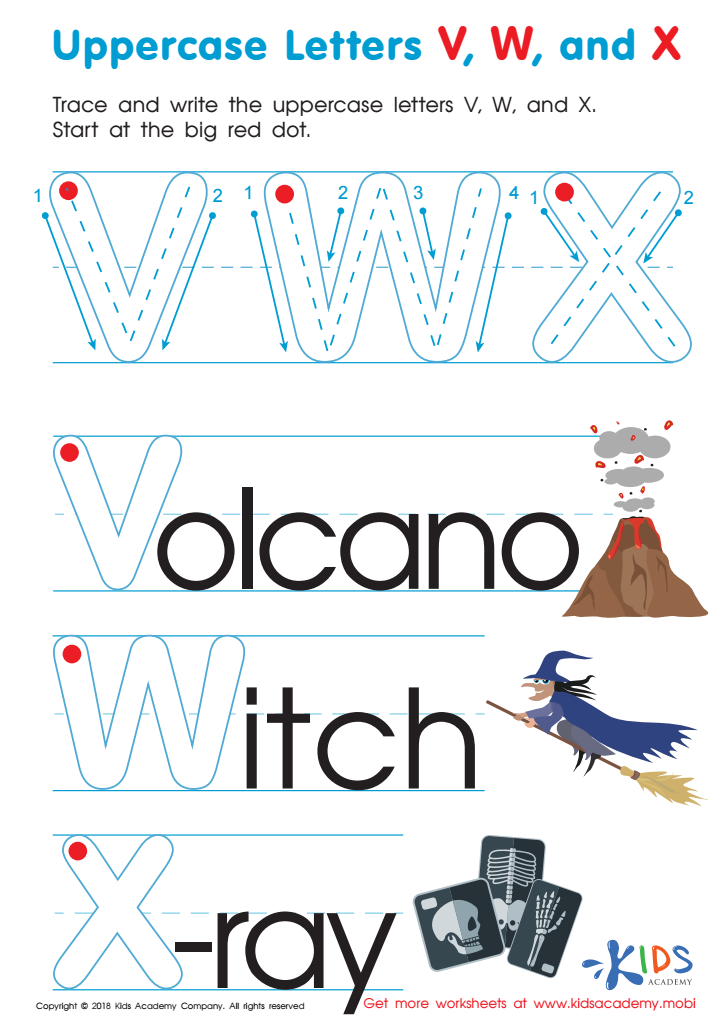
Uppercase Letters V, W, and X Worksheet
This worksheet is perfect for kids struggling to write uppercase letters V, W, and X. Warm up their brains first by having them name words starting with these letters. Then, help them trace and write each letter from the big red dot. With your assistance, they will quickly sharpen their writing skills.
Uppercase Letters V, W, and X Worksheet
Worksheet
Join Kids Academy for Free
Who is primarily going to use this learning content?








Letter tracing and letter recognition are fundamental skills critical in the early development of language and literacy for children aged 3-9. Firstly, these skills form the building blocks for reading and writing. When children trace letters, they enhance their fine motor skills, which are essential for tasks such as holding a pencil and forming letters correctly. Tracing helps them to visualize and understand the shapes of letters, promoting successful recognition.
Moreover, letter recognition equips children to decode and associate sounds with letters, a crucial process in learning to read. This recognition lays the groundwork for vocabulary development, comprehension, and communication skills. Engaging with letters through fun, hands-on activities makes learning enjoyable and memorable, fostering a positive attitude towards education.
Another essential aspect is that mastering these skills can boost a child’s confidence. As they successfully recognize and replicate letters, they feel a sense of achievement, motivating them to tackle more complex literacy activities. Parents and teachers should care because these early experiences significantly impact a child’s academic trajectory and can influence their lifelong skills in language and critical thinking. Fostering a solid foundation in letter tracing and recognition sets the stage for lifelong learning and success.








