Motor skills development Normal Letter Recognition Worksheets for Ages 3-9
3 filtered results
-
From - To
Enhance your child’s motor skills with our specially designed Normal Letter Recognition Worksheets for ages 3-9. Kids Academy's engaging and educational printables seamlessly blend letter recognition activities with motor skills development. Children will enjoy tracing, coloring, and identifying letters through fun exercises that improve hand-eye coordination and fine motor control. These carefully crafted worksheets cater to various learning styles, ensuring every child can excel at their own pace. Boost your child's confidence and foundational skills with resources that make learning both interactive and enjoyable. Explore our comprehensive collection to support your child's growth today.
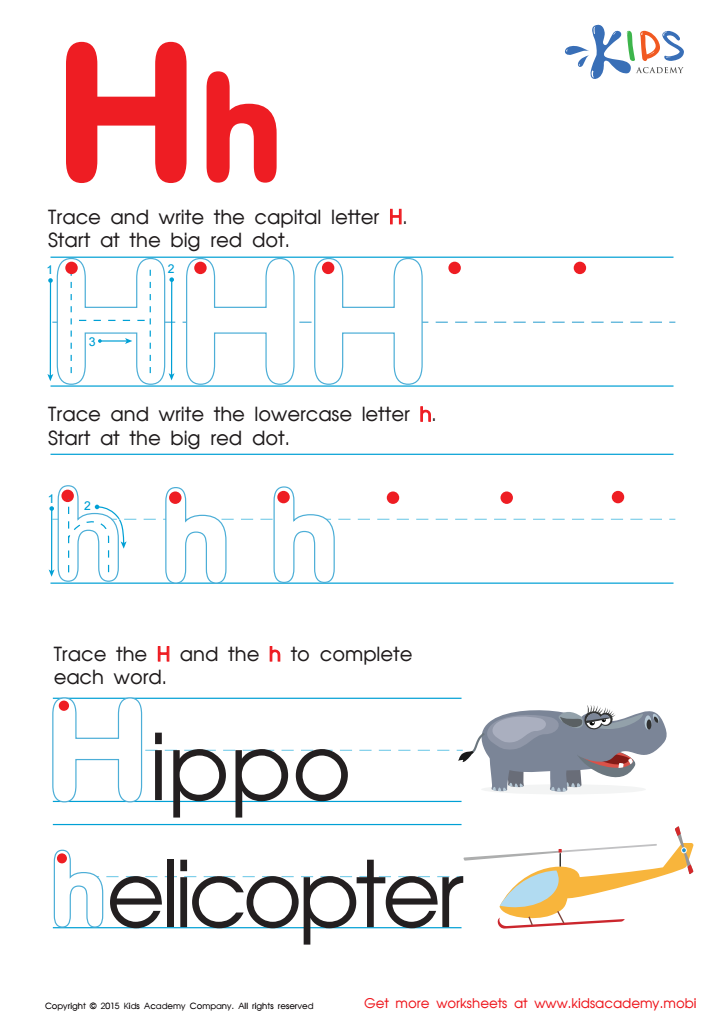
Letter H Tracing Page
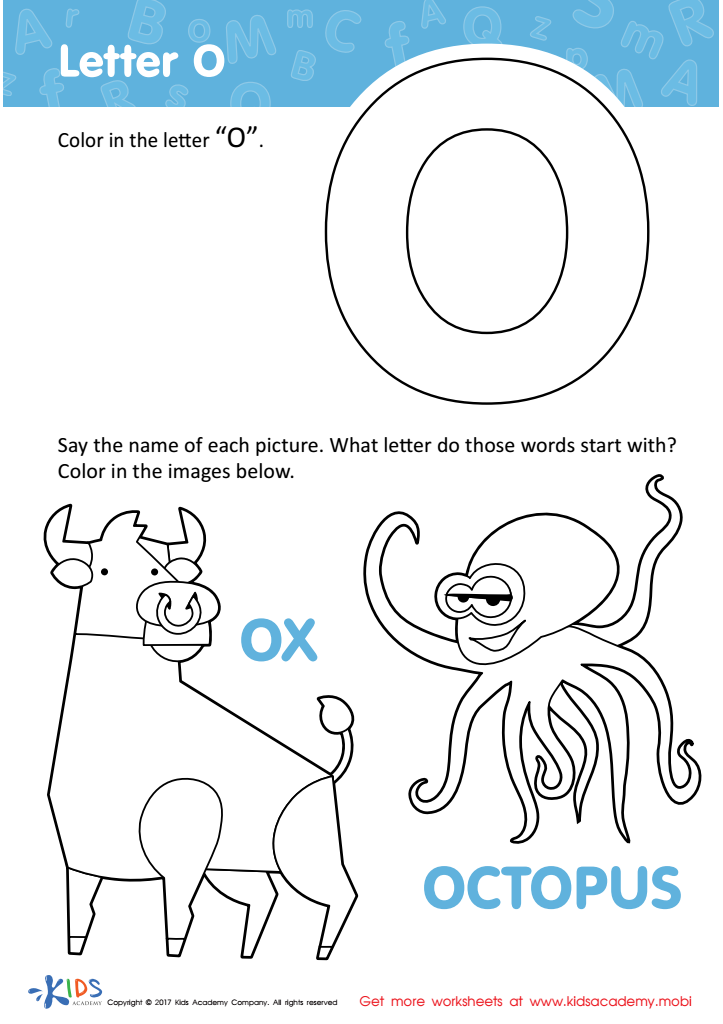
Letter O Coloring Sheet
 Assign to My Students
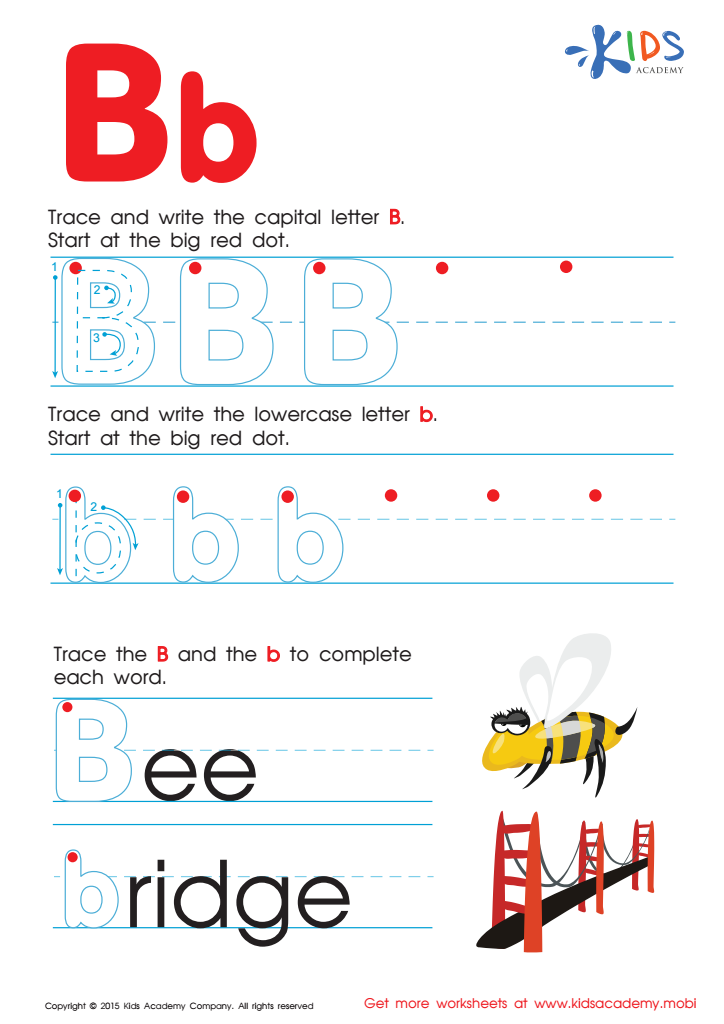
Letter B Tracing Page








Motor skills development and normal letter recognition for children ages 3-9 are crucial for academic and personal growth.
First, fine motor skills, which involve the coordination of small muscles in movements like writing, are foundational for literacy and learning. By honing these skills, children can more easily grasp pencils, control their hand movements, and form letters clearly, aiding in effective communication and expression.
Normal letter recognition is equally important as it serves as the building block for reading and writing. Recognizing letters accurately helps children decode words, making it possible for them to read sentences and comprehend stories. By ages 3-9, strong letter recognition sets the pathway for fluent reading, which is directly linked to academic achievement.
Moreover, the development of these skills fosters confidence and independence. Children who master motor and letter recognition skills feel more capable in classroom tasks, mitigating frustration and boosting self-esteem.
Early intervention is critical—parents and teachers should encourage activities like drawing, tracing, and playing with letter toys. Keeping an eye on these developments ensures any delays are addressed promptly, averting future learning difficulties.
In essence, attention to these developmental areas equips children for both educational success and everyday life tasks, laying a firm foundation for their overall growth.








