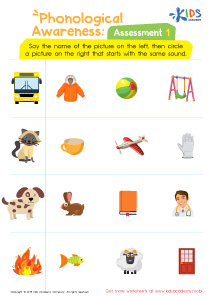
Vocabulary expansion Normal Rhyming Worksheets for Ages 3-9
3 filtered results
-
From - To
Explore our Vocabulary Expansion Normal Rhyming Worksheets designed specifically for children ages 3-9. These engaging worksheets help young learners enhance their vocabulary while having fun with the rhythm and sounds of words. By incorporating playful rhyming exercises, children develop phonemic awareness and improve their linguistic skills in an enjoyable way. Each worksheet features exciting themes and colorful illustrations to capture children’s attention and stimulate their creativity. Ideal for both classroom learning and at-home practice, our rhyming worksheets foster a love for language and boost confidence in early literacy skills. Start your child’s language journey today with our valuable resources!
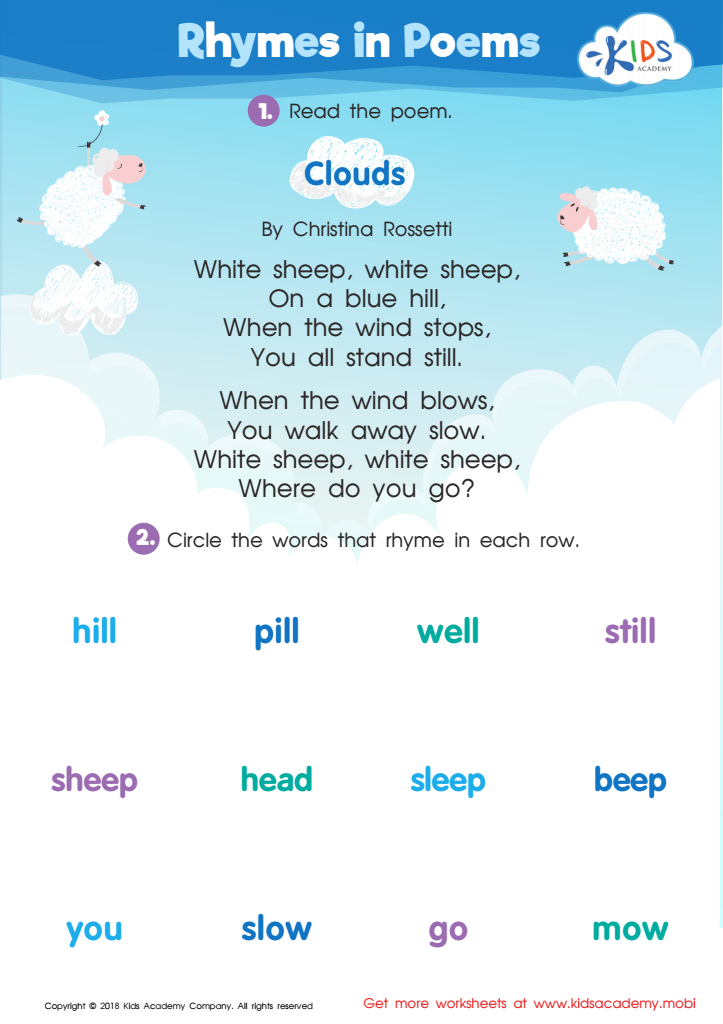
Rhymes in Poems Worksheet
 Assign to My Students
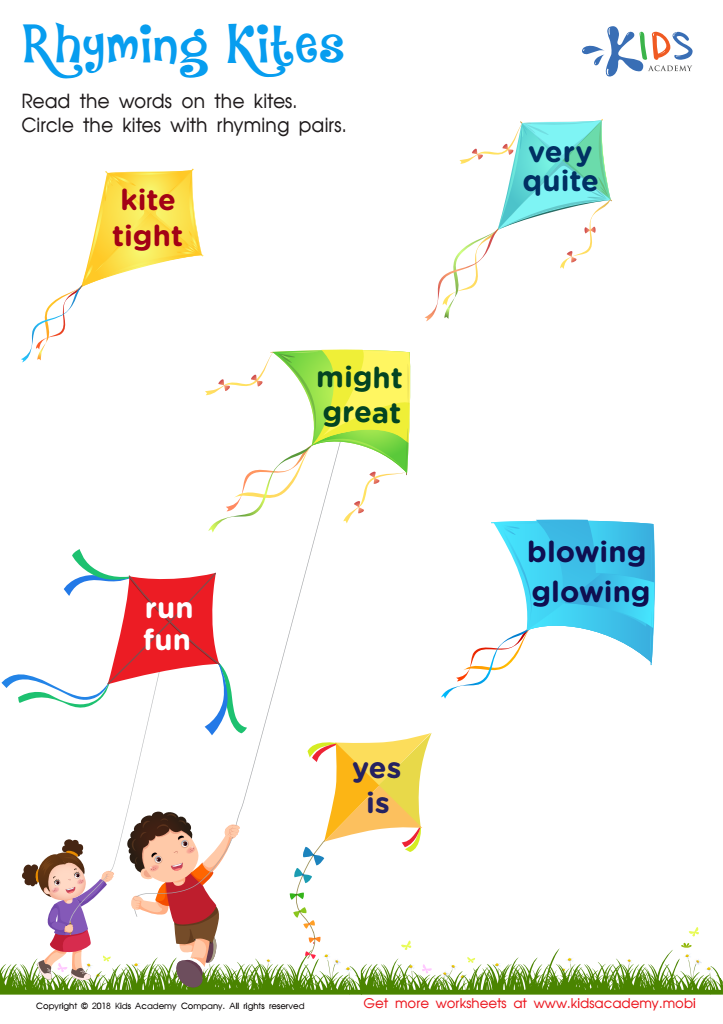
Rhyming Kites Worksheet
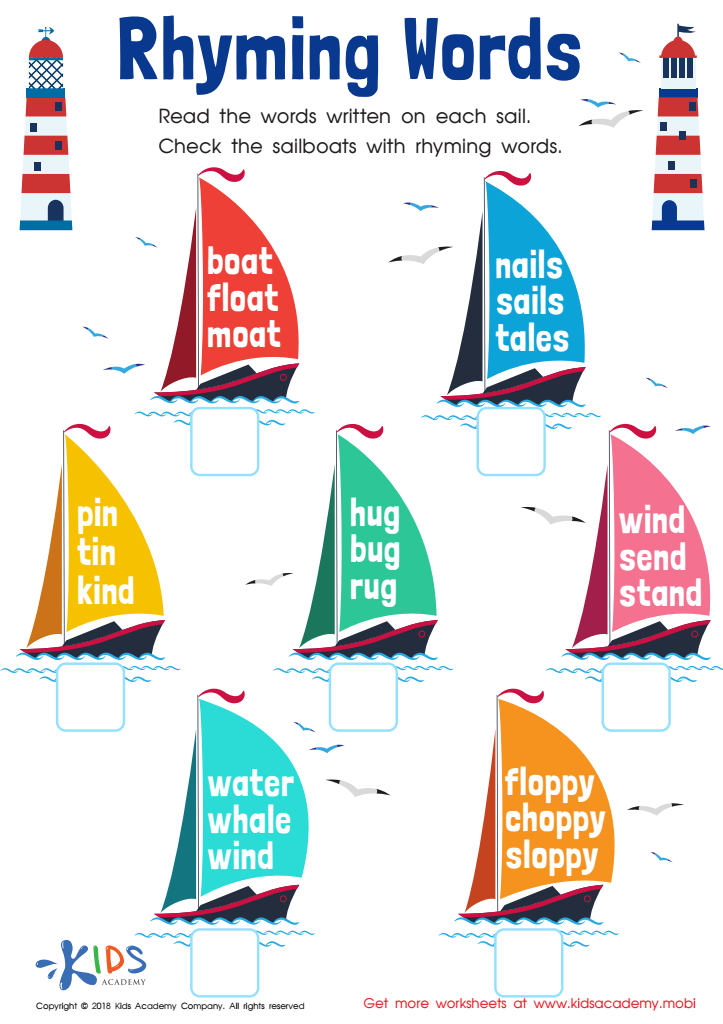
Rhyming Words Worksheet








Vocabulary expansion through normal rhyming plays a crucial role in early childhood development for children aged 3 to 9. For parents and teachers, engaging children with rhyming activities enhances phonemic awareness, which is foundational for reading and writing skills. When children identify and produce rhymes, they sharpen their auditory discrimination abilities, improving their capacity to recognize sounds and syllables in words.
Furthermore, rhyming helps to boost vocabulary acquisition. When children learn new rhyming words, they not only expand their word bank but also develop an understanding of language patterns. This understanding lays the groundwork for more complex linguistic skills as they advance in their education.
In addition to cognitive benefits, rhyming is an essential tool for social and emotional development. Choosing and creating rhymes can enhance creativity, encouraging children to express themselves. Rhyming games and activities can also promote collaboration and bonding between peers, fostering a sense of community in the classroom.
Ultimately, parents and teachers should prioritize vocabulary expansion through normal rhyming, as it provides invaluable skills for literacy, creativity, and social interaction in these formative years. Investing time in rhyming activities can yield lasting academic and personal benefits for children as they grow.