
Comprehension skills Normal Building Vocabulary Worksheets for Ages 3-9
3 filtered results
Difficulty Level
Grade
Age
-
From - To
Subject
Activity
Standards
Unlock your child's potential with our Comprehension Skills Normal Building Vocabulary Worksheets, designed specifically for ages 3-9. These engaging worksheets support young learners in enhancing their vocabulary and comprehension abilities through interactive reading exercises. Each activity is tailored to promote critical thinking and language skills, helping children decipher meanings, build connections, and boost their confidence in understanding text. Ideal for home or classroom use, our worksheets foster a love for reading while making learning enjoyable. Encourage your child's growth in literacy and comprehension with our thoughtfully crafted resources that set the foundation for academic success! Start exploring today!
Favorites
With answer key
Interactive
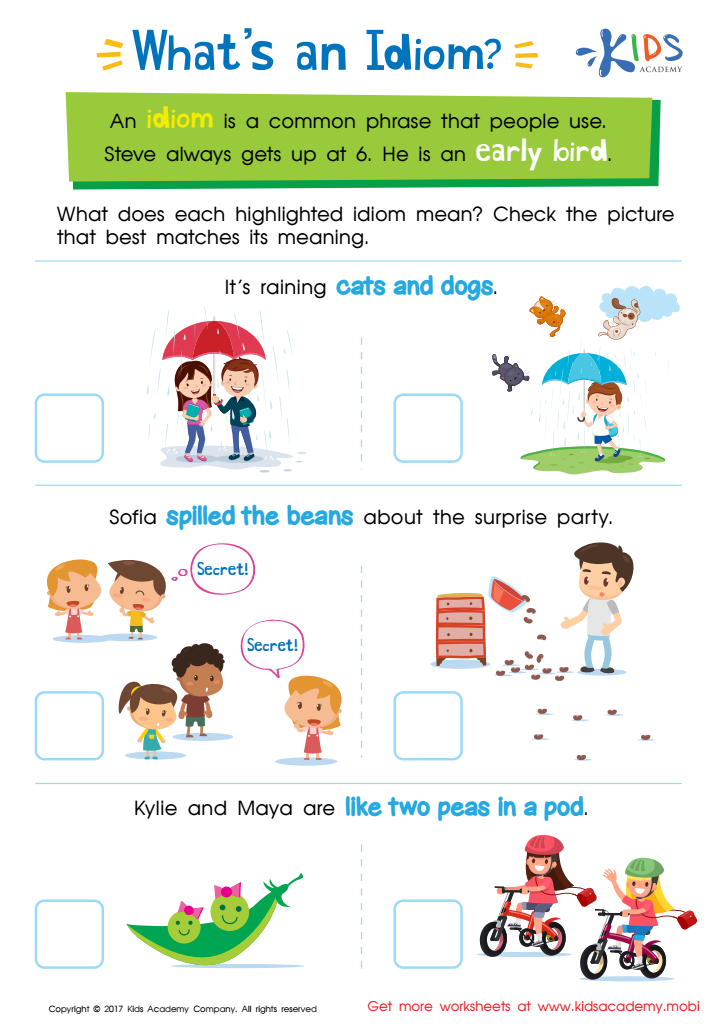
Idiom Worksheet
This idiom worksheet for 3rd grade is the answer.
Make learning idioms a breeze! Help your 3rd grader understand figurative language with a fun worksheet based on the common expressions they already know. Unlock the mystery behind these phrases and make learning fun!
 Assign to My Students
Idiom Worksheet
Worksheet











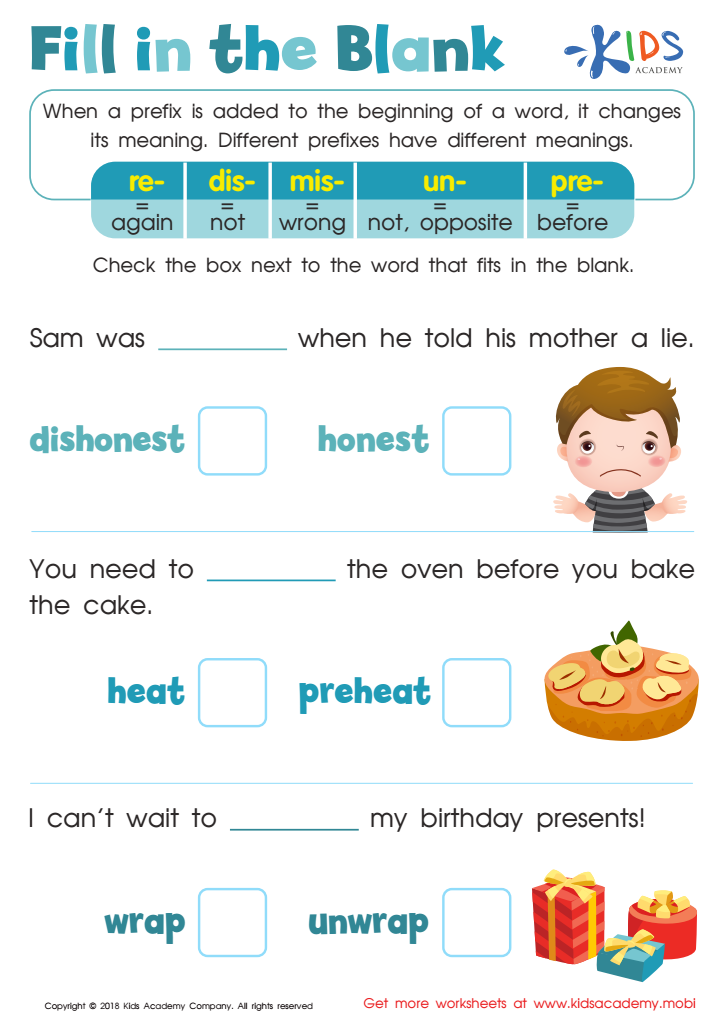
Reading: Fill in the Blank Worksheet
Students can practice understanding the meaning of common prefixes with this worksheet. They read sentences and pick the correct word with the appropriate prefix to complete it. Downloadable and a great addition to reading and vocabulary resources, this helps improve comprehension with mastery of the skill!
Reading: Fill in the Blank Worksheet
Worksheet
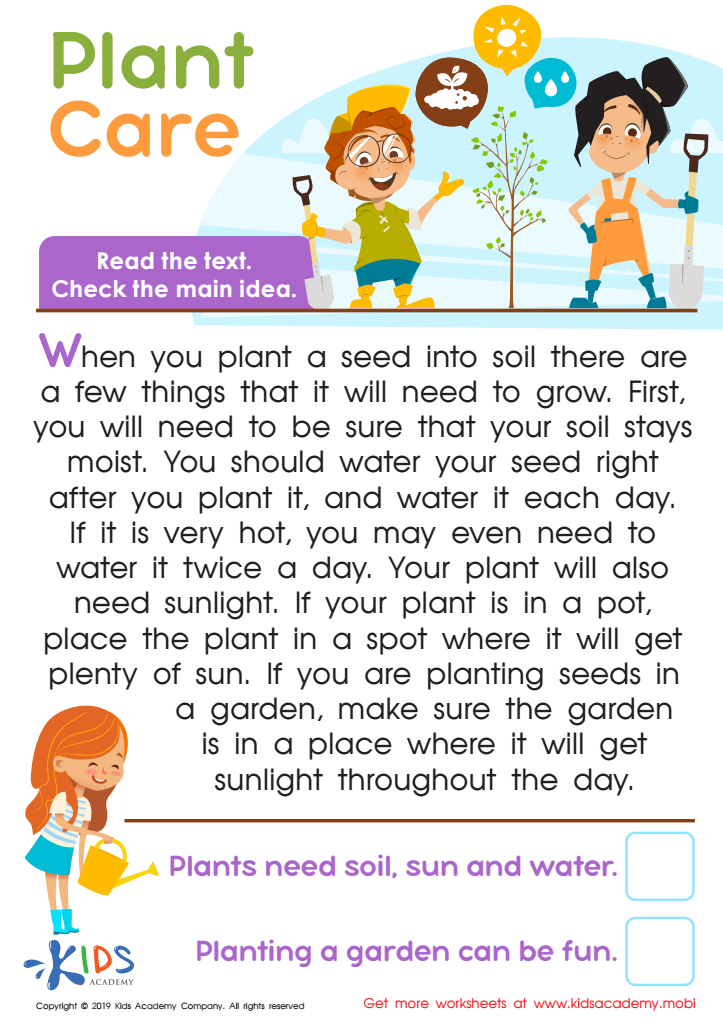
Plant Care Worksheet
Encourage your children to read by helping them practice. Print out the worksheet and read the text with them. Help them understand the words and find the main idea. This will improve their reading skills and prepare them for school.
Plant Care Worksheet
Worksheet
Join Kids Academy for Free
Who is primarily going to use this learning content?






.jpg)
Comprehension skills and vocabulary building are crucial for children ages 3-9, as they lay the foundation for future academic success and effective communication. Parents and teachers should prioritize these skills because they directly impact a child's ability to understand and engage with content across all subjects. Strong comprehension skills help children synthesize information, make connections, and develop critical thinking abilities. This not only enhances their performance in reading but also enriches their overall learning experience.
Vocabulary development acts as a gateway to comprehension. A rich vocabulary enhances a child's ability to express thoughts and emotions, making social interactions more meaningful. When children understand and use a diverse range of words, they become confident readers and communicators. Engaging with literature, storytelling, and vocabulary-rich activities fosters curiosity and a lifelong love of learning.
Moreover, early investment in these skills can help prevent future reading difficulties, supporting children as they transition into more complex texts and academic challenges. Overall, prioritizing comprehension and vocabulary skills equips children with the tools they need for success, confidence, and resilience in school and life. Encouraging these skills should be a shared responsibility among both parents and educators to ensure holistic development.








