Visual interpretation Normal Reading Worksheets for Ages 3-9
5 filtered results
-
From - To
Discover our engaging Visual Interpretation Normal Reading Worksheets for Ages 3-9 at Kids Academy! Our expertly designed worksheets stimulate your child’s cognitive skills and creativity while making learning enjoyable. They help develop reading comprehension, critical thinking, and visual interpretation, ensuring your child grasps essential skills effortlessly. Perfect for young learners, these worksheets combine vibrant visuals with age-appropriate reading exercises to maintain interest and aid understanding. Whether used in a classroom or at home, they support a solid educational foundation, fostering a love for reading and lifelong learning. Dive into fun and effective read-and-enrich activities to enhance your child's educational journey today!
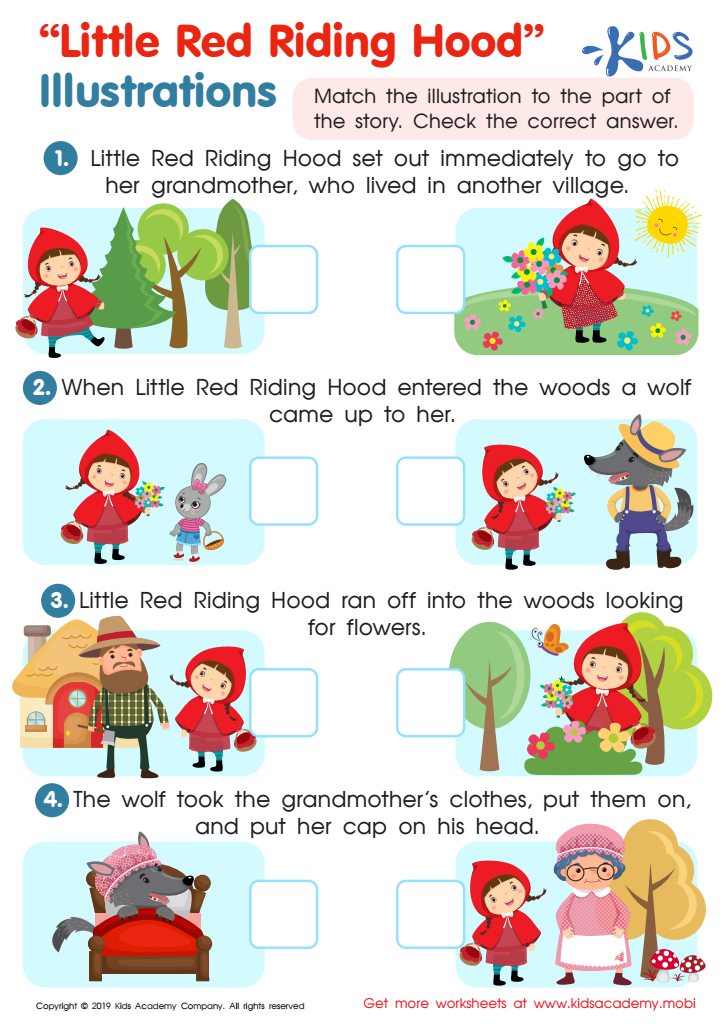
Little Red Riding Hood: Illustrations Worksheet
 Assign to My Students
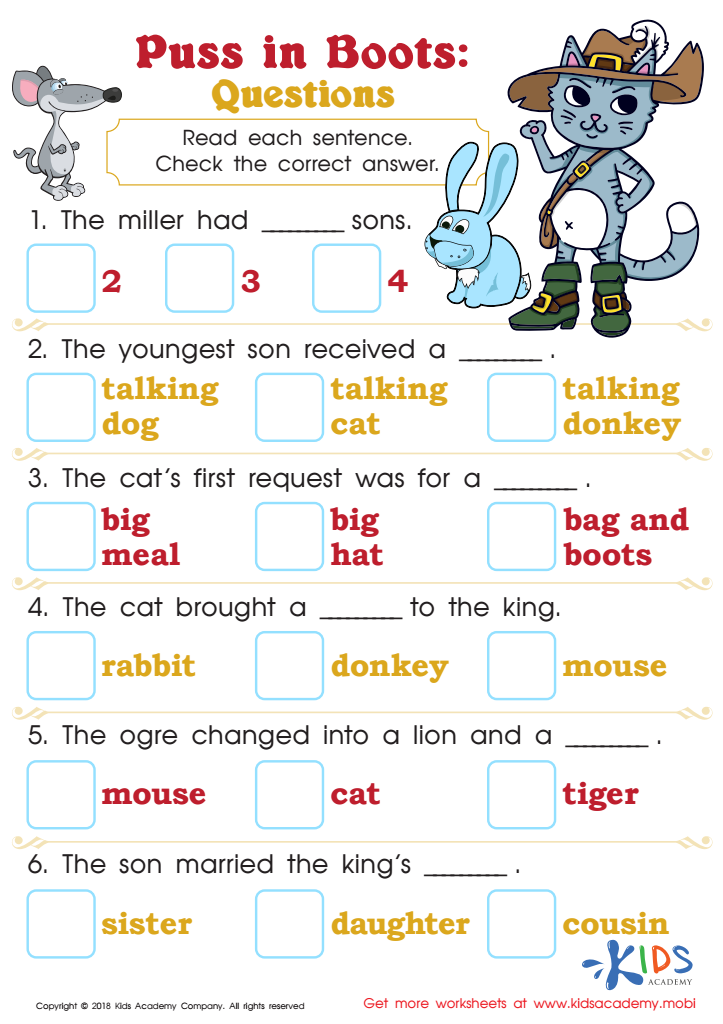
Puss in Boots: Questions Worksheet
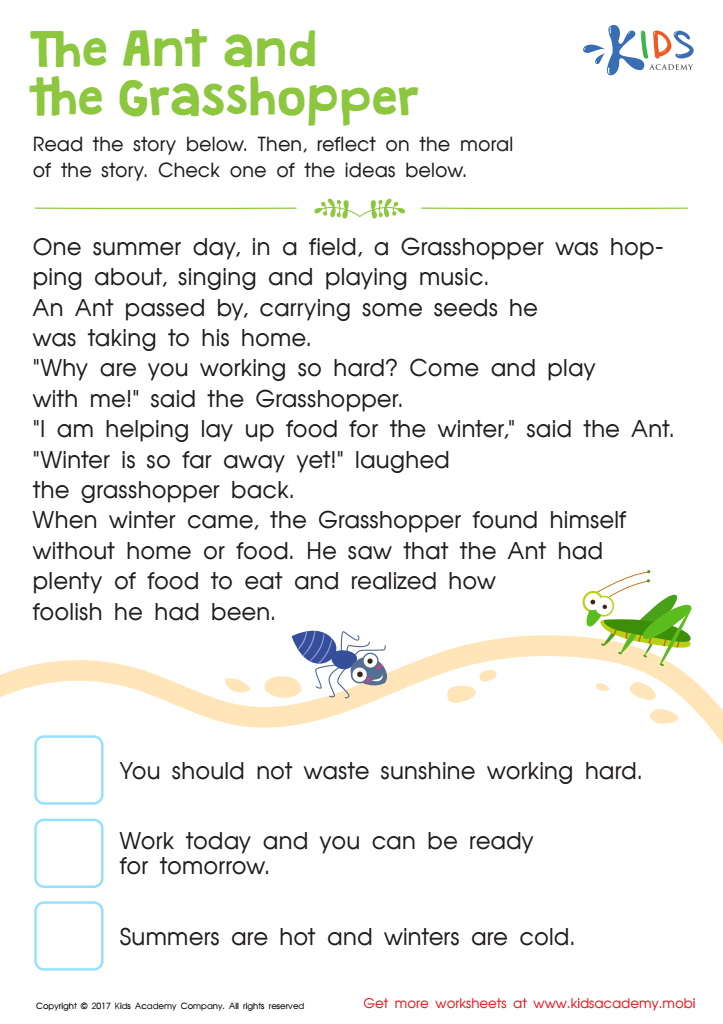
The Ant and The Grasshopper Printable
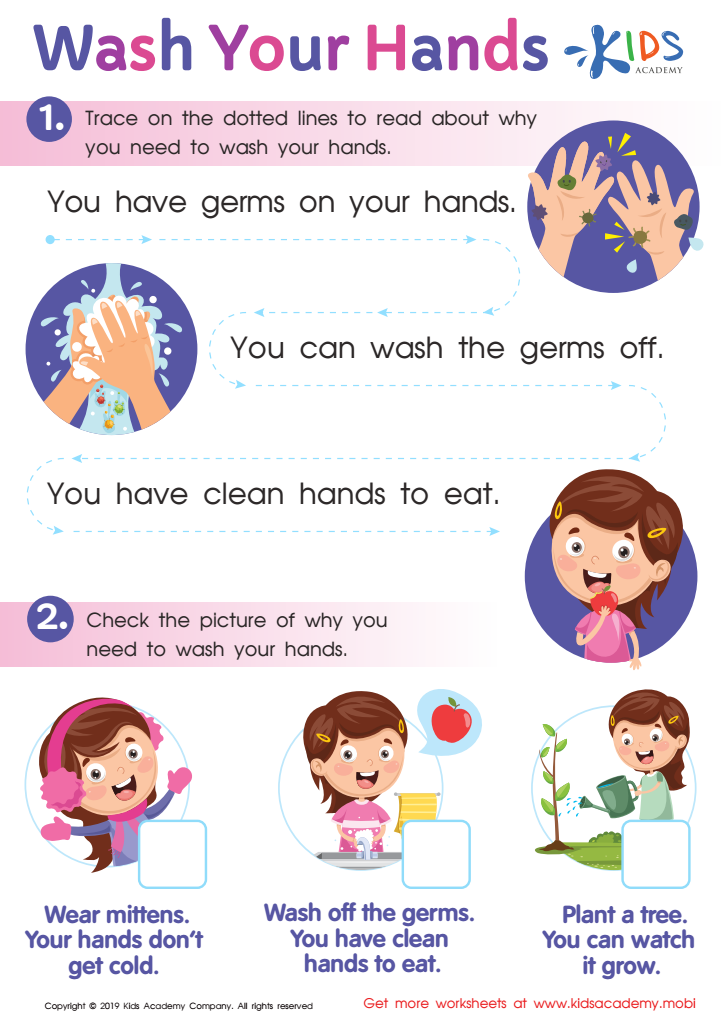
Wash Your Hands Worksheet
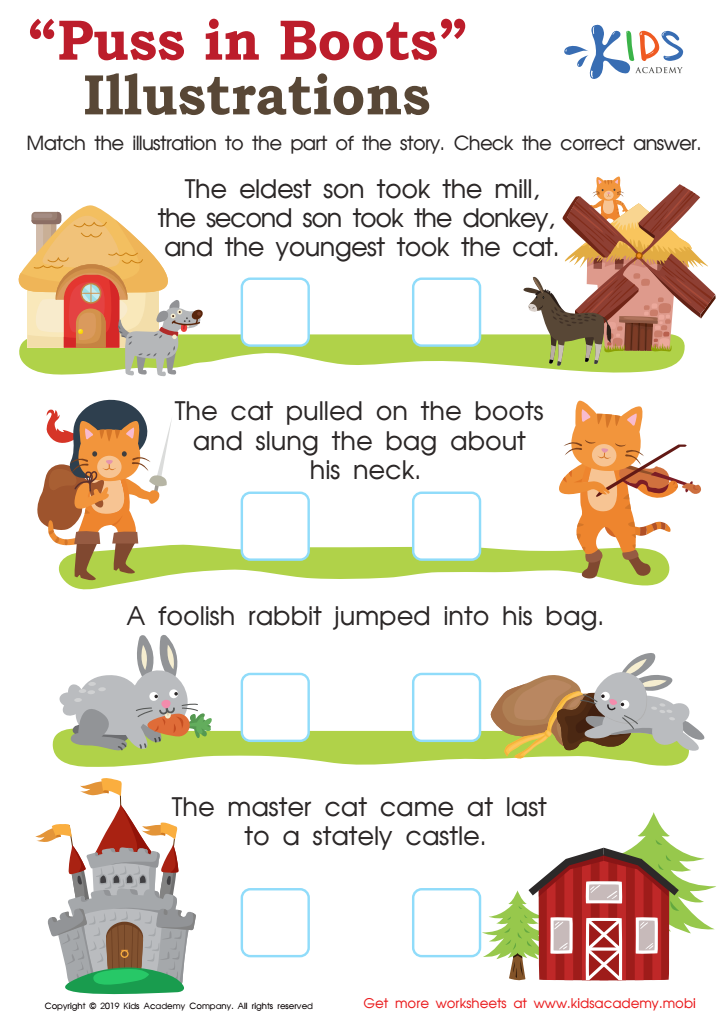
Puss in Boots Illustrations Worksheet







Visual interpretation and normal reading abilities in children aged 3-9 are crucial for their cognitive and academic development. During these formative years, children develop foundational skills for future learning, and parents and teachers play pivotal roles in nurturing these abilities. Visual interpretation involves understanding and making sense of what is seen, an important skill as much of early learning is visually stimulated through pictures, symbols, and written words. This skill enhances comprehension, critical thinking, and the ability to relate to their environment.
Normal reading proficiency, developed at this age, sets the ground for literacy, enabling children to read, comprehend, and interact with written texts. Achieving age-appropriate reading milestones supports academic success, as reading is integral across subjects.
Moreover, fostering visual and reading skills during early childhood helps identify and address learning difficulties such as dyslexia or vision problems early on, providing timely intervention. Through engaging visual and reading activities, children not only gain knowledge but also build confidence, curiosity, and a lifelong love for learning.
Parents and teachers should prioritize these skills, integrating visual aids, reading aloud, and hands-on learning experiences into daily routines, to support children’s holistic growth and future educational success.








