Detail identification Normal Reading Comprehension Worksheets for Ages 3-9
3 filtered results
-
From - To
Enhance your child's reading skills with our Detail Identification Normal Reading Comprehension Worksheets designed specifically for ages 3-9. These engaging, interactive worksheets focus on developing critical reading comprehension skills by helping young learners identify key details in stories and texts. Each worksheet features colorful illustrations and age-appropriate content that captivates children's attention while fostering a love of reading. Perfect for both classroom settings and home learning, our resources are aligned with educational standards and aim to boost confidence in young readers. Discover how these worksheets can transform reading practice into enjoyable learning experiences for your child today!
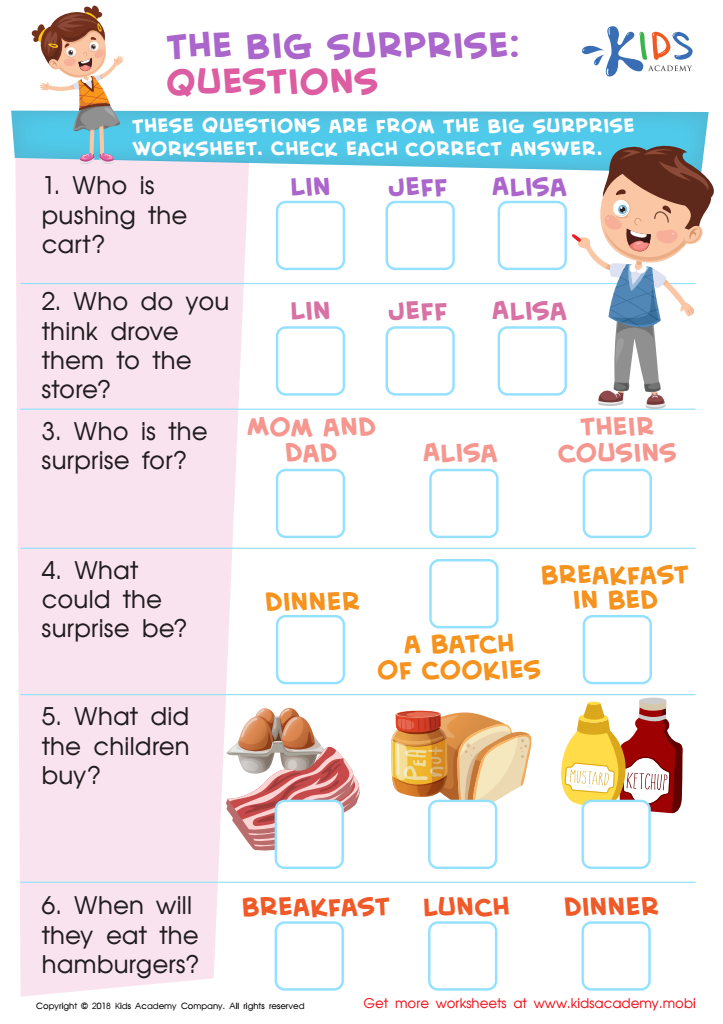
The Big Surprise: Questions Worksheet
 Assign to My Students
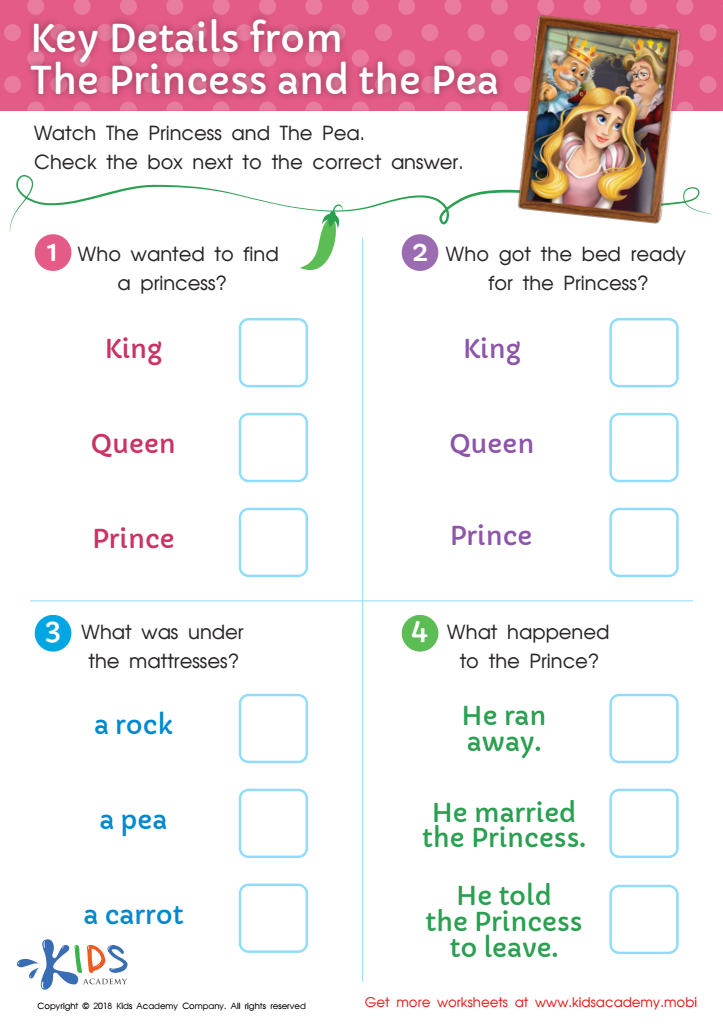
Key Details from the Princess and the Pea Worksheet
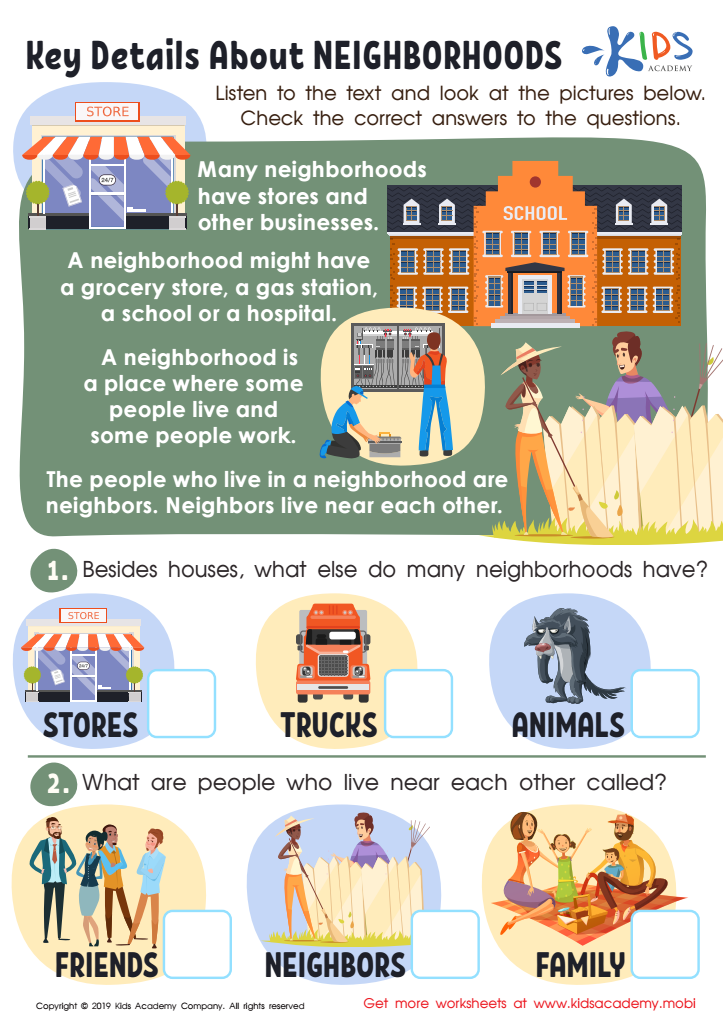
Key Details Neighborhoods Worksheet








Detail identification in reading comprehension is crucial for children aged 3-9 as it serves as a foundational skill that enhances overall literacy and critical thinking. During this developmental stage, children learn to recognize and understand the key elements of stories, including characters, settings, and events. By honing their ability to identify details, children improve their comprehension skills, allowing them to engage more actively with texts. This skill is not only essential for academic success but also fosters a lifelong love for reading.
For parents and teachers, attention to detail identification helps in assessing a child's understanding and retention of texts. It aids in initiating meaningful discussions about stories, promoting vocabulary expansion, and strengthening narrative skills. Furthermore, by focusing on detail identification, educators can tailor their teaching methods to suit individual learning styles, ensuring that all children grasp essential reading concepts.
Encouraging detail recognition also aligns with educational standards and assessment requirements, thereby preparing children for future academic challenges. Ultimately, a strong grasp of detail identification leads to increased confidence, better academic performance, and a greater appreciation for literature, making it an essential focus for both parents and teachers in nurturing young readers.








