
Enhancing observation skills Normal Physical Science Worksheets for Ages 3-9
3 filtered results
Difficulty Level
Grade
Age
-
From - To
Subject
Activity
Standards
Enhance your child's observation skills with our engaging Normal Physical Science Worksheets designed for ages 3-9. At Kids Academy, our expertly crafted worksheets encourage curiosity and critical thinking by blending fun activities with educational content. By focusing on core physical science principles, these worksheets help children develop keen observational abilities, enhance their scientific understanding, and foster a love for learning. Perfect for early learners, our activities include interactive experiments, and more structured activities to ensure continuous engagement and skill-building. Give your child the tools they need to excel in science through hands-on exploration and observation!
Favorites
With answer key
Interactive
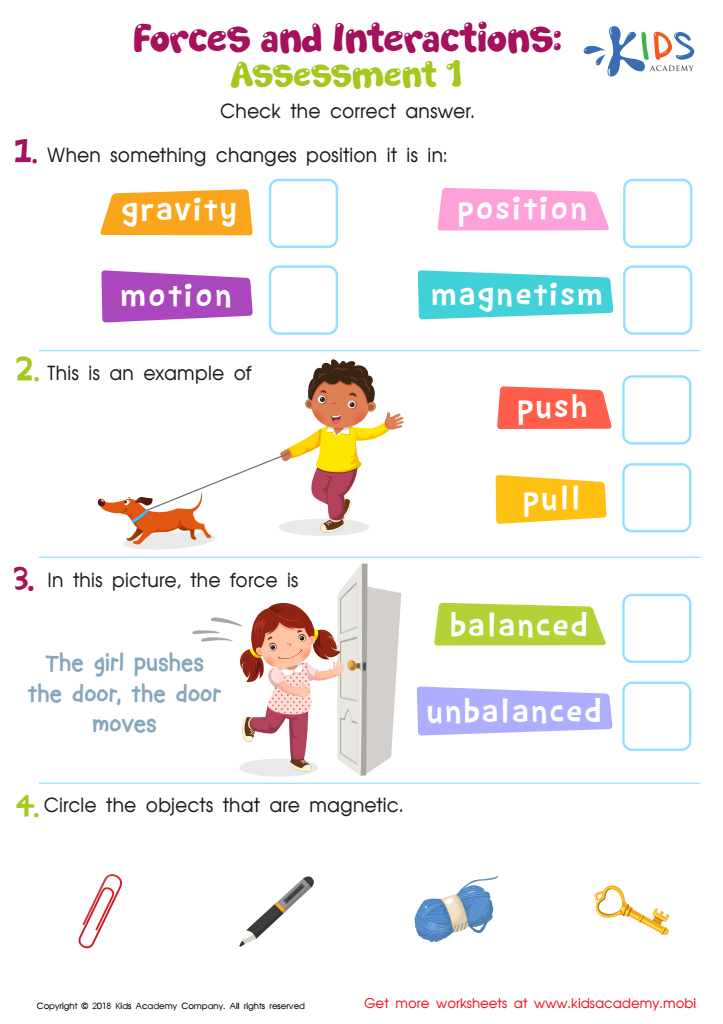
Forces and Interactions Printable
Test your child's physics know-how with this vibrant forces and interactions printable worksheet! Kids can assess their understanding of the different types of forces while they complete it. Read each example and check the boxes to show what they know!
 Assign to My Students
Forces and Interactions Printable
Worksheet
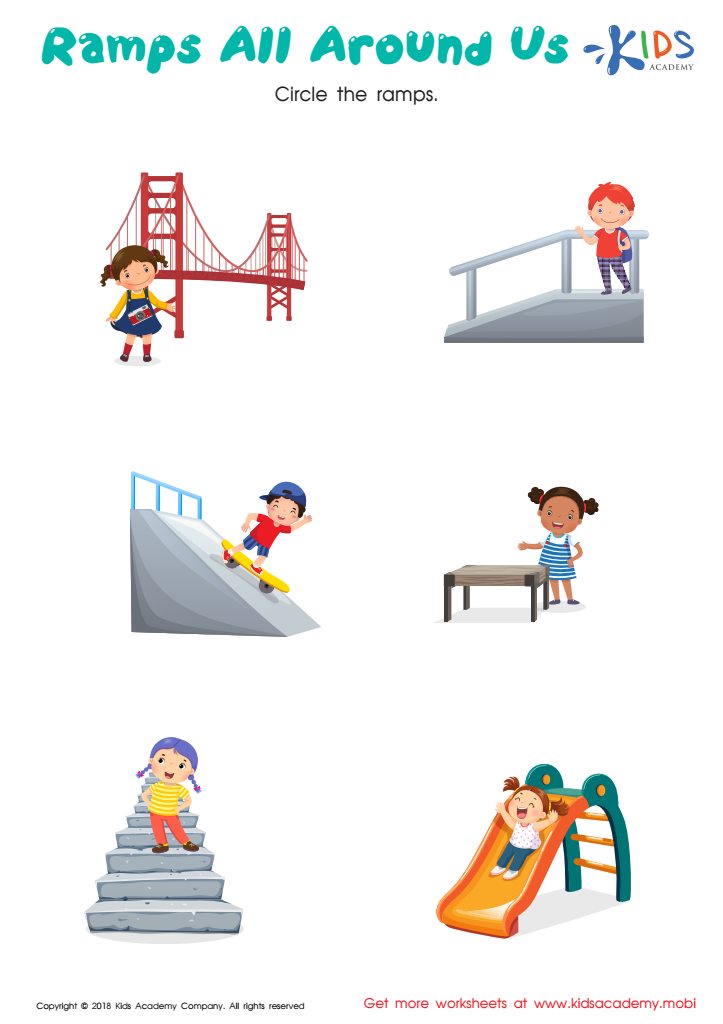
Ramps All Around us Worksheet
Ask your kids if they know what ramps are, then have them give you examples of places they've seen them. This worksheet has pictures of ramps - have your child identify and circle them.
Ramps All Around us Worksheet
Worksheet
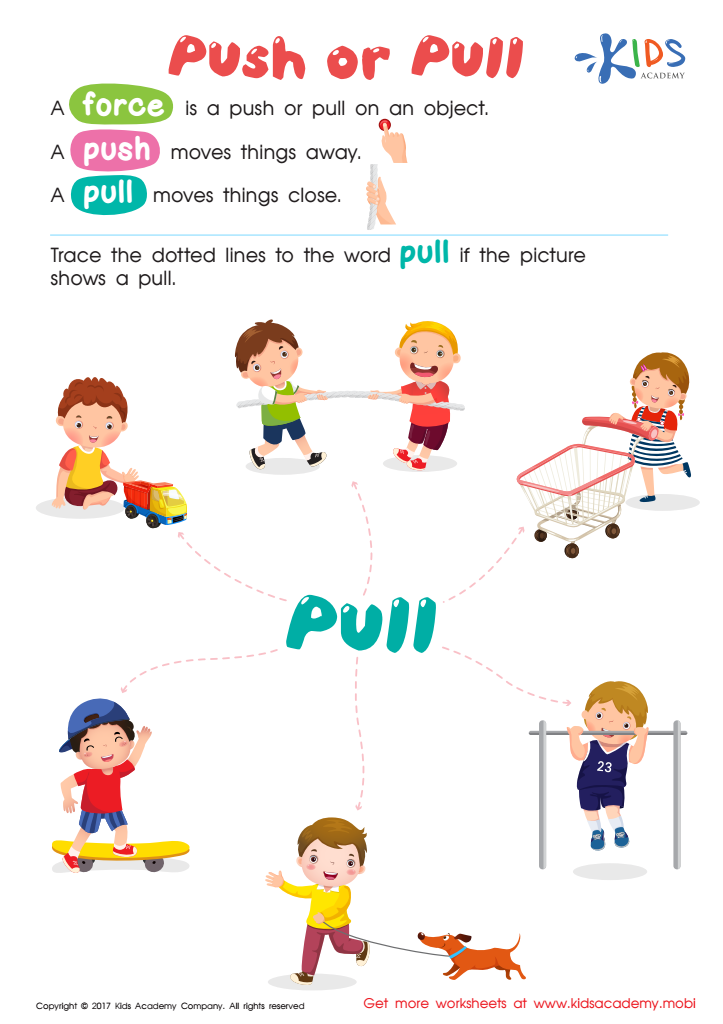
Pull or Push Worksheet
With this fun worksheet, they'll explore physics by sorting objects into categories according to their mode of motion. It's a great way to get them interested in science.
Pull or Push Worksheet
Worksheet
Join Kids Academy for Free
Who is primarily going to use this learning content?



.jpg)

Enhancing observation skills in early childhood is crucial as it forms the foundation for scientific inquiry and critical thinking. For children aged 3-9, their natural curiosity about the world makes this an ideal time to develop these skills. Observation is the first step in the scientific method, and by honing this ability, children learn to notice details, ask questions, and explore their surroundings with a deeper understanding.
For parents and teachers, fostering these skills can significantly impact a child's cognitive development. It encourages active learning and curiosity, which are essential for academic success across all subjects. Children who can observe details are better at identifying patterns, making connections, and developing problem-solving skills. Moreover, these competencies promote language development as kids articulate their observations and communicate findings.
In the context of physical science, enhanced observation skills can lead to greater engagement and interest in scientific concepts. Children learn to distinguish different materials, understand their properties, and observe how they change in different environments. This hands-on, experiential learning encourages a love for science and builds a solid foundation for future STEM education.
Therefore, parents and teachers should prioritize enhancing observation skills to nurture well-rounded, inquisitive learners who are eager to explore and understand their world.







