Hand-eye Coordination Normal Letter Recognition Worksheets for 3-Year-Olds
4 filtered results
-
From - To
Enhance your child's learning journey with our Hand-eye Coordination Normal Letter Recognition Worksheets designed specifically for 3-year-olds. These engaging printables are perfect for developing crucial skills early on, combining fun activities with effective learning strategies. Each worksheet promotes letter recognition, refined motor skills, and improved hand-eye coordination, creating a strong foundation for future reading and writing proficiency. Tailored for young learners, these worksheets include vibrant pictures and interactive tasks to keep kids captivated while they learn. Give your child a head start on literacy with these expert-crafted, age-appropriate tools. Visit our website to explore and download today.
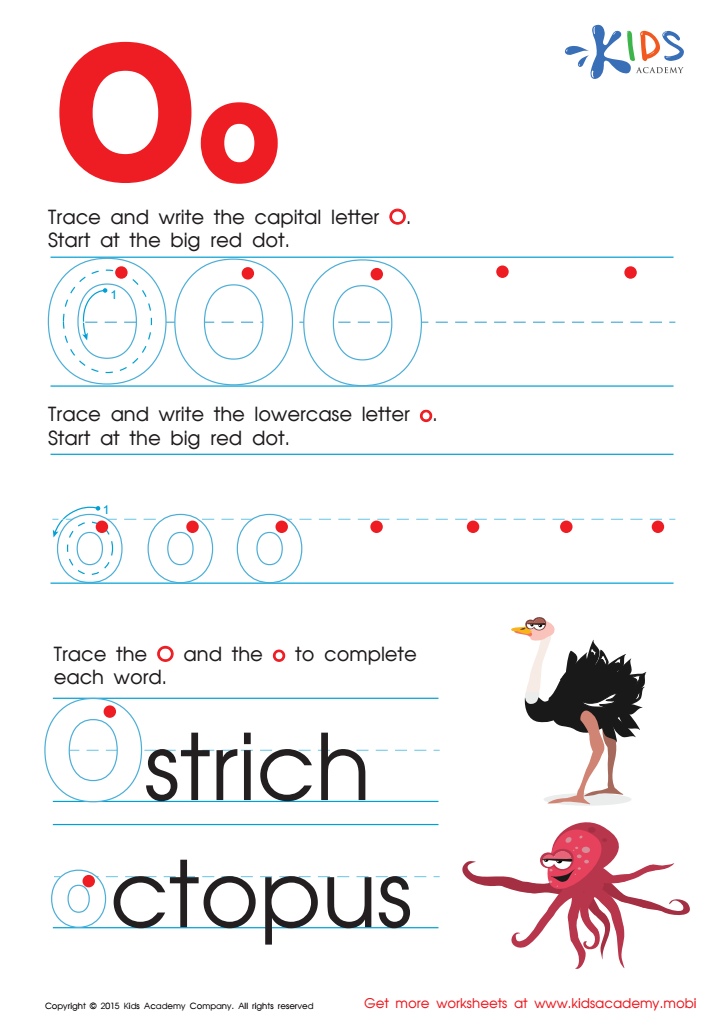
Letter O Tracing Page
 Assign to My Students

Letter P Tracing Page

Letter H Tracing Page

Letter D Tracing Page








Hand-eye coordination and normal letter recognition are crucial developmental milestones for 3-year-olds and deserve attentiveness from both parents and teachers. Hand-eye coordination involves the synchronized control of eye movement with hand movement, enabling children to perform tasks that require precision, such as stacking blocks, drawing, or even basic self-care tasks like dressing. When these skills are nurtured early, they lay the groundwork for more advanced physical activities and cognitive functions, including writing, sports, and other everyday tasks that require fine motor skills.
Similarly, recognizing letters is a fundamental literacy skill. At this age, children are in the exploratory stages of language development, and being able to identify letters helps form the basis for reading and writing. This early literacy skill is critical for educational success, as it aids in vocabulary expansion, comprehension, and the ability to follow instructions.
When parents and teachers focus on hand-eye coordination and letter recognition, they set the stage for a child’s overall academic and personal growth. Activities like playing with alphabet puzzles, drawing shapes, and navigating obstacle courses can significantly enhance these abilities. By fostering these foundational skills, caregivers are essentially equipping children with the tools they need for lifelong learning and problem-solving, as well as boosting their self-confidence and independence.








