Motor skills development Normal Letter Recognition Worksheets for 3-Year-Olds
3 filtered results
-
From - To
Enhance your 3-year-old’s motor skills and letter recognition with our expert-designed worksheets. These engaging activities focus on normal letter recognition while honing fine motor skills through fun tracing, coloring, and matching exercises. Each worksheet incorporates age-appropriate challenges to support essential developmental milestones. Perfect for both classroom and home settings, our printable sheets provide a foundational stepping stone in early literacy. Foster a love for learning and develop crucial hand-eye coordination with our trusted educational tools. Discover the ease of integrating motor skills development into your child’s everyday learning routine, ensuring a solid start in their educational journey.
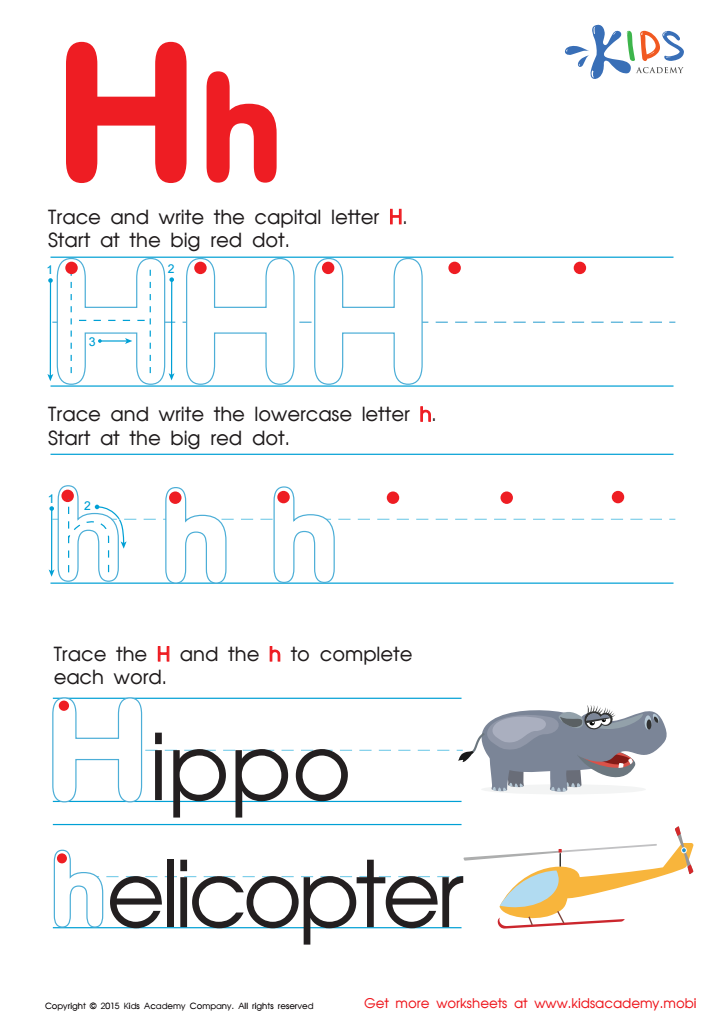
Letter H Tracing Page
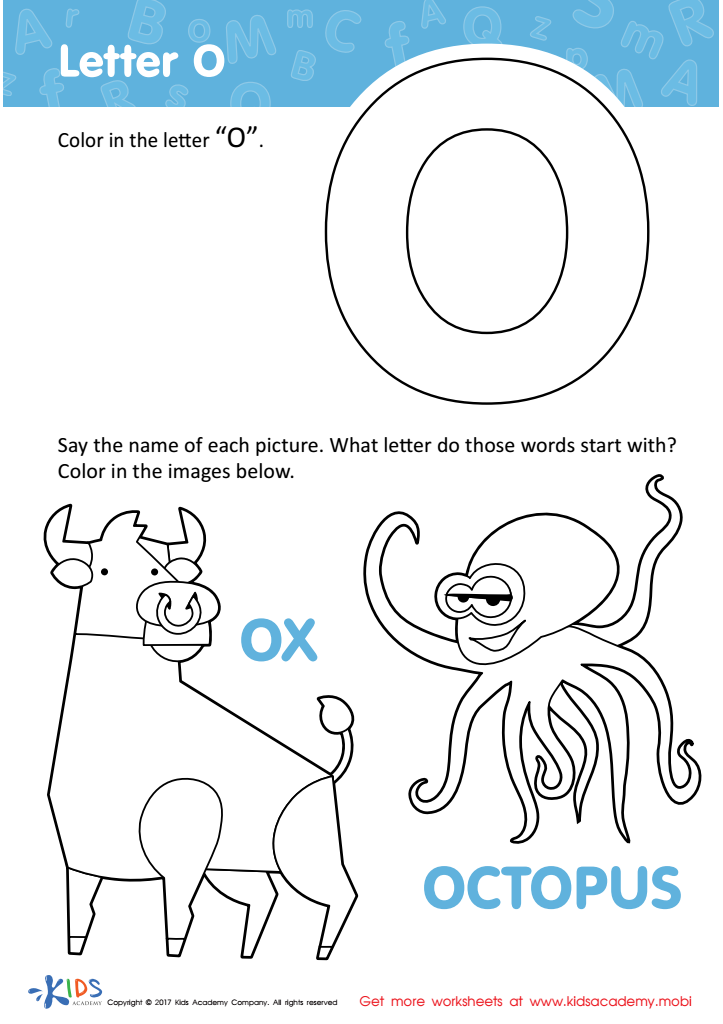
Letter O Coloring Sheet
 Assign to My Students
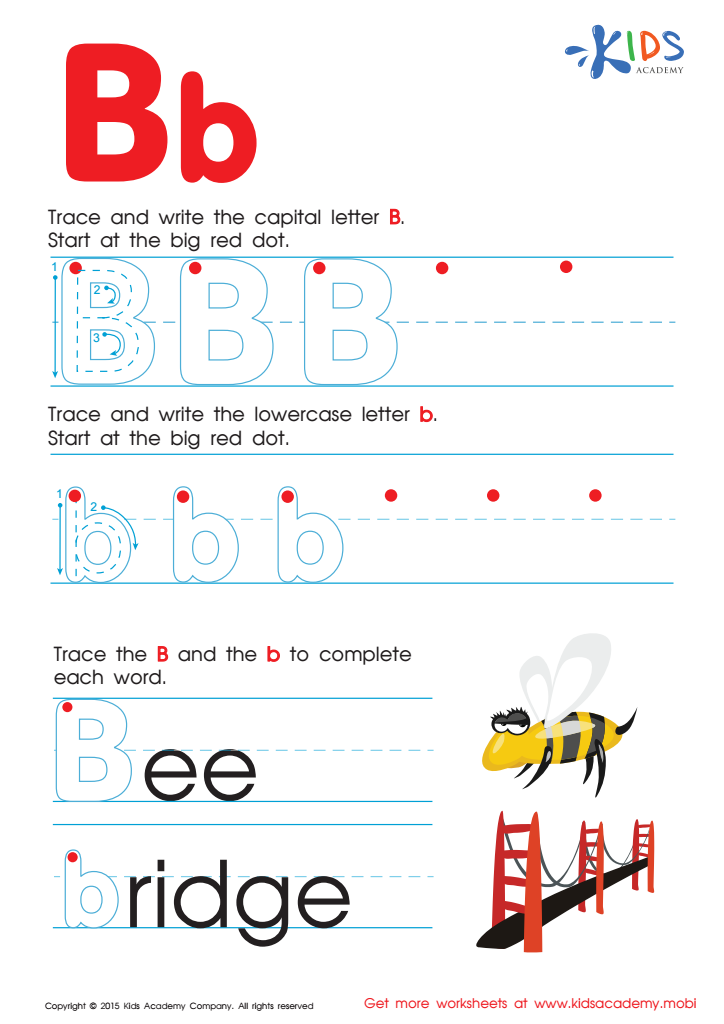
Letter B Tracing Page








Motor skills development and normal letter recognition are foundational aspects of early childhood education that should be prioritized by both parents and teachers. Essential motor skills, such as fine and gross motor abilities, underpin activities ranging from writing to physical play. For young children, developing these skills improves coordination, hand-eye coordination, and overall dexterity. These abilities provide the physical readiness necessary for tasks like gripping pencils, turning pages, and creating shapes or letters, directly influencing the ease with which children can learn to read and write.
Normal letter recognition, particularly at the age of 3, catalyzes crucial cognitive development. It forms a stepping stone towards literacy, helping children to develop the ability to recognize letters, understand their phonetic sounds, and, later on, read words. Early recognition enhances language acquisition, reading fluency, and eventually comprehension skills. As children start identifying letters, they gain confidence in their burgeoning scholarly abilities, fostering a positive relationship with learning.
Parents and teachers who emphasize motor skills and letter recognition empower children with the physical and cognitive competencies required for academic achievements. This dual focus thus not only ensures well-rounded development but also paves the way for future educational success, enabling children to fully engage with and enjoy their learning experiences.








