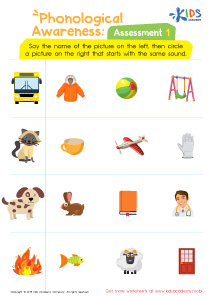
Phonics practice Normal Beginning Sounds Worksheets for Ages 4-5
5 filtered results
-
From - To
Enhance your child's literacy skills with our Phonics Practice Normal Beginning Sounds Worksheets, designed specifically for ages 4-5. These engaging worksheets provide a fun way for young learners to recognize and practice the initial sounds of letters, laying a solid foundation for reading and writing. Each activity is tailored to promote phonemic awareness, encouraging children to match letters with corresponding picture cues. Parents and educators will appreciate the clear instructions and visually appealing design, making learning enjoyable. Start your child's phonics journey today and watch them gain confidence in their reading abilities as they master the critical skill of identifying beginning sounds!
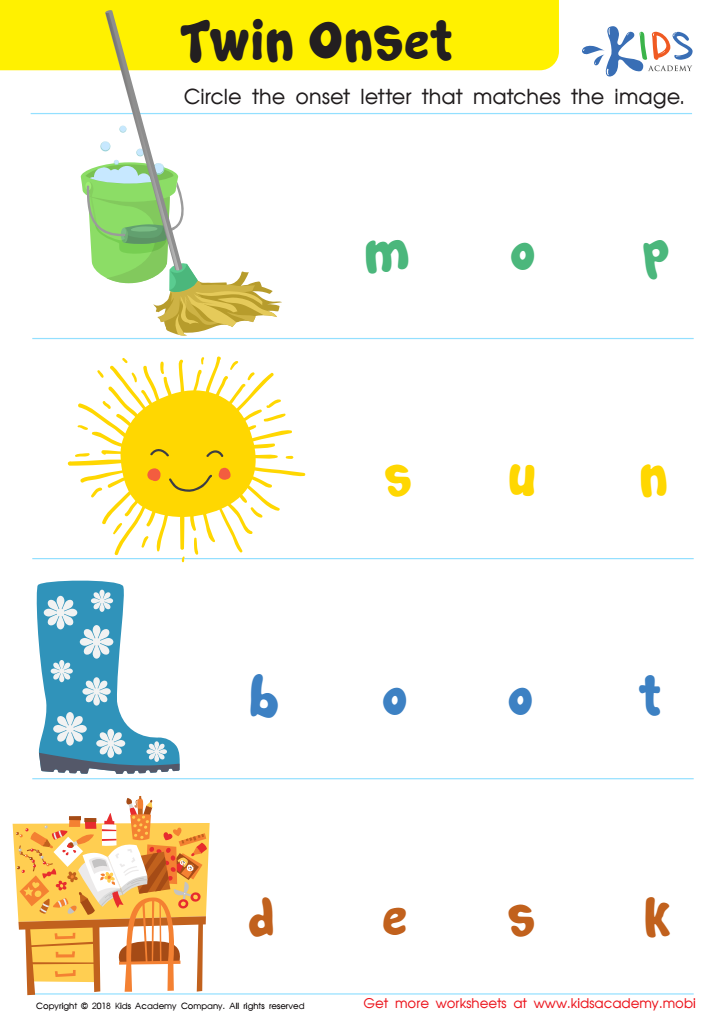
Twin Onset Worksheet
 Assign to My Students
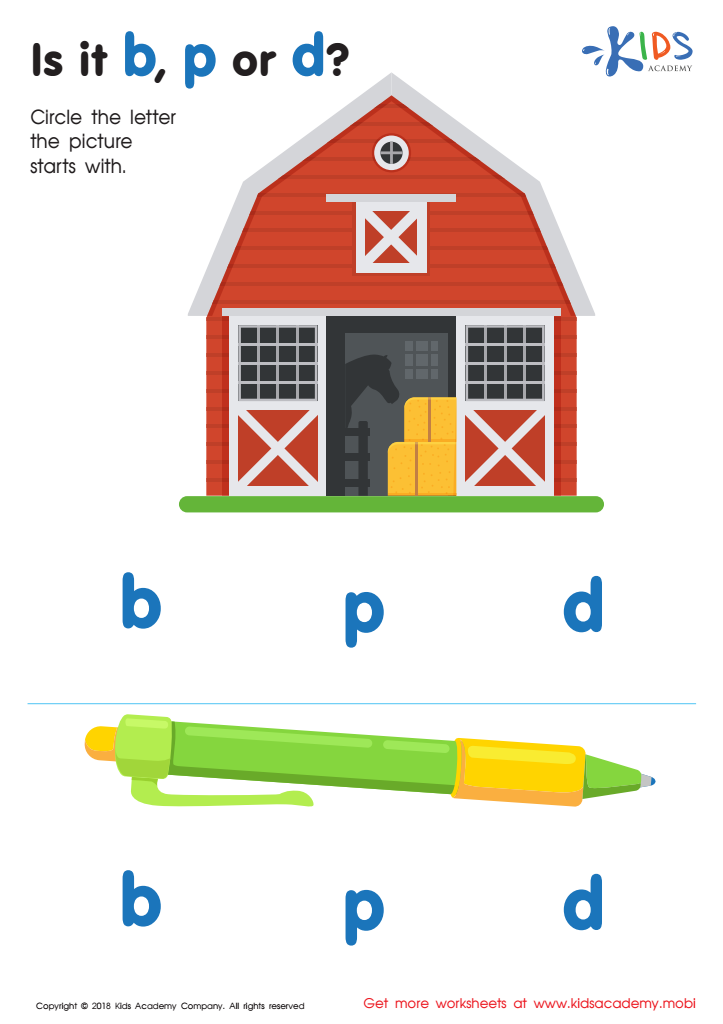
Is it b, p or d? Worksheet
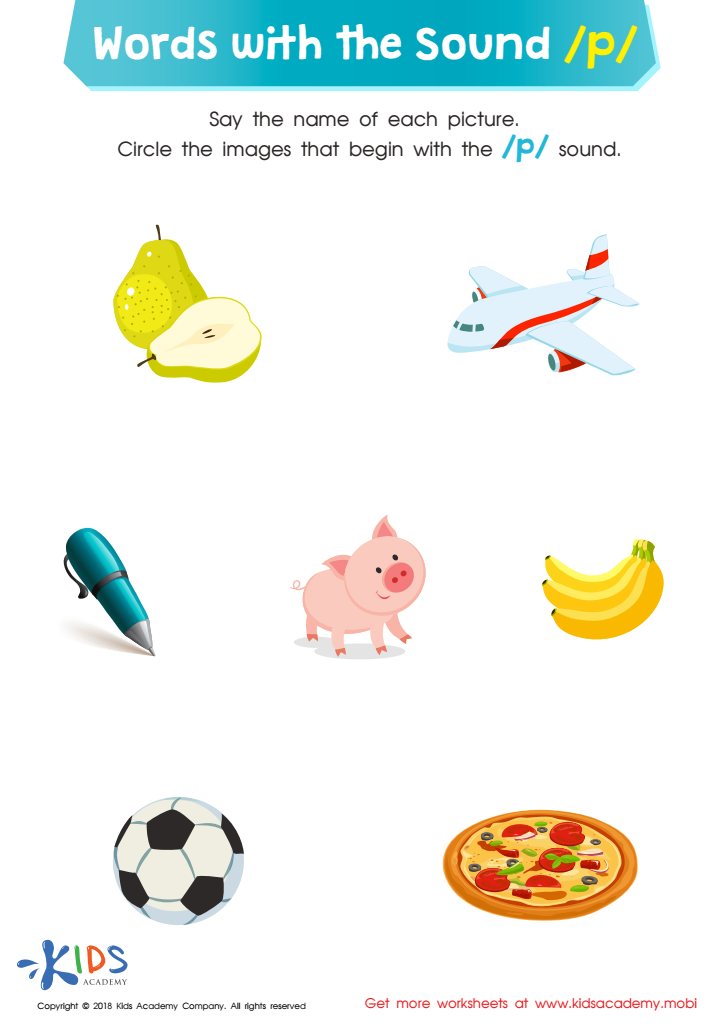
Words with sound p Reading Worksheet
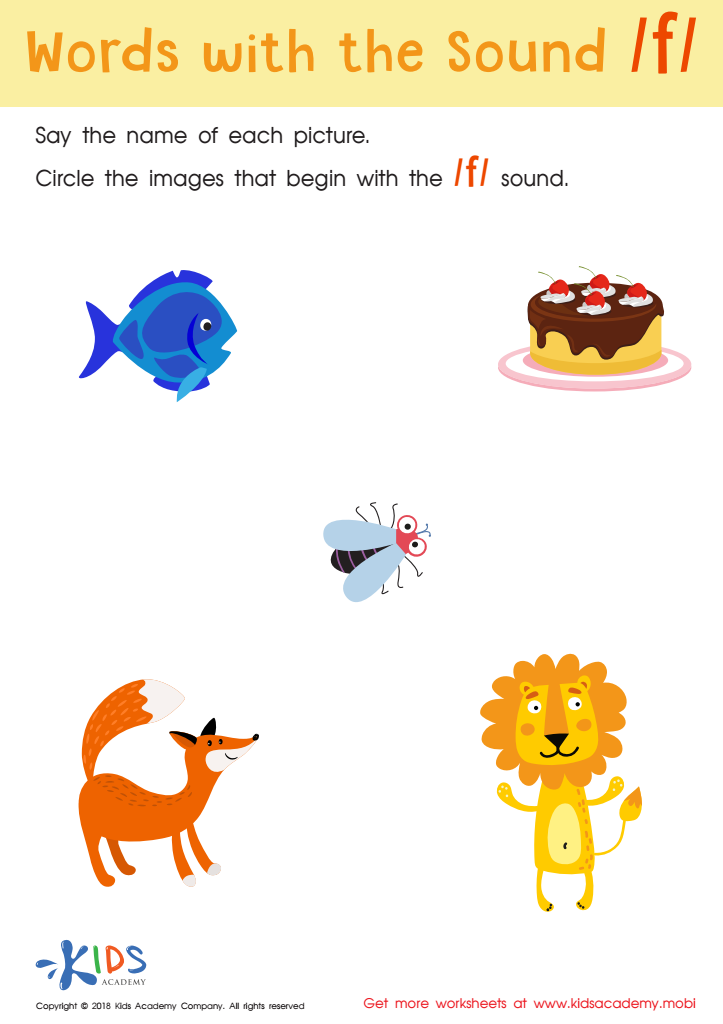
Words with sound f Reading Worksheet
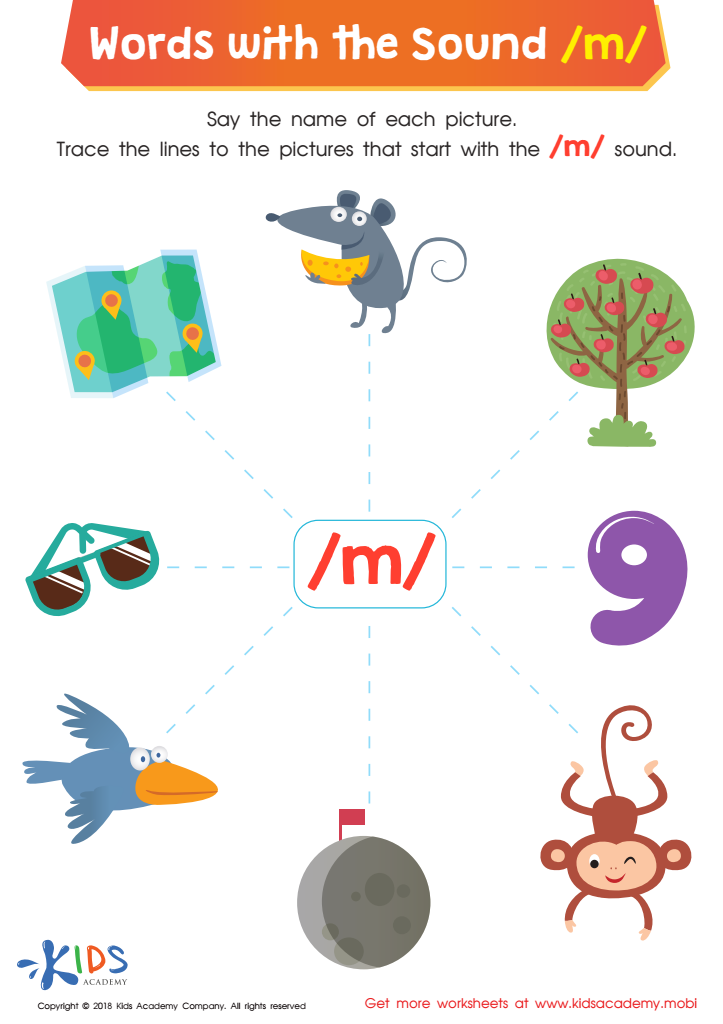
Words with Sound M Reading Worksheet








Phonics practice, particularly focusing on normal beginning sounds, is crucial for children aged 4-5 as it lays the foundation for reading and literacy development. At this stage, children are often exposed to phonemic awareness, which is the ability to hear and manipulate phonemes, the smallest units of sound in language. Beginning sounds help children recognize and articulate sounds associated with letters, facilitating their ability to decode words when reading.
Parents and teachers should prioritize phonics practice because mastering these sounds enhances vocabulary, spelling, and reading fluency. It nurtures confidence and fosters a love for reading, essential for academic success. Engaging children with beginning sounds through games, songs, and interactive activities makes learning enjoyable and effective.
Moreover, children who struggle with phonics at this early age may experience difficulties in later reading comprehension, affecting their overall academic performance. A solid grasp of normal beginning sounds also helps with language development, supporting communication skills critical for social interactions and personal expression.
By investing time in phonics practice, parents and teachers can ensure that children build essential literacy skills, setting them on a path toward future educational achievement and lifelong learning.