Fine motor skills development Normal Alphabet Worksheets for Ages 4-5
6 filtered results
-
From - To
Enhance your child's fine motor skills with our "Normal Alphabet Worksheets" specifically designed for ages 4-5. These engaging worksheets provide a fun and interactive way for young learners to practice letter recognition and writing. Each activity is crafted to develop hand-eye coordination, dexterity, and control, ensuring your child builds a strong foundation for their handwriting skills. With colorful designs and entertaining illustrations, children will be excited to trace, color, and connect letters while improving their motor abilities. Suitable for preschool or homeschooling, our worksheets are a valuable resource to support early childhood education and make learning enjoyable!

I Stands High Worksheet
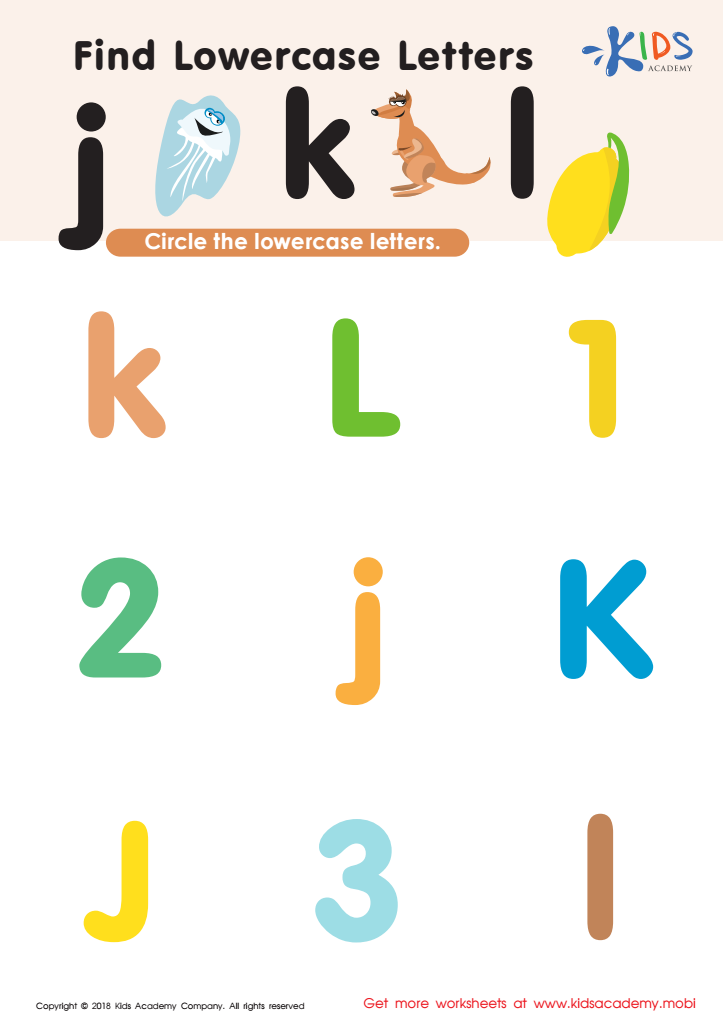
Find Lowercase Letters j k l Worksheet
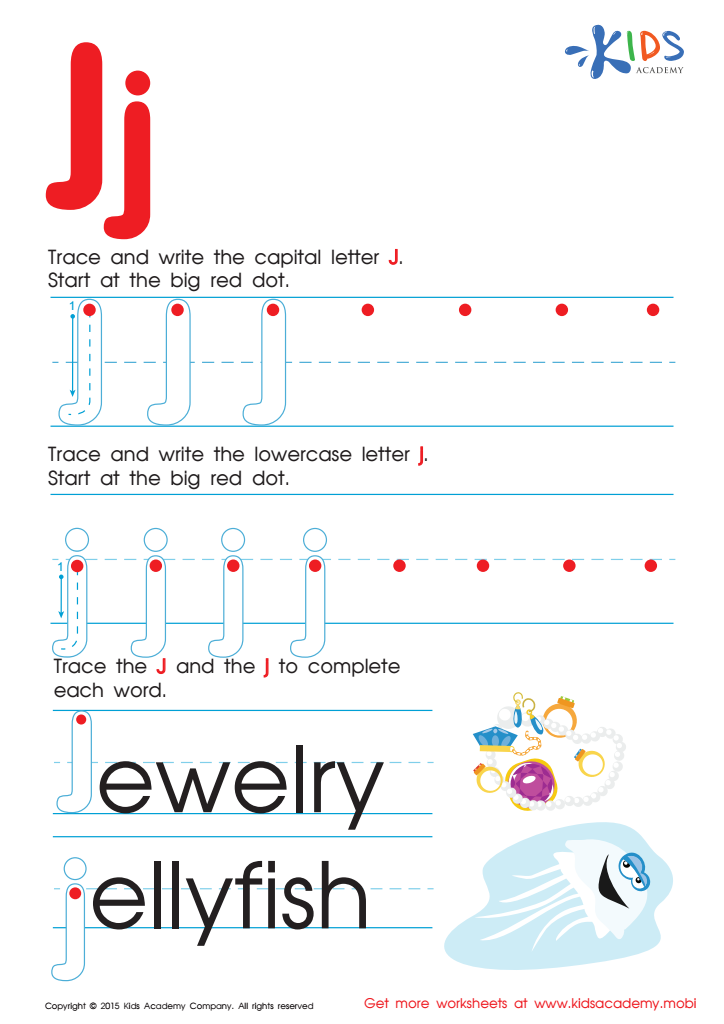
Letter J Tracing Page
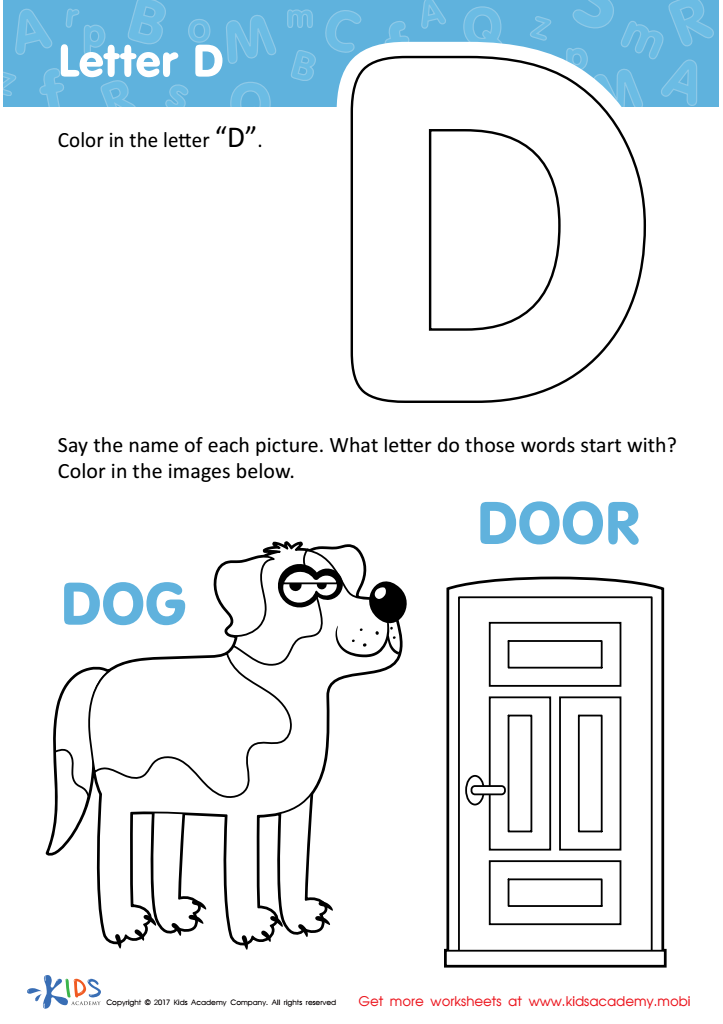
Letter D Coloring Sheet
 Assign to My Students
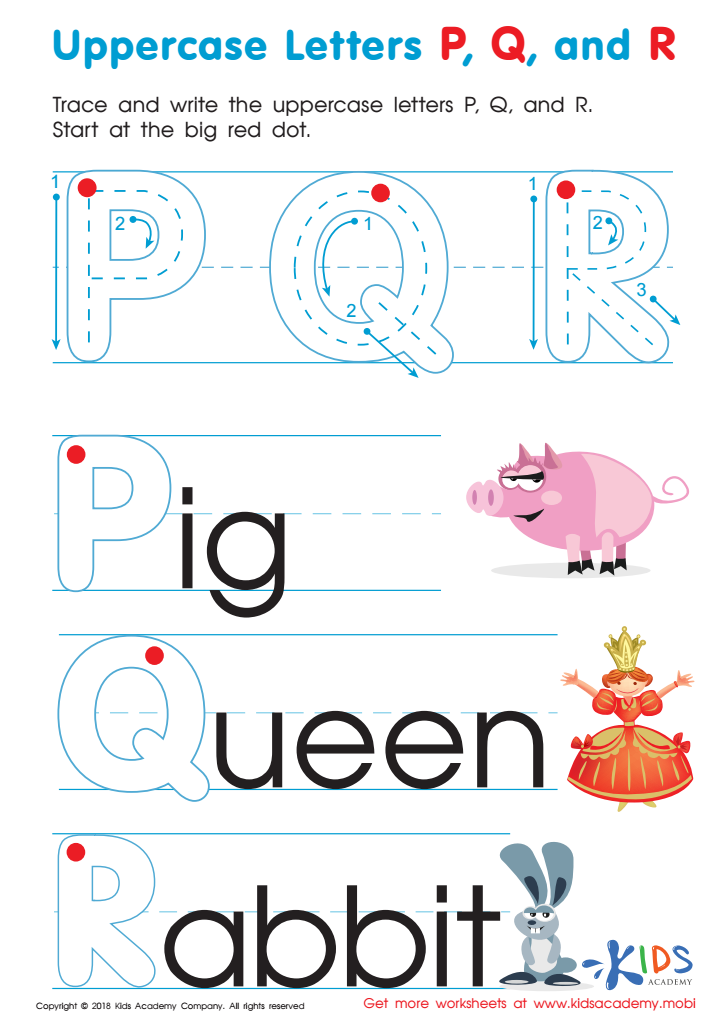
Uppercase Letters P, Q, and R Worksheet
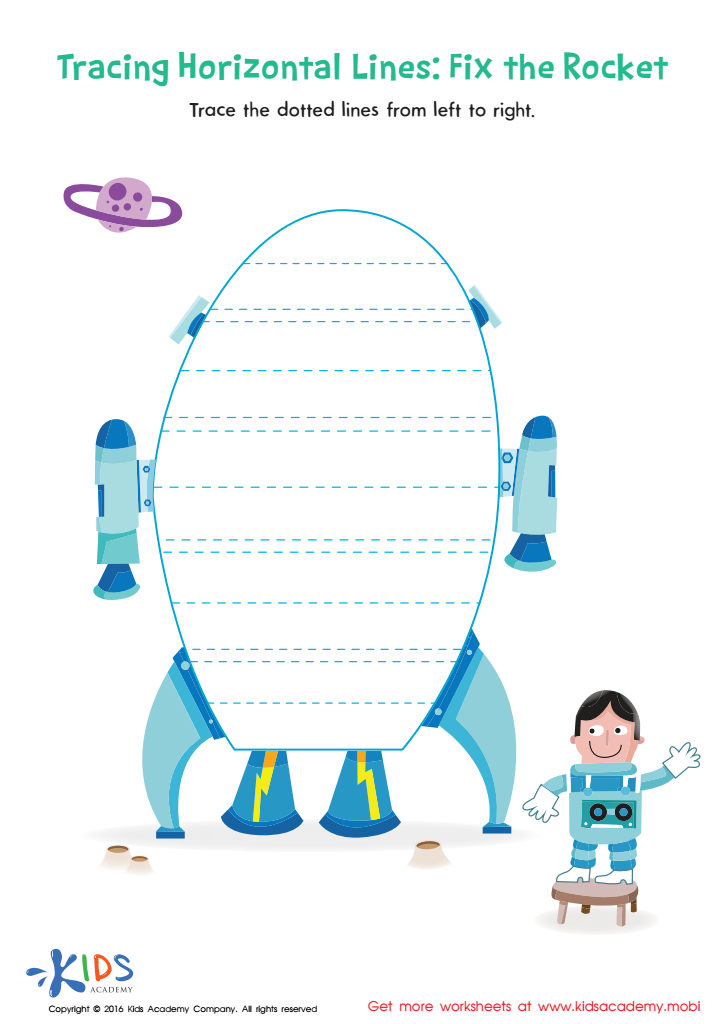
Tracing Horizontal Lines Worksheet






Fine motor skills development in children aged 4-5 is crucial for their overall growth and learning. At this stage, children are fine-tuning their hand-eye coordination and dexterity, skills necessary for various everyday tasks. Parents and teachers should pay close attention to this development because fine motor skills are fundamental for activities such as writing, drawing, and even fastening clothing.
As children practice manipulating small objects, they develop strength and control in their hands and fingers. This not only leads to improved handwriting but also reflects positively on their academic performance. Engaging fine motor skills exercises, such as using scissors, threading beads, or playing with playdough, can enhance concentration and promote patience.
Moreover, a lack of fine motor skills can lead to frustration and hinder a child's confidence in both academic and social scenarios. By actively supporting fine motor skills development, parents and teachers can nurture a child’s independence, self-esteem, and creativity. Additionally, as children master these skills, they provide a strong foundation for more complex tasks in later years. Ultimately, fostering fine motor skills in early childhood directly contributes to a child's readiness for school and lifelong learning.







