
Alphabet familiarity Normal Letter Recognition Worksheets for Ages 4-5
6 filtered results
Difficulty Level
Grade
Age
-
From - To
Subject
Activity
Standards
Introduce your child to the world of letters with our Alphabet Familiarity Normal Letter Recognition Worksheets for Ages 4-5. Designed to make learning the alphabet fun and engaging, these printable activities help children identify, match, and write each letter. Kids will develop crucial pre-reading skills while enjoying delightful illustrations and interactive tasks. Created by educational experts, each worksheet is tailored to build confidence and foster a lifelong love of reading. Perfect for preschool and kindergarten, our resources ensure children grasp the alphabet in an enjoyable, hands-on way. Download now to kickstart your child's literacy journey!
Favorites
With answer key
Interactive
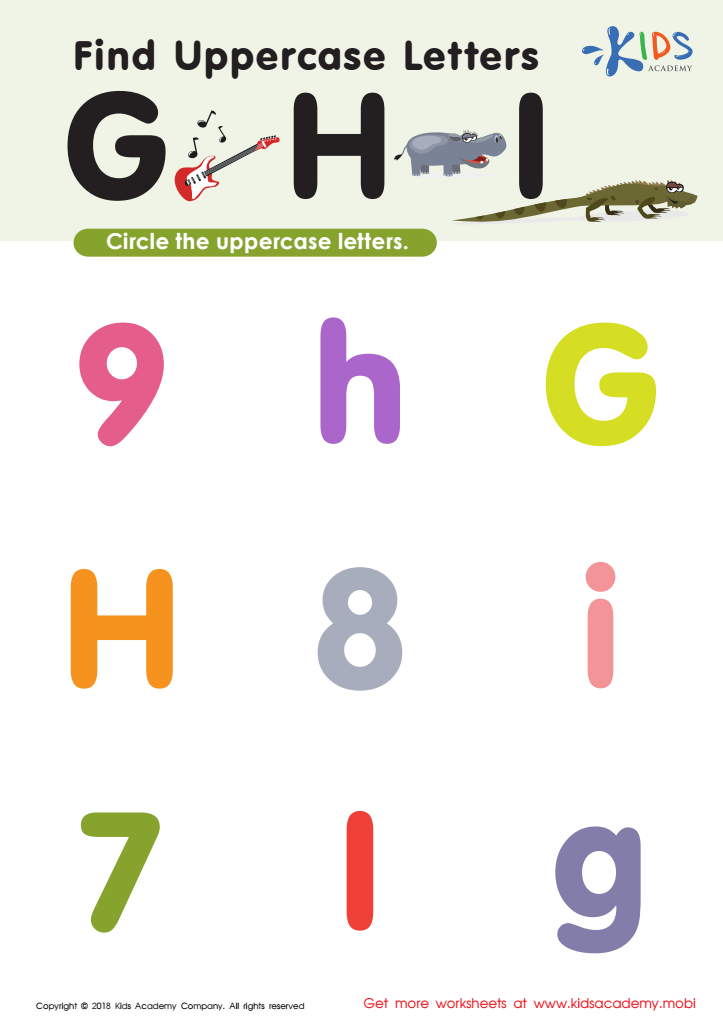
Find Uppercase Letters G, H, and I Worksheet
Find G, H, and I in uppercase with this downloadable worksheet! Numbers are included to challenge your kindergartener's letter recognition skills. Plus, practice G, H, and I sounds using the cute graphics. Perfect for learning letter case recognition!
 Assign to My Students
Find Uppercase Letters G, H, and I Worksheet
Worksheet
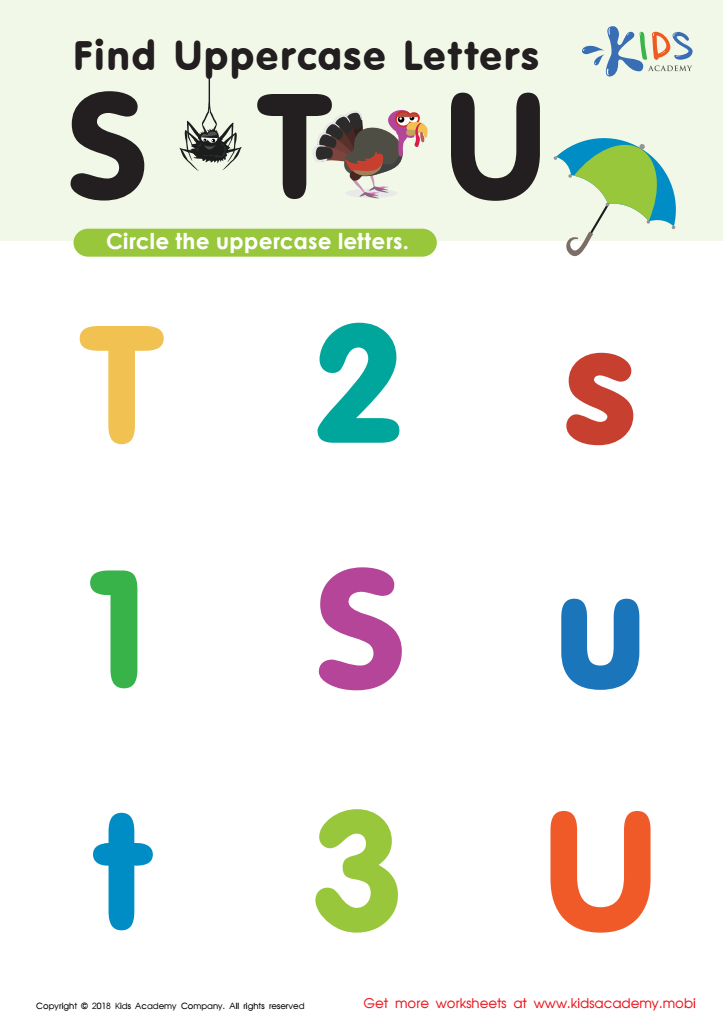
Find Uppercase Letters Worksheet
What level is your kid at now? Can they tell the difference between small and uppercase letters? Ask them to name words beginning with S, T and U, then help them find and circle the uppercase letters S, T and U in a mix of small letters, numbers and uppercase letters.
Find Uppercase Letters Worksheet
Worksheet
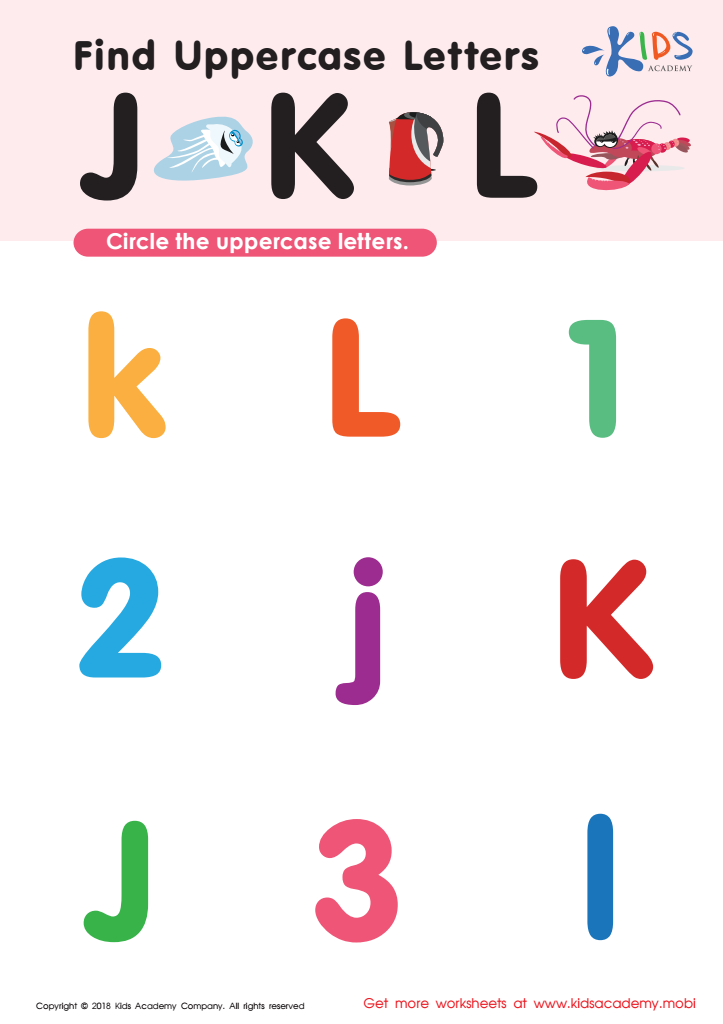
Find Uppercase Letters J, K, and L Worksheet
Search for the uppercase letters J, K, and L in this fun worksheet! Help your child identify the starting sound of each picture, then look for the letters. Keep an eye out for numbers that look like letters. Swim with the jellyfish and solve this delightful puzzle!
Find Uppercase Letters J, K, and L Worksheet
Worksheet
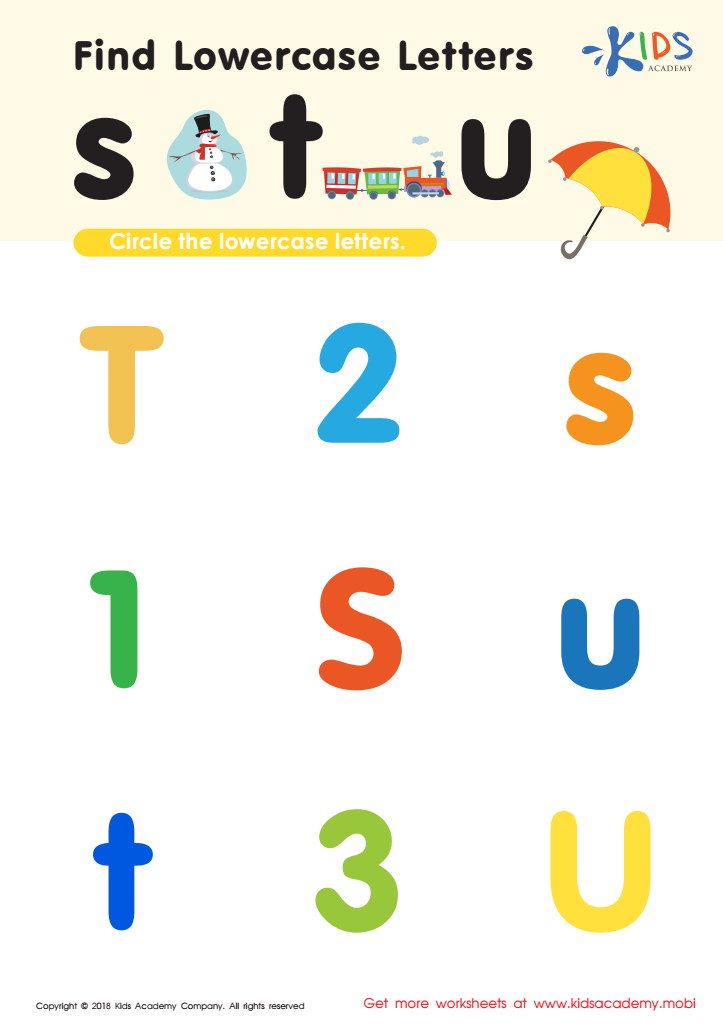
Find lowercase Letters s t u Worksheet
Puzzles are great for boosting your child's thinking skills. Can they identify lowercase letters s, t and u? This free printout contains the letters mixed in with uppercase letters and numbers, all presented in a fun, colorful format - sure to keep them entertained as they learn!
Find lowercase Letters s t u Worksheet
Worksheet
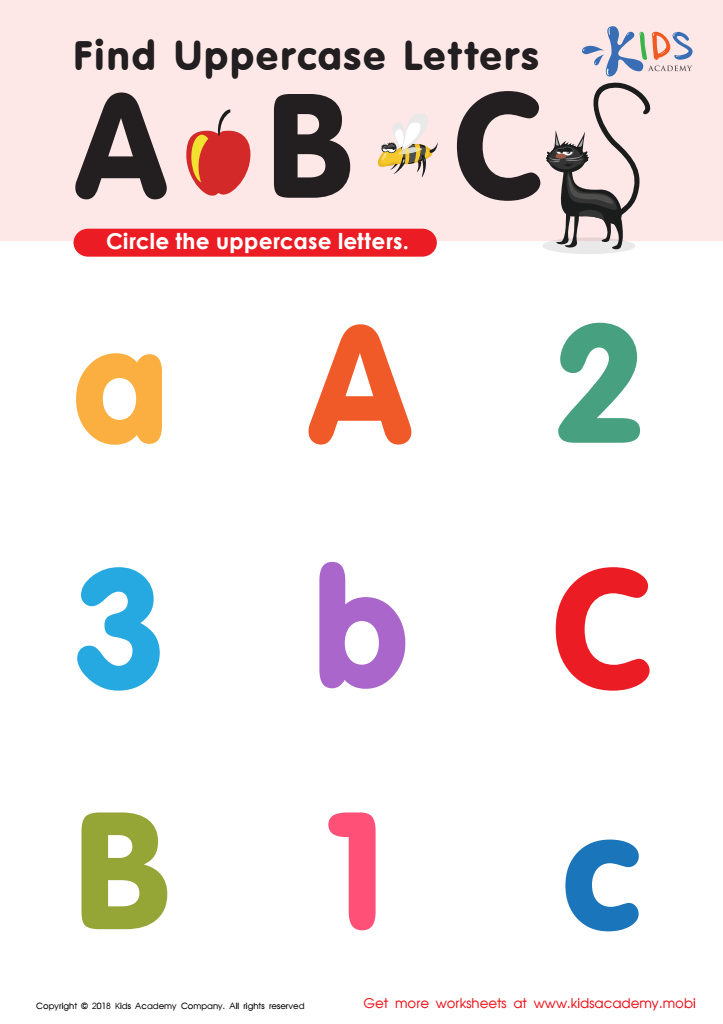
Find Uppercase Letters A, B, and C Worksheet
Check out this PDF worksheet and spot all the capital letters! Arranged as a puzzle, this exercise will test little learners to read and recognize uppercase letters and tell the difference between letters and numbers. To help them, use the pictures on top of the page to practice the sounds A, B and C make! 80 words.
Find Uppercase Letters A, B, and C Worksheet
Worksheet
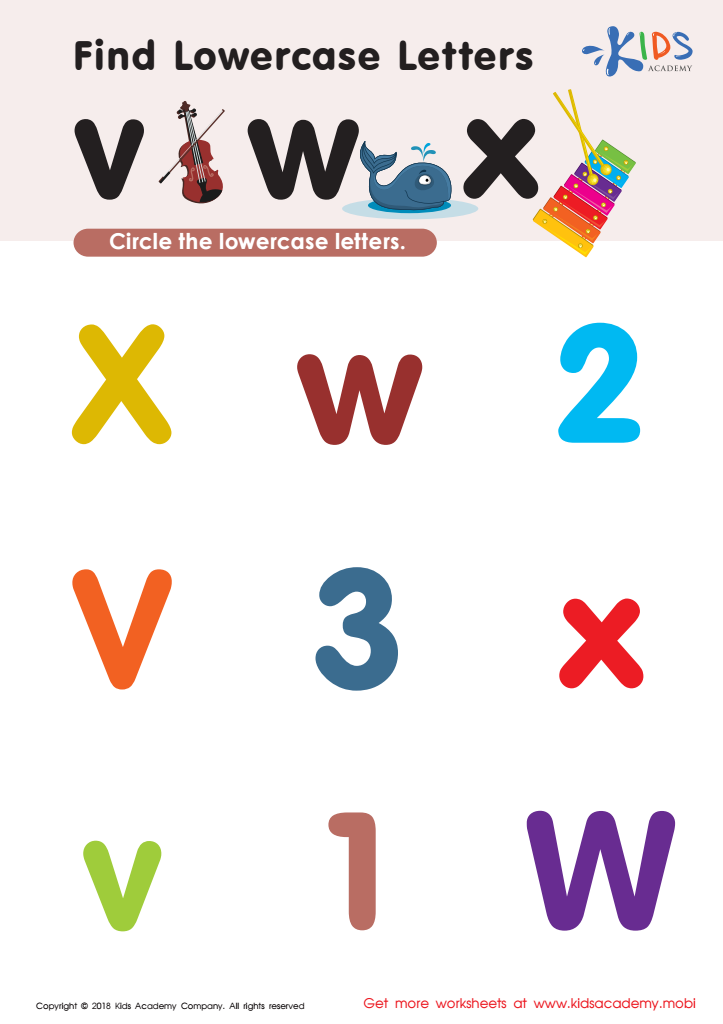
Find Lowercase Letters v w x Worksheet
If your child doesn't know the alphabet, get them this helpful worksheet. It's an easy exercise to build their understanding of the alphabet and lowercase letters. Find the letters v, w, and x among other uppercase letters and numbers in the downloadable PDF.
Find Lowercase Letters v w x Worksheet
Worksheet
Join Kids Academy for Free
Who is primarily going to use this learning content?








Alphabet familiarity and normal letter recognition for children ages 4-5 are critical because they form the foundation for reading and writing, essential skills for academic success and lifelong learning. At this developmental stage, children's brains are extraordinarily receptive to language acquisition. Recognizing letters and understanding their sounds aids in phonemic awareness, a key predictor of reading proficiency.
When parents and teachers focus on alphabet familiarity, they help children develop a sense of confidence and curiosity about texts. This early exposure ignites a passion for reading and learning, making future academic tasks less daunting. Children who are comfortable with letter recognition can more easily grasp word formation and sentence building, which are crucial components of literacy.
Furthermore, early literacy skills are closely tied to cognitive development, influencing areas such as memory, attention, and even socio-emotional skills. Picture a child trying to write their name or understand written instructions in a kindergarten classroom; alphabet familiarity makes these tasks manageable, ensuring the child does not feel left behind or frustrated.
Therefore, prioritizing letter recognition at ages 4-5 sets children on a positive academic trajectory and equips them with the basic tools to navigate the rich, text-filled world around them. Investing time in this area yields significant, long-term educational and personal benefits.








