Visual discrimination skills Normal Letter Recognition Worksheets for Ages 4-5
5 filtered results
-
From - To
Boost your child's learning with our Visual Discrimination Skills Normal Letter Recognition Worksheets, designed specifically for ages 4-5. These engaging worksheets help young learners distinguish between similar letters, enhancing their visual recognition abilities. By providing fun activities that encourage critical thinking, children will improve their letter identification while fostering their cognitive skills. Each worksheet is carefully crafted to match the developmental needs of early learners, making it easy for parents and teachers to facilitate effective practice. Help your child build a strong literacy foundation with our vibrant, interactive resources that make learning enjoyable and effective. Start their journey to reading success today!
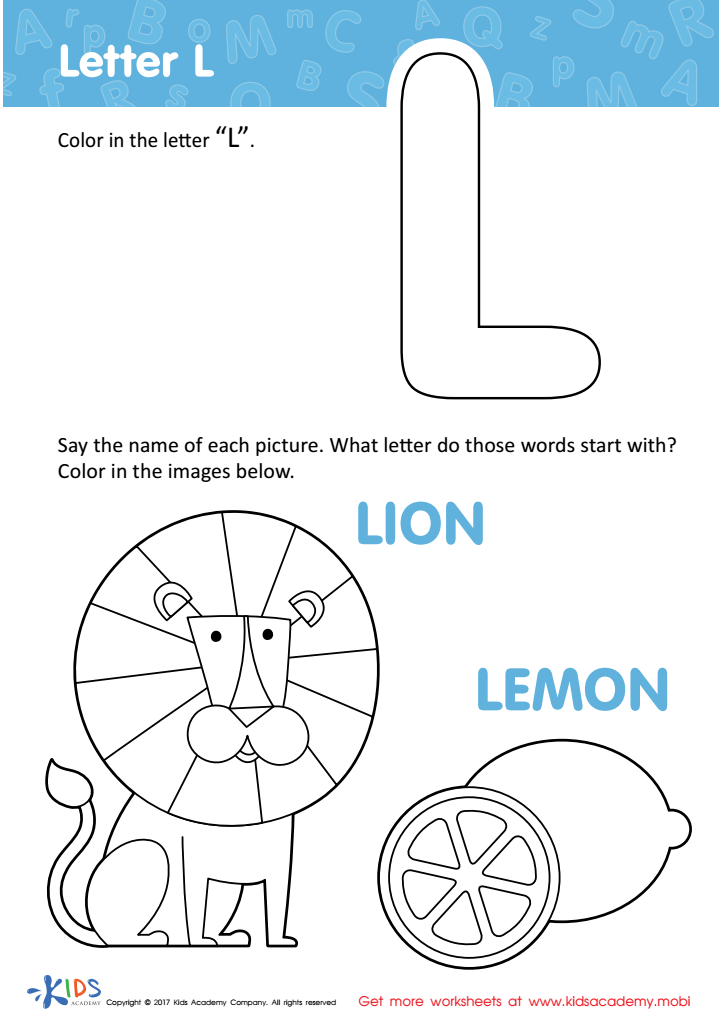
Letter L Coloring Sheet
 Assign to My Students
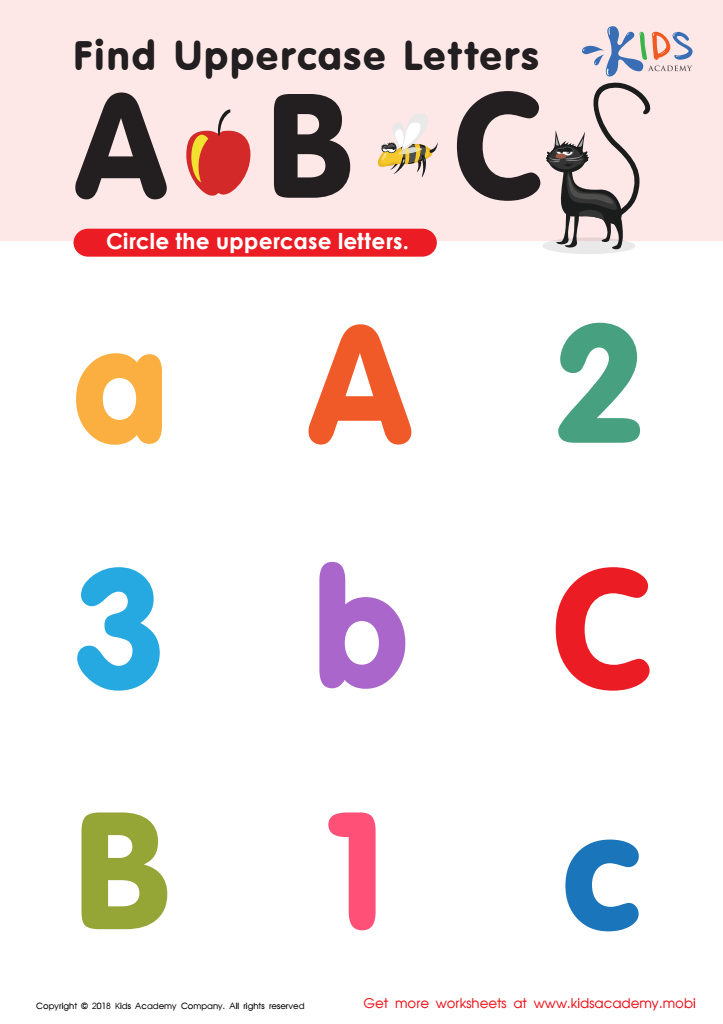
Find Uppercase Letters A, B, and C Worksheet
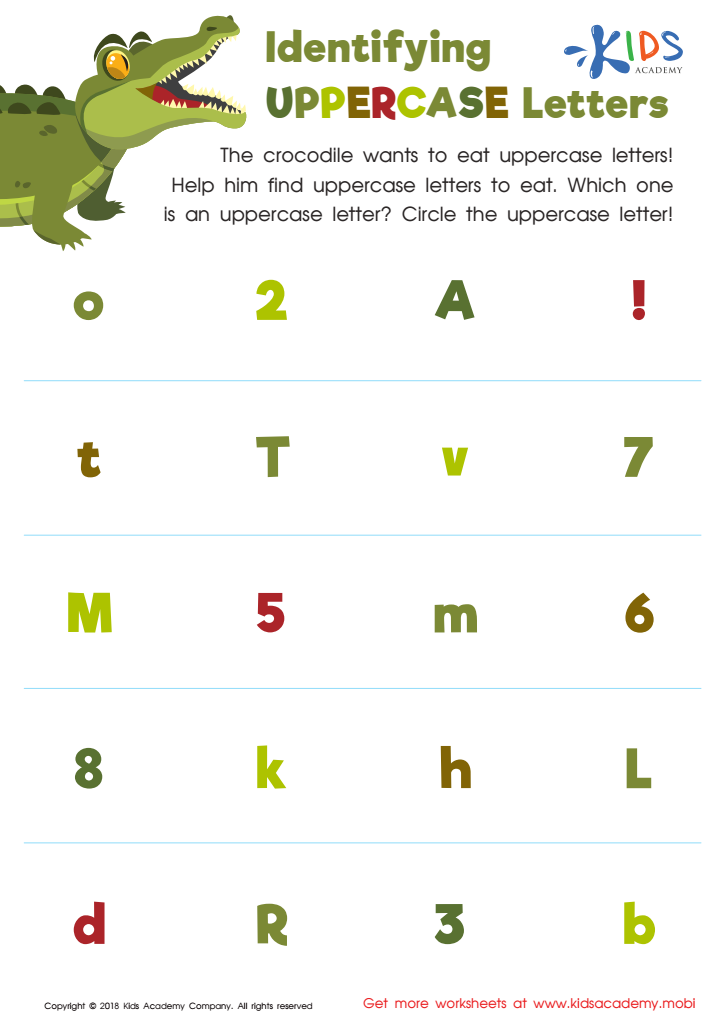
Identifying Uppercase Letters Worksheet

Find lowercase letters a b c Worksheet
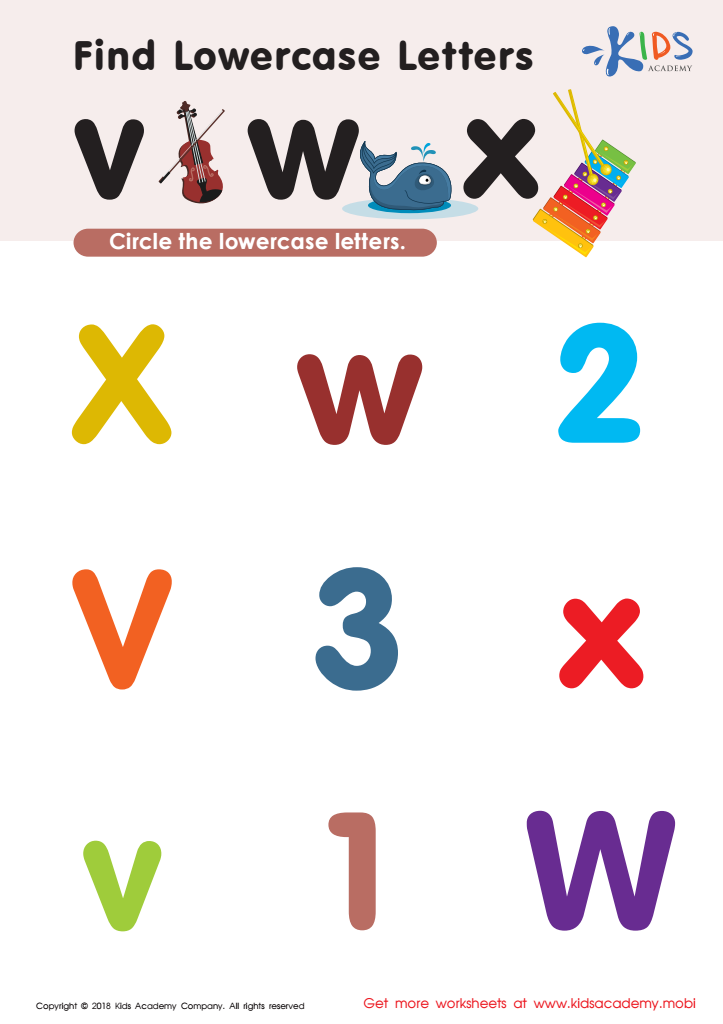
Find Lowercase Letters v w x Worksheet








Visual discrimination skills and normal letter recognition are crucial for children aged 4-5 as they serve as foundational elements for reading and writing. At this age, children begin to develop the ability to recognize letters, a skill vital for their literacy journey. Understanding the differences between letters, such as 'b' and 'd', helps prevent future reading difficulties and fosters confidence in young learners.
Parents and teachers play a pivotal role in nurturing these skills. Engaging children in activities that promote visual discrimination—such as matching games, puzzles, or sorting activities—can significantly enhance their ability to identify and differentiate letters. This early foundation minimizes confusion and encourages smoother transitions into more advanced literacy skills.
Moreover, early letter recognition helps children grasp basic phonics and sight words, integral components of reading. When kids can quickly identify letters, they can blend sounds and start reading simple words sooner, making the learning process enjoyable and fulfilling.
By nurturing these skills early on, parents and teachers can build a supportive environment that cultivates literacy confidence and enthusiasm, setting children on a path to academic success and lifelong learning.








