Vocabulary development Normal Letter Sounds Worksheets for Ages 4-5
5 filtered results
-
From - To
Enhance your child's literacy journey with our Vocabulary Development Normal Letter Sounds Worksheets designed for ages 4-5. At Kids Academy, we provide engaging, colorful exercises tailored to introduce young learners to letter sounds and early vocabulary. These printable worksheets are crafted to boost phonemic awareness, making phonics fun and interactive. Perfect for preschool or kindergarten, each worksheet aims to improve linguistic skills, paving the way for fluent reading and writing. Parents and educators love our easy-to-use resources that support foundational language development, building confidence in each young learner’s phonetic abilities. Explore today and set the stage for lifelong learning!
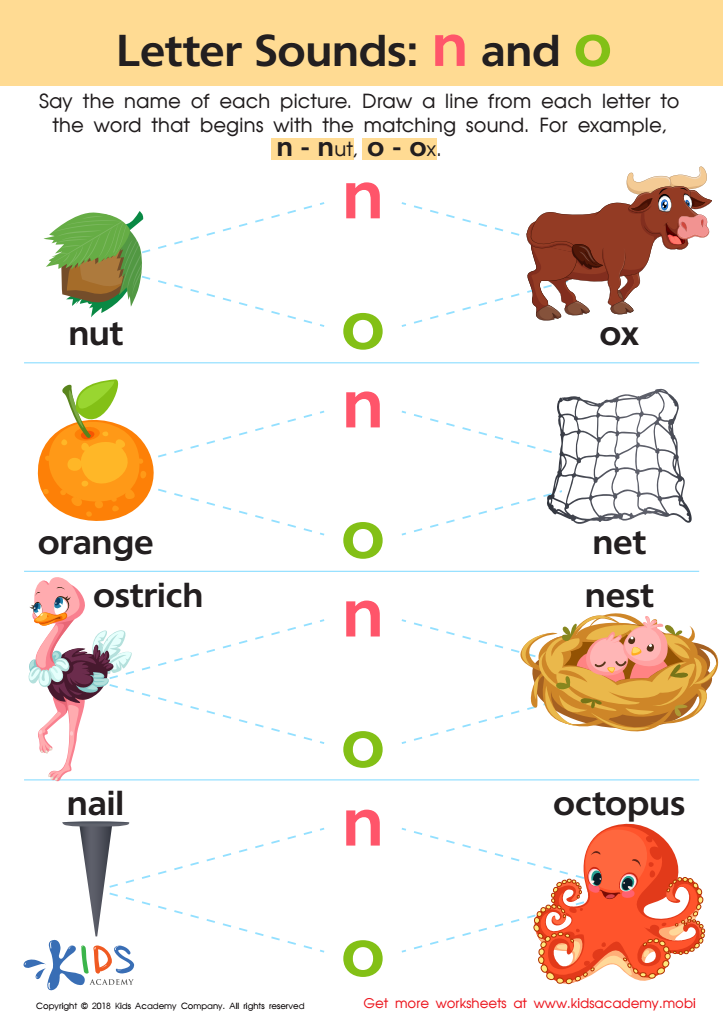
Letter N and O Sounds Worksheet
 Assign to My Students
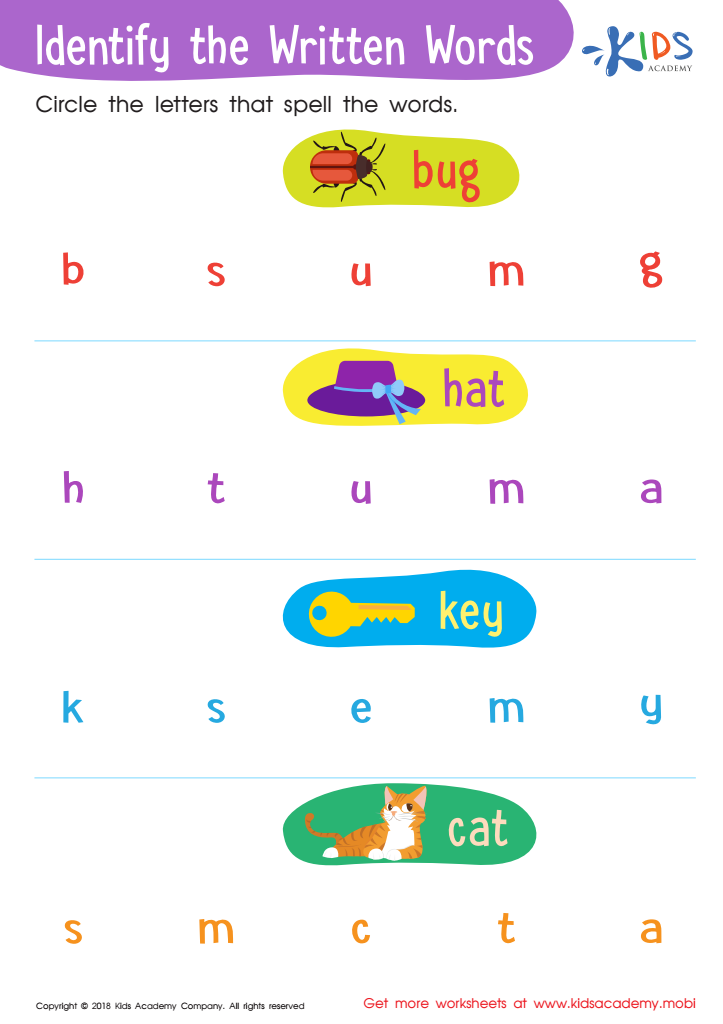
Identify the Written Words Worksheet
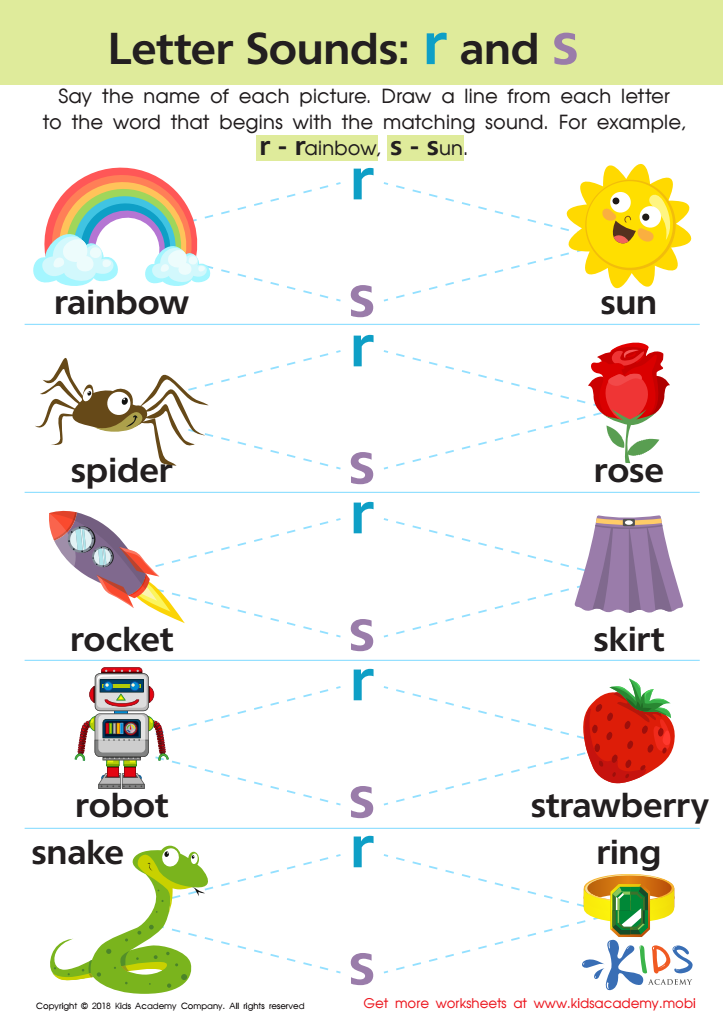
Letter R and S Sounds Worksheet
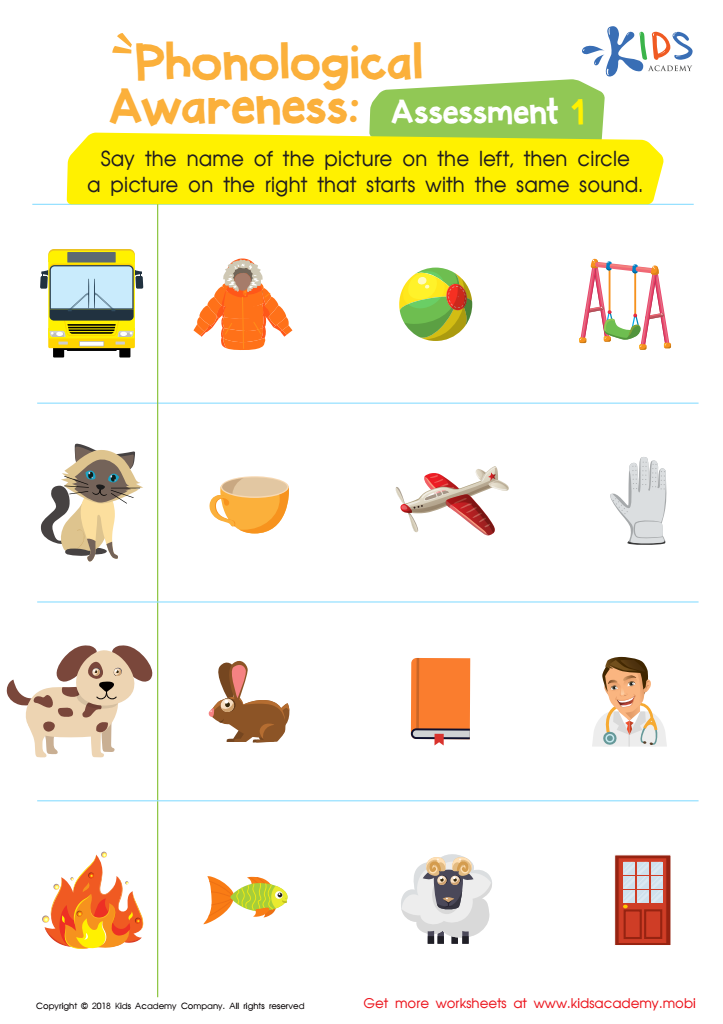
Phonological Awareness: Assessment 1 Worksheet
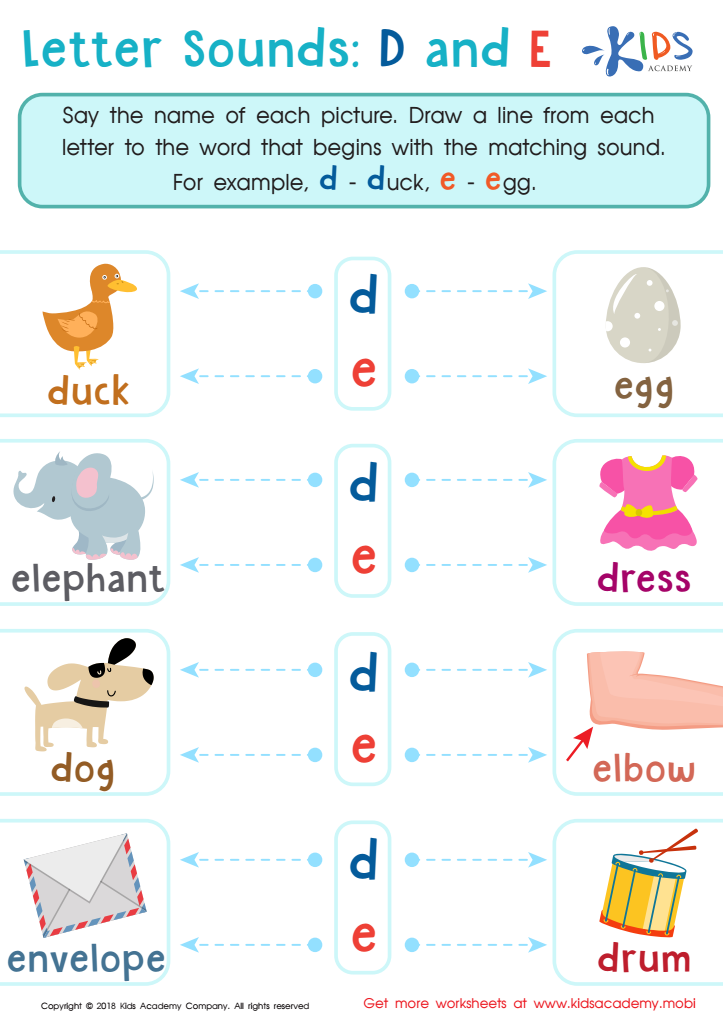
Letter D and E Sounds Worksheet








Parents and teachers should care about vocabulary development and normal letter sounds for ages 4-5 because it forms the foundation for future literacy and learning. At this critical stage, children are in a prime developmental window for language acquisition. Vocabulary growth enhances their ability to understand and communicate effectively, both essential for social and academic success. Recognizing and producing normal letter sounds are fundamental skills that pave the way for reading and writing.
Children with a strong vocabulary and phonemic awareness tend to read more easily and proficiently, allowing them to access a broader range of knowledge across subjects. Early exposure to diverse words and correct letter sounds helps them develop better listening and speaking skills, which are crucial for following instructions, engaging in discussions, and expressing themselves.
Moreover, fostering these skills early can boost a child's confidence and enthusiasm for learning. It helps identify potential speech or language issues early on, allowing for timely intervention if needed. Engaging in activities like reading aloud, playing sound-based games, and encouraging expressive conversations can significantly support this development. Thus, prioritizing vocabulary and phonics in the early years equips children with essential tools for lifelong academic and personal success.






