Phonics Skills Normal Long Vowels Worksheets for Ages 4-5
4 filtered results
Difficulty Level
Grade
Age
-
From - To
Subject
Activity
Standards
Enhance your child's reading foundation with our Phonics Skills Normal Long Vowels Worksheets, designed specifically for ages 4-5. These engaging worksheets help young learners recognize and practice long vowel sounds in a fun and interactive way. Through a series of vibrant activities, kids will improve their phonetic skills, develop confidence in reading, and foster a love for learning. Perfect for at-home learning or classroom use, our worksheets cater to early literacy development, making them an invaluable resource for teachers and parents alike. Equip your little ones with essential phonics skills today—let their reading journey begin!
Favorites
With answer key
Interactive
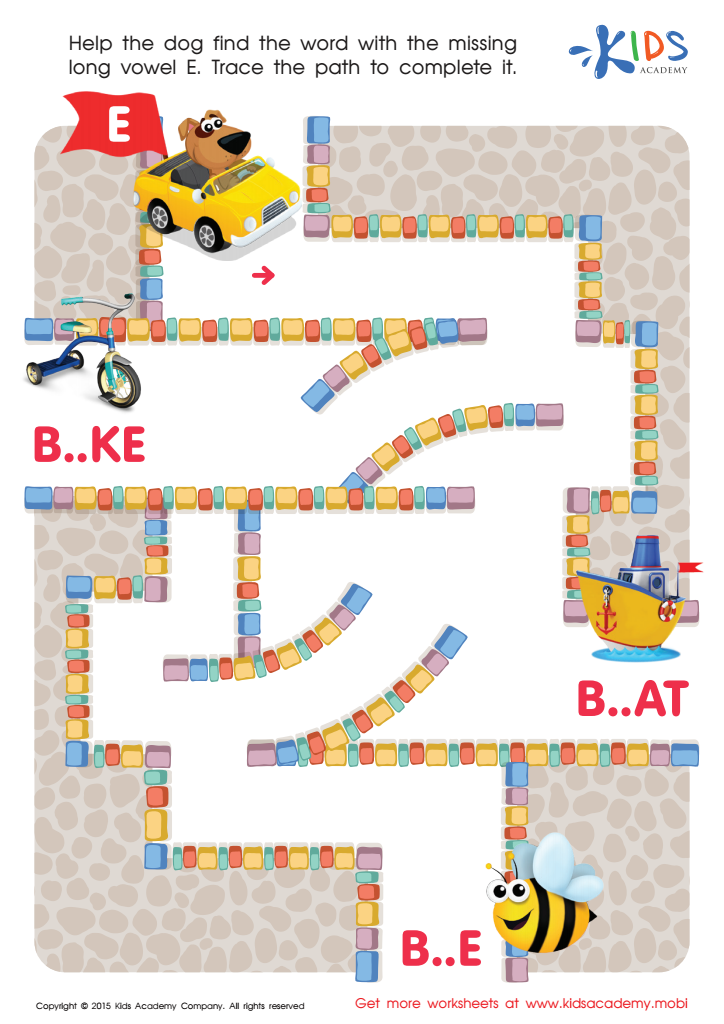
Long Vowel Sound E Worksheet
Practice distinguishing long and short vowel sound E with this free printable! Kids must complete the word “bee” by tracing the maze and adding the missing letter E. Remind them to say the word aloud to help sharpen their phonics ear. Get more phonics fun with the vowel sound E here.
Long Vowel Sound E Worksheet
Worksheet
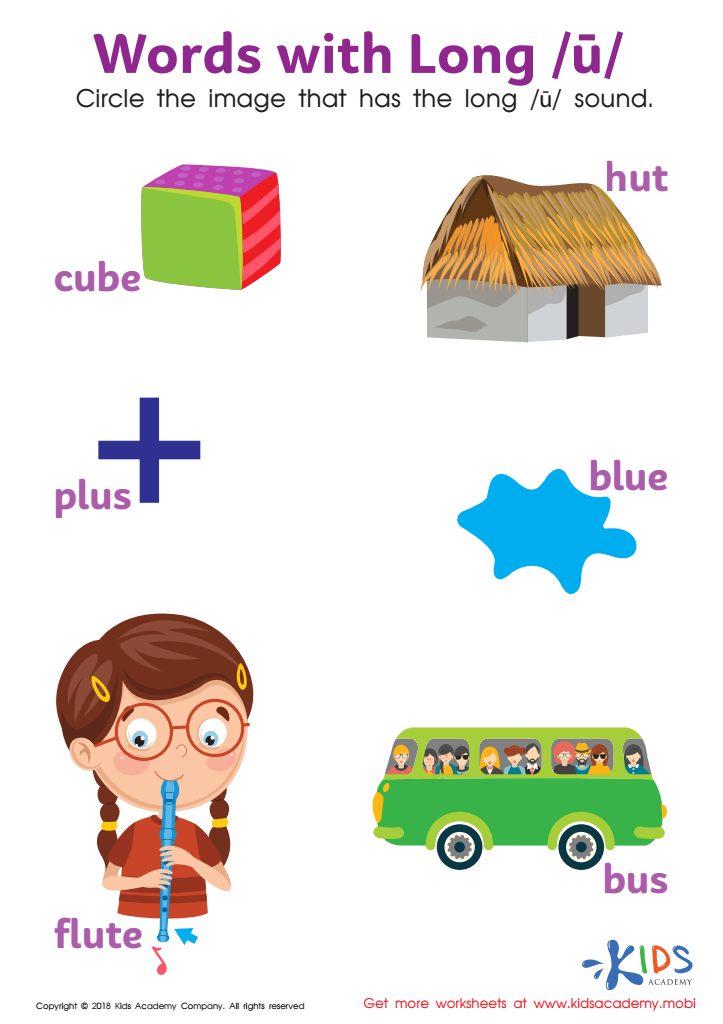
Words with Long U Reading Worksheet
Help your new reader master vowel recognition with this fun worksheet. By using picture clues and practicing fine motor skills, they'll learn to differentiate between words with the long and short «u» sound. Your learner will also get to practice vowel discrimination in high-frequency words. It's a great way to learn the importance of vowels in reading!
Words with Long U Reading Worksheet
Worksheet
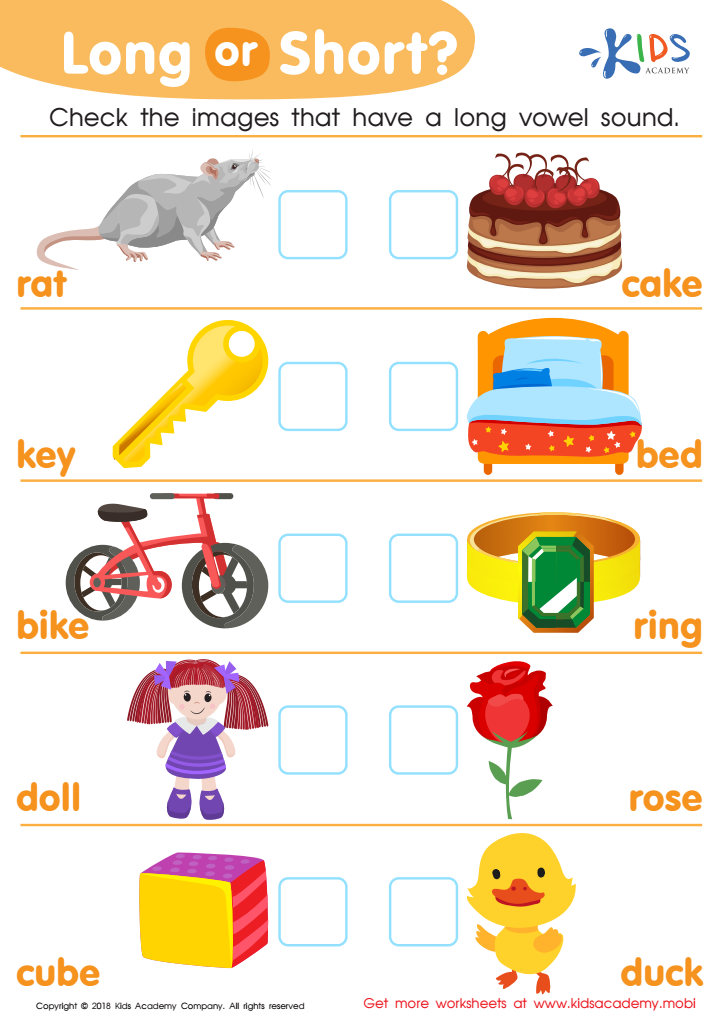
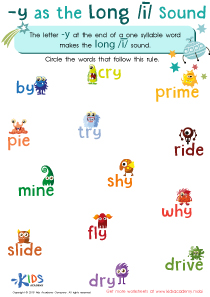
Long or Short Reading Worksheet
Every new reader needs to learn to recognize long and short vowel sounds. This phonics worksheet uses pictures of high-frequency words to help. Kids read the words and then check off images with long vowel sounds. It helps them learn to decode words and improves fine motor skills.
Long or Short Reading Worksheet
Worksheet
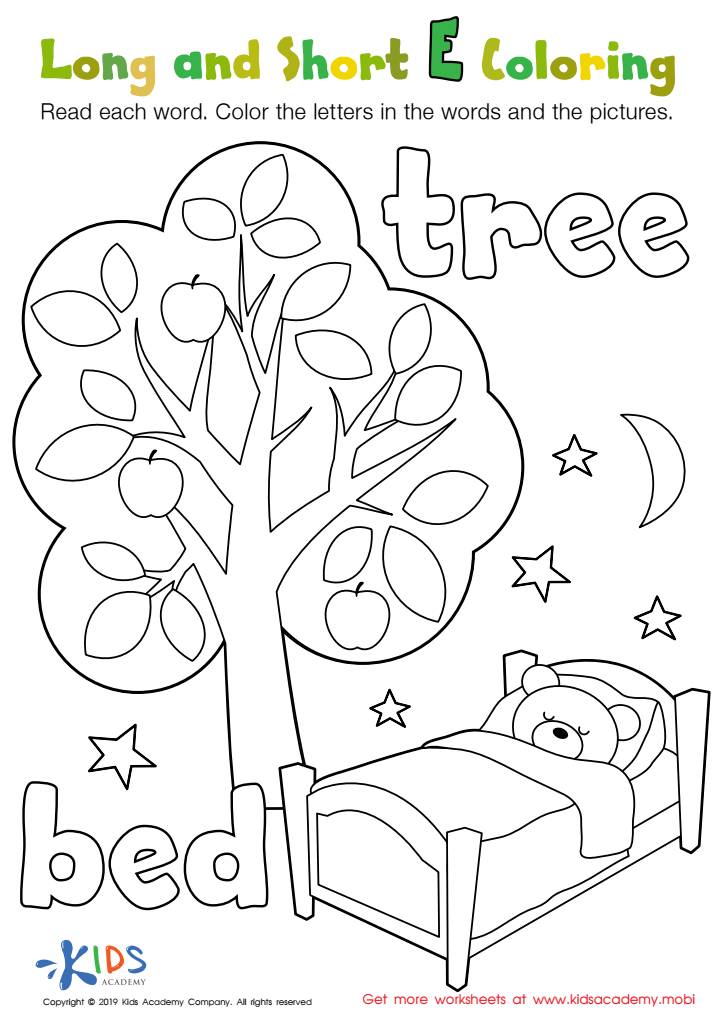
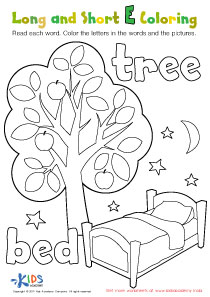
Long and Short E Worksheet
This fun printout makes learning phonics enjoyable for Grade 3 students. Get them to read the words “tree” and “bed” to recognize the different sounds of the letter “E”. After hearing the words they can color the words and the pictures to understand differences between long and short vowels.
Download (PDF)
 Assign to My Students
Assign to My Students
Long and Short E Worksheet
Worksheet
Join Kids Academy for Free
Who is primarily going to use this learning content?



Parents and teachers should prioritize phonics skills, particularly normal long vowels, for children aged 4-5 as they form a crucial foundational element in early literacy development. Mastery of long vowel sounds assists young learners in recognizing and decoding words, enhancing their reading fluency. This builds confidence and encourages a love for reading, setting the stage for future academic success.
Long vowels, such as those in words like "game," "bike," and "cone," play a significant role in phonological awareness. When children learn to identify and pronounce these sounds, they develop the ability to blend and segment words, which are essential skills for decoding unfamiliar texts. Furthermore, phonics instruction promotes vocabulary acquisition, as students can begin to recognize patterns in word formation and spelling.
Incorporating phonics education in the early years also helps children grasp the complexities of language more effectively, preventing difficulties later on. Thus, by prioritizing normal long vowels and phonics skills, parents and teachers equip young learners with necessary tools for communication, critical thinking, and overall literacy. These foundational skills foster lifelong learning abilities, influencing academic trajectories and cognitive development as children grow.