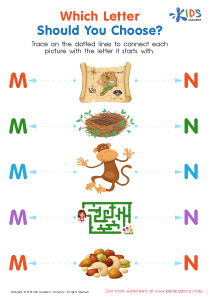
Handwriting practice Normal Lowercase/Small Letters Worksheets for Ages 4-5
8 filtered results
-
From - To
Boost your child's handwriting skills with our engaging Lowercase/Small Letters Worksheets, designed specifically for ages 4-5. These carefully crafted printable worksheets by Kids Academy help young learners master letter formation, improve fine motor skills, and build confidence in writing. Each fun and interactive worksheet guides children through tracing and writing lowercase letters, ensuring a smooth transition from recognizing to writing the alphabet. Perfect for preschoolers and kindergarteners, these resources provide a strong foundation for future writing success. Explore our collection and support your child's literacy journey with effective and enjoyable handwriting practice.
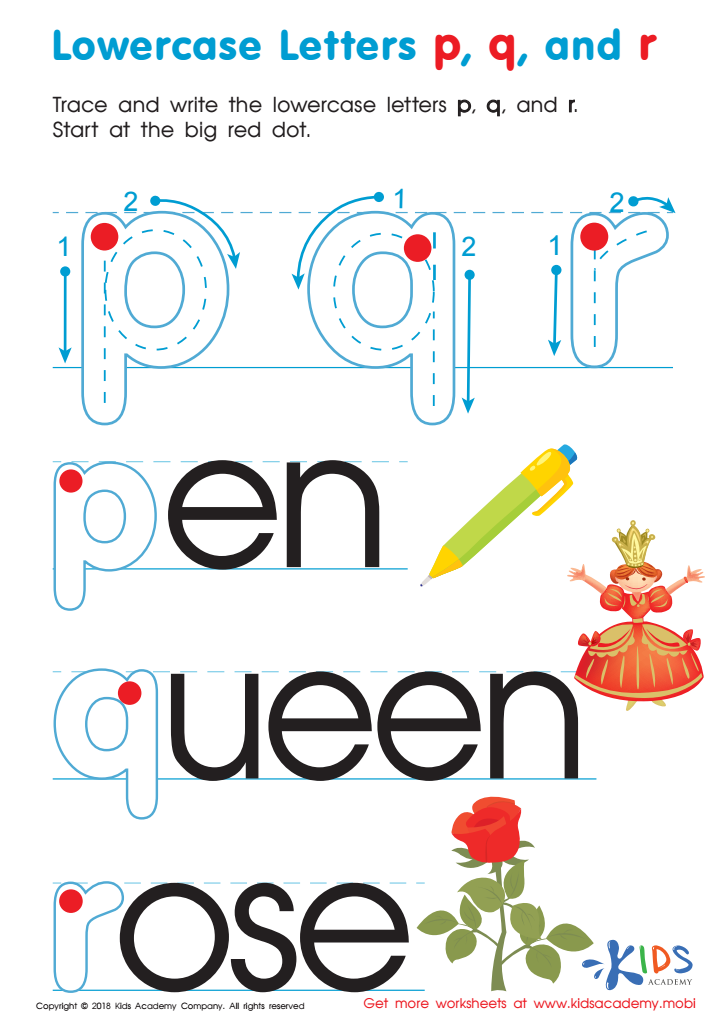
Lowercase Letters p q r Worksheet
 Assign to My Students
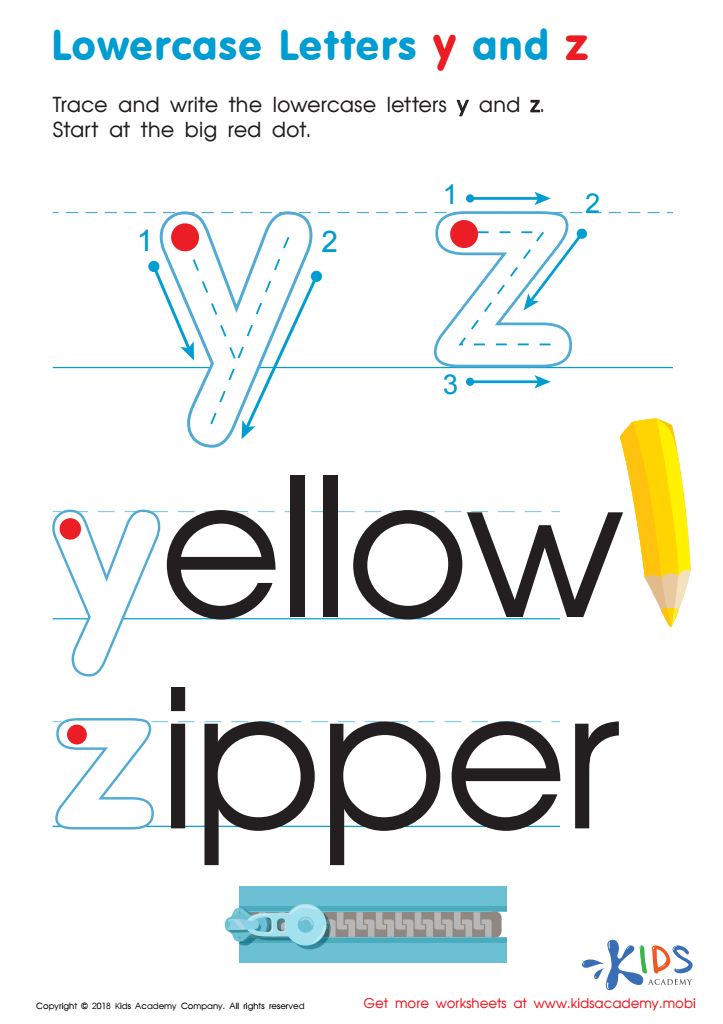
Lowercase Letters y z Worksheet

Lowercase Letters m n o Worksheet

Lowercase Letters d e f Worksheet
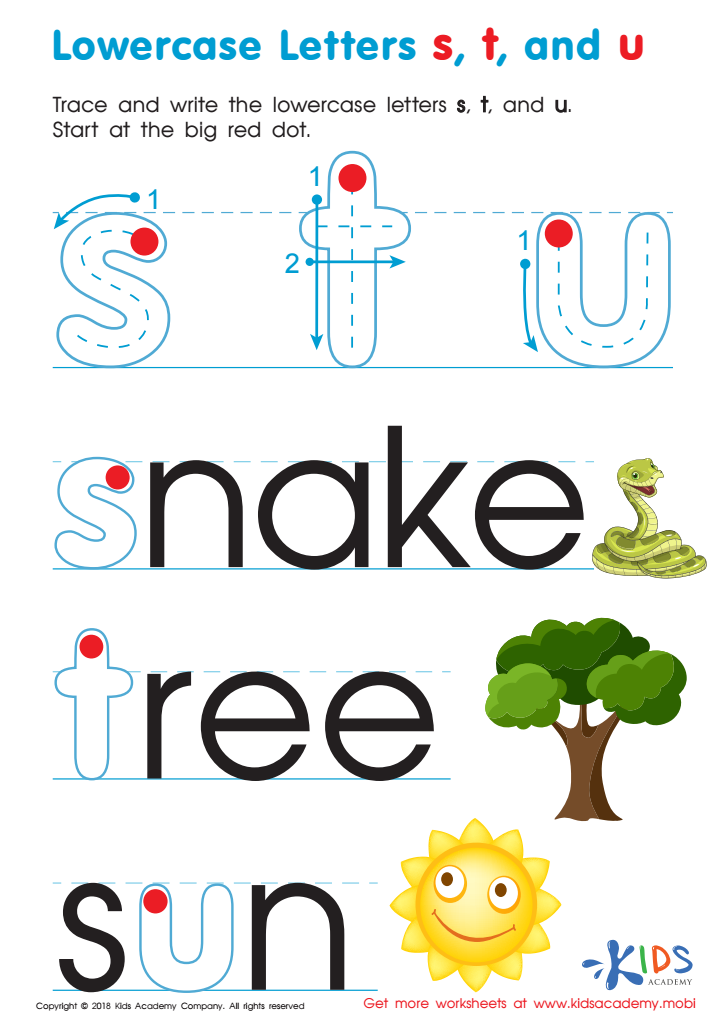
Lowercase Letters s t u Worksheet
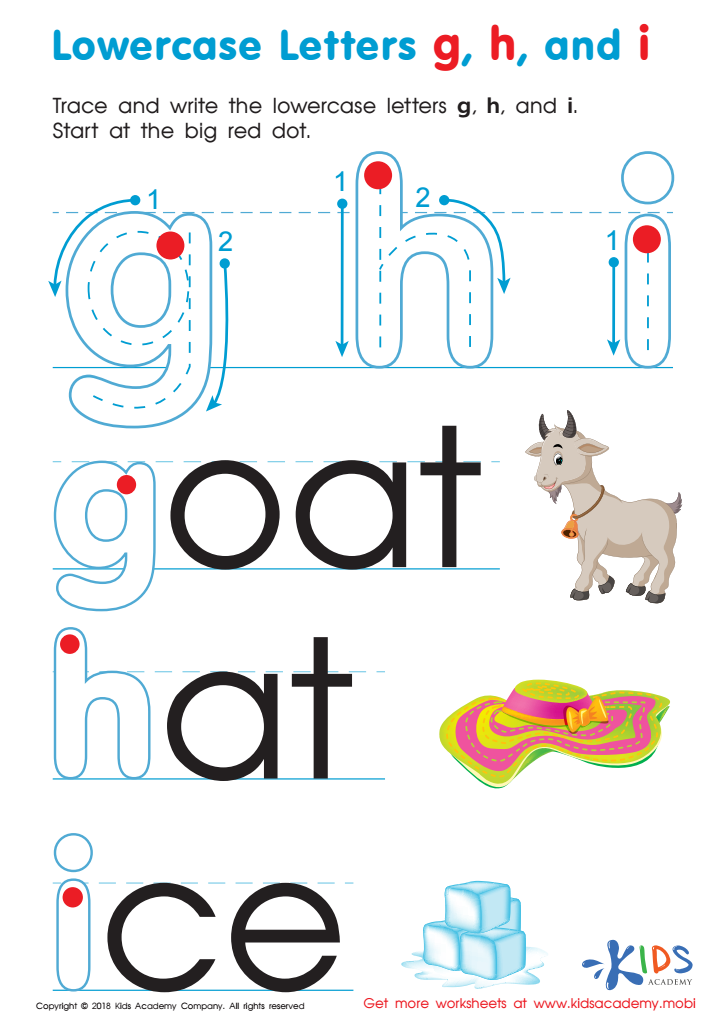
Lowercase Letters g h i Worksheet
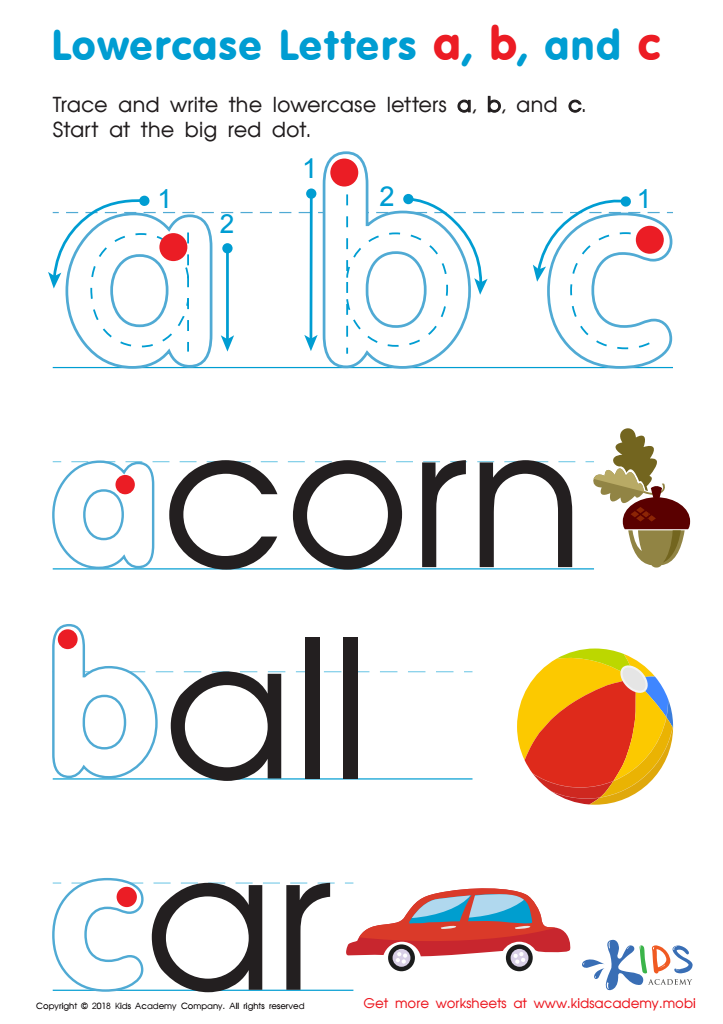
Lowercase Letters a b c Worksheet
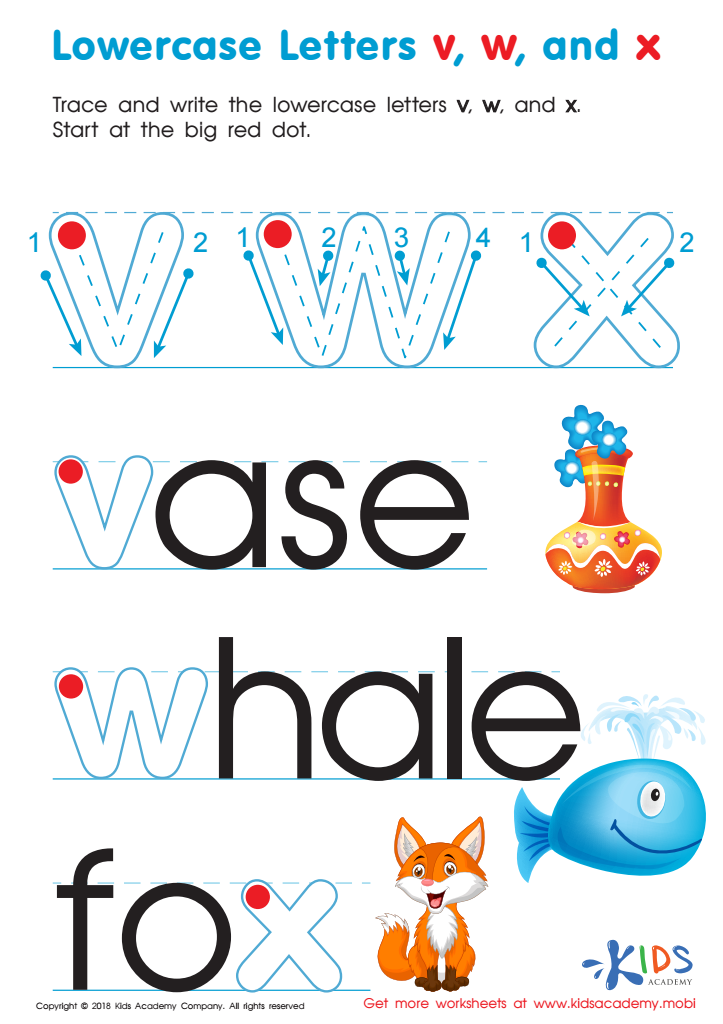
Lowercase Letters v w x Worksheet


Handwriting practice, especially focusing on normal lowercase or small letters, is essential for children aged 4-5 because it forms the foundation for effective communication and academic success. At this developmental stage, fine motor skills and eye-hand coordination are just beginning to refine, and handwriting practice helps accelerate this process. As children engage in writing exercises, they enhance their ability to control hand movements, which is crucial for other daily tasks.
Furthermore, learning lowercase letters specifically is essential because most written language is composed predominantly of these characters. Early familiarity encourages smoother reading and writing progression, thereby reducing potential learning obstacles.
Practicing handwriting also stimulates cognitive development. It requires children to recognize letter shapes, associate them with sounds, and remember their formations, which can benefit early literacy skills. Moreover, this process supports language development by aiding vocabulary acquisition and comprehension.
Incorporating handwriting practice into a child's routine fosters discipline, concentration, and persistence—valuable life skills that extend beyond literacy. Additionally, a strong grasp of handwriting promotes confidence as children successfully read and write more independently. Therefore, parents and teachers should prioritize this practice to ensure well-rounded development and instill early academic confidence.