Phonics development Normal Phonics Worksheets for Ages 4-5
3 filtered results
-
From - To
Enhance your child’s phonics development with our engaging Normal Phonics Worksheets designed for ages 4-5! Our thoughtfully crafted worksheets offer fun and interactive activities that help young learners recognize sounds, decode words, and build essential reading skills. Each worksheet focuses on different phonetic concepts, providing a well-rounded approach to literacy. Ideal for both home and classroom settings, these worksheets promote active learning through games and exercises that captivate young minds. Encourage early language skills and boost confidence in reading with our comprehensive phonics resources, perfect for young learners ready to embark on their educational journey. Explore the excitement of phonics today!
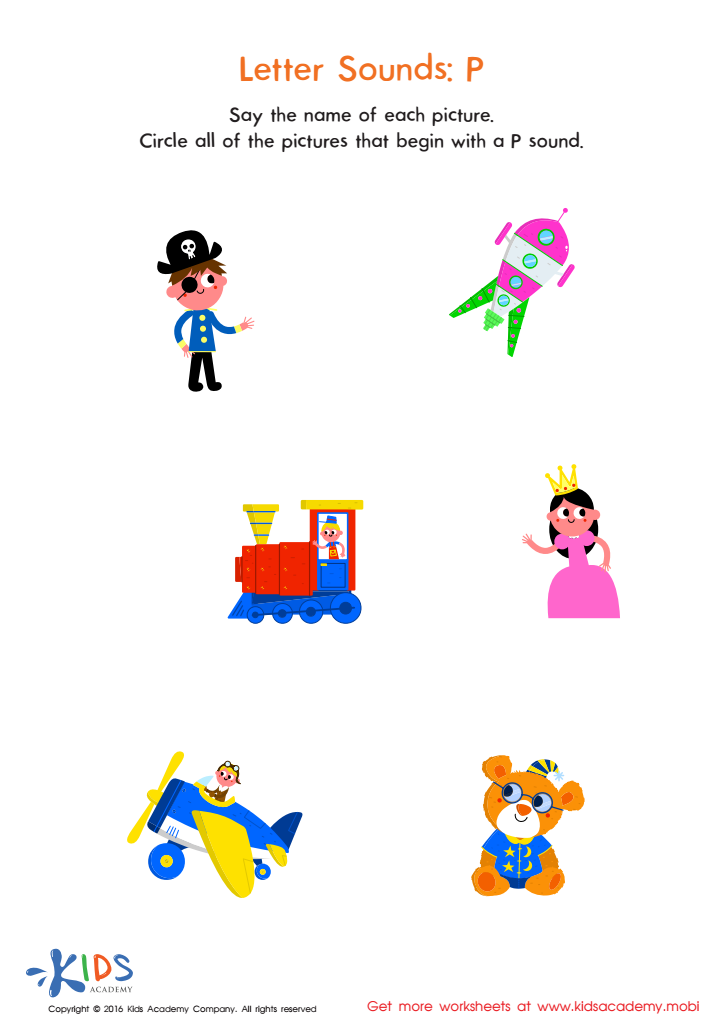
Letter P Sound Worksheet
 Assign to My Students
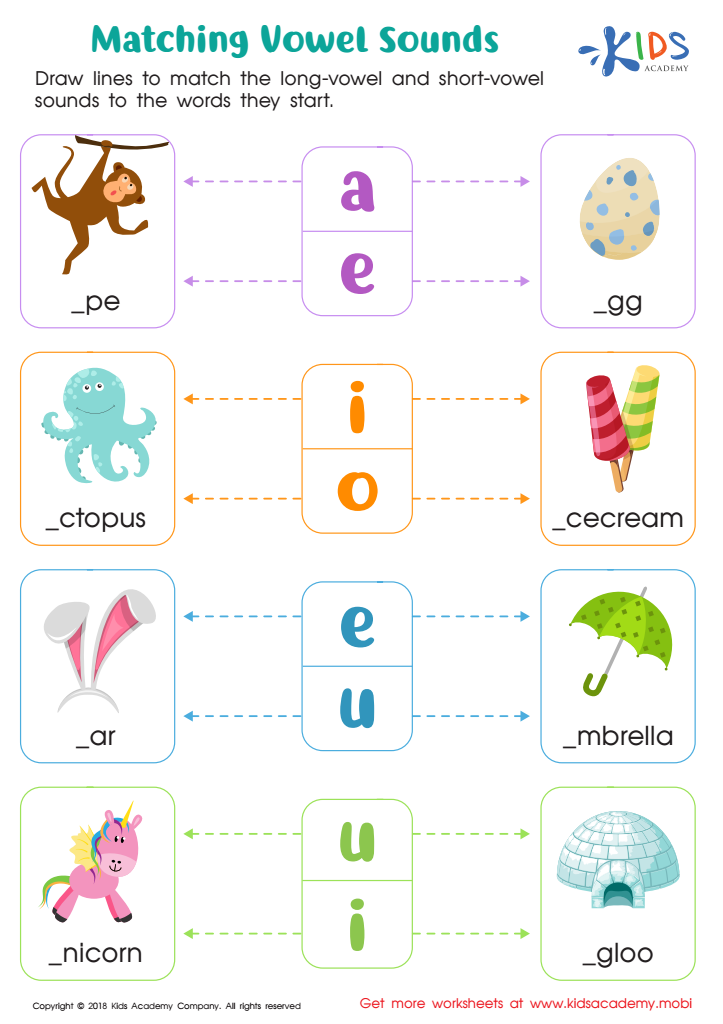
Matching Vowel Sounds Worksheet
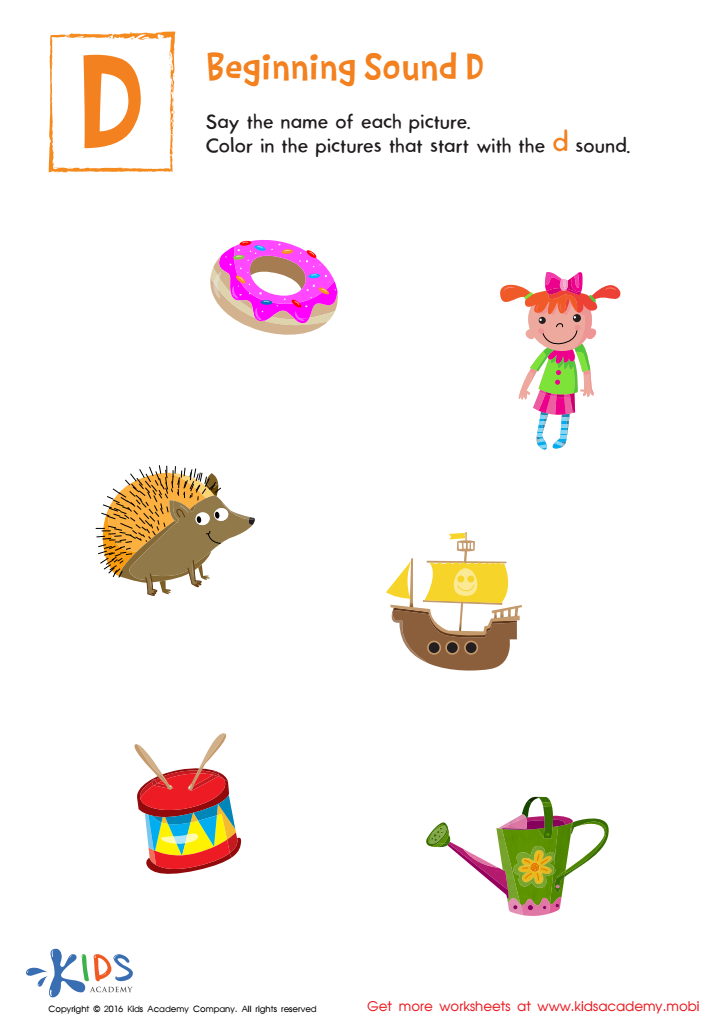
Beginning Sound D Worksheet








Phonics development is crucial for children ages 4-5 as it serves as the foundation for reading and writing skills. At this early age, children are in a critical period for language acquisition, and understanding the relationship between letters and sounds is essential for literacy development. Phonics helps young learners decode words, enabling them to sound out unfamiliar words independently. This skill builds confidence, promotes a love for reading, and supports comprehension.
For parents and teachers, fostering phonics development is vital because it directly impacts children's academic success. Mastering phonics can lead to improved reading fluency, which is linked to better performance in later grades across all subjects. Furthermore, children who struggle with phonics may face challenges in literacy that can affect their self-esteem and motivation to learn.
Engaging in phonics activities, such as rhyming, blending sounds, and using phonemic awareness games, can be both fun and educational. Supporting phonics development creates a supportive learning environment where children can thrive, ensuring they have the skills needed for lifelong learning. Investing in phonics now sets the stage for literacy proficiency, paving the way for a successful academic journey.







