Sound recognition Normal Phonics Worksheets for Ages 4-5
4 filtered results
-
From - To
Discover our engaging Sound Recognition Normal Phonics Worksheets designed specifically for children aged 4-5. These fun, interactive resources help young learners strengthen their understanding of phonics through targeted activities. Each worksheet is crafted to improve sound recognition, enabling kids to identify letters and the sounds they make, laying a solid foundation for reading and literacy skills. Bright, colorful designs capture children’s attention while incorporating playful elements to enhance learning. Ideal for homeschooling or classroom use, our worksheets support diverse learning styles and foster a love for reading. Download now to bring fun phonics practice into your child's educational journey!
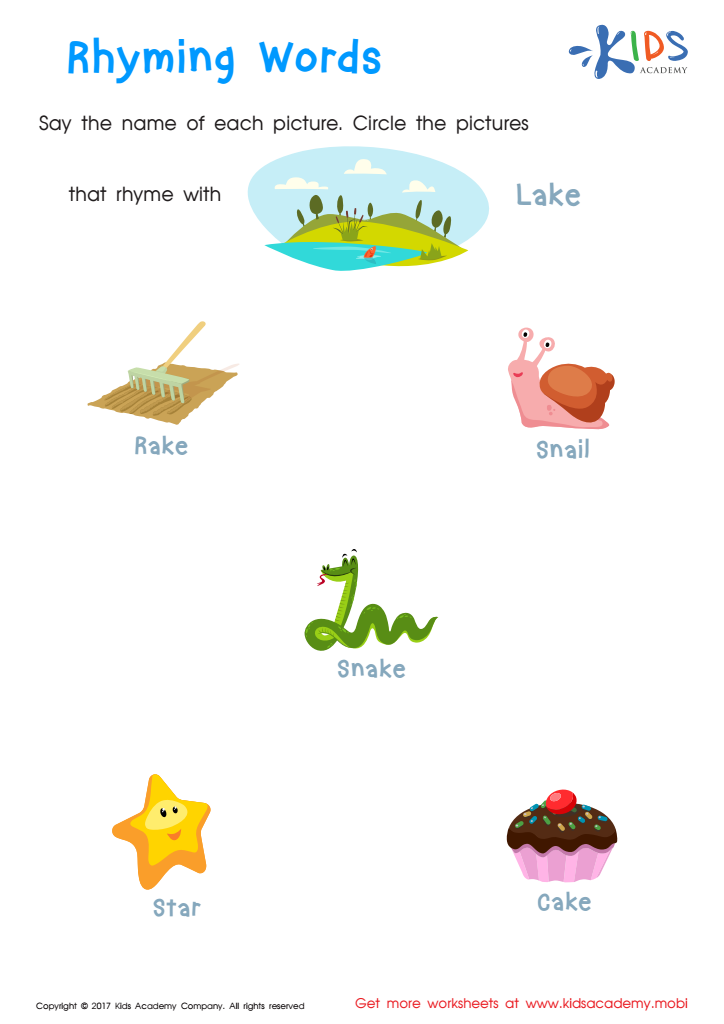
Rhyming Words Rhyming Worksheet

Long and Short U Worksheet
 Assign to My Students
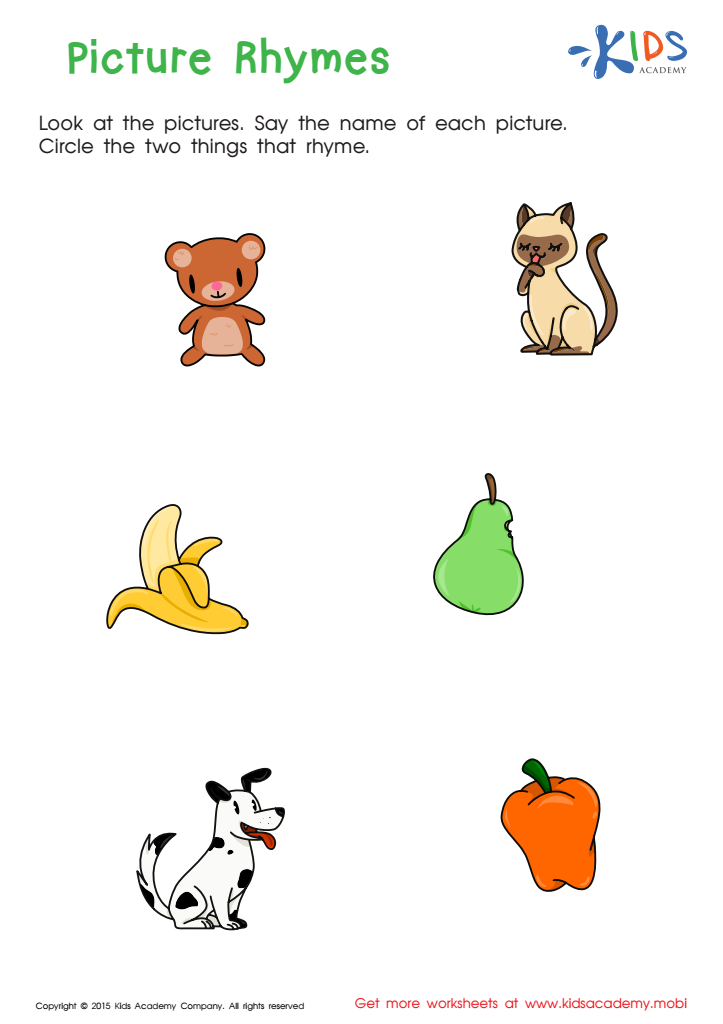
First Words: Picture Rhymes Worksheet
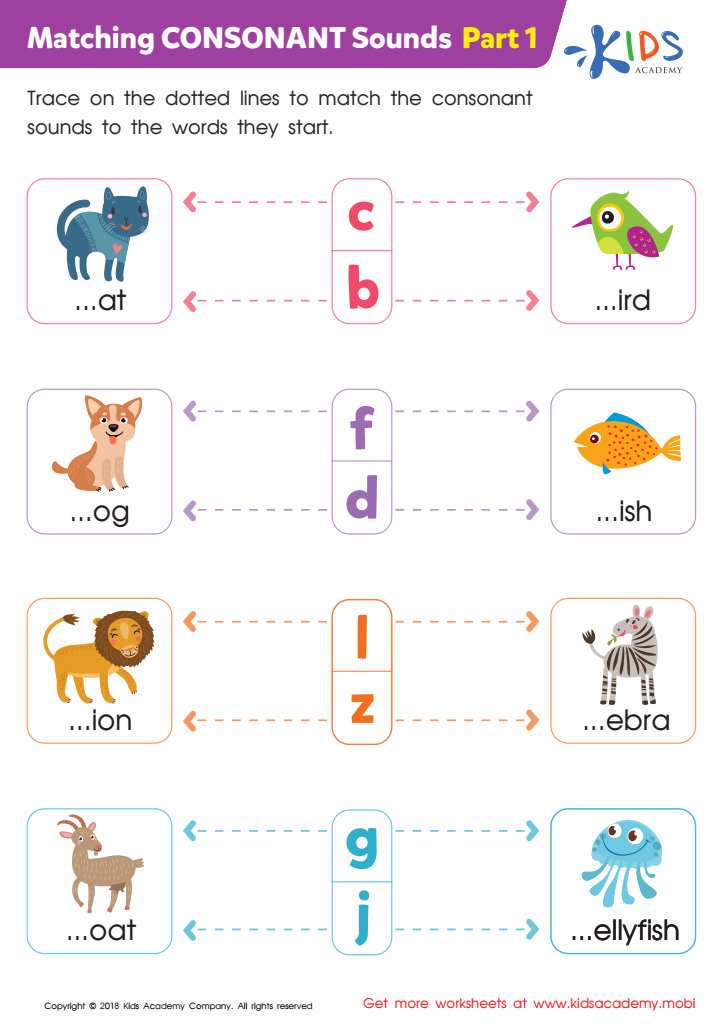
Matching Consonant Sounds: Part 1 Worksheet








Sound recognition and phonics are foundational to early literacy development, making them critical for children aged 4-5. Understanding sound recognition involves identifying and manipulating individual sounds (phonemes) within words, which is essential for reading skills. By mastering these skills early, children develop the ability to decode new words, thus promoting reading fluency and comprehension.
Parents and teachers should care about normal phonics instruction as it provides structured exposure to the alphabetic principle—the understanding that letters correspond to specific sounds. This connection aids in the development of spelling and writing skills, which are vital for overall communication.
Moreover, engaging in phonics through fun and interactive activities enhances children's language skills and boosts confidence. When children feel competent in their reading abilities, they are more likely to develop a love for books and learning, setting the stage for future academic success.
Incorporating sound recognition and phonics into everyday routines also allows for seamless integration of learning. By prioritizing these practices, parents and teachers not only support literacy development but also equip children with the tools necessary for lifelong learning and cognitive growth. Thus, a focus on phonics at this early age can have significant long-term benefits.







