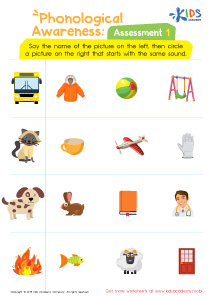
Rhyming skills development Normal Rhyming Worksheets for Ages 4-5
3 filtered results
-
From - To
Boost your child’s language development with our "Rhyming Skills Development" worksheets, tailored for ages 4-5. These engaging, age-appropriate worksheets introduce young learners to the vibrant world of rhyming through fun exercises and interactive tasks. Designed to bolster phonemic awareness, our activities help children recognize, match, and create rhymes, laying a strong foundation for future reading proficiency. With colorful illustrations and simple instructions, kids will enjoy enhancing their vocabulary and sound discrimination skills. Perfect for preschool and kindergarten students, these worksheets make learning a delightful adventure that prepares them for academic success. Start rhyming today!
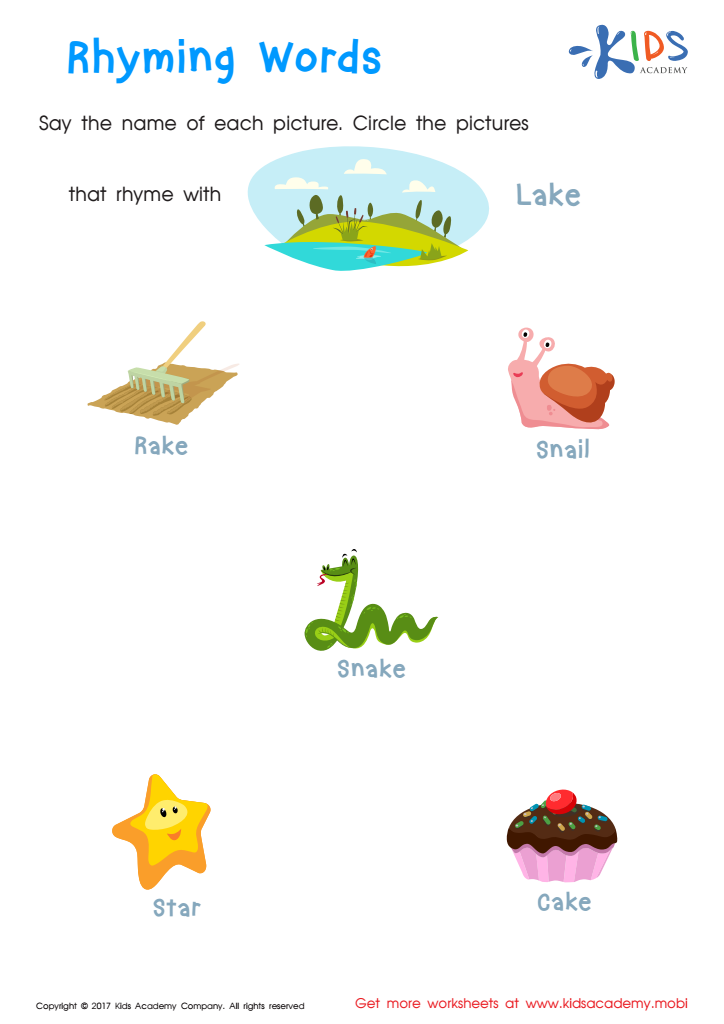
Rhyming Words Rhyming Worksheet
 Assign to My Students
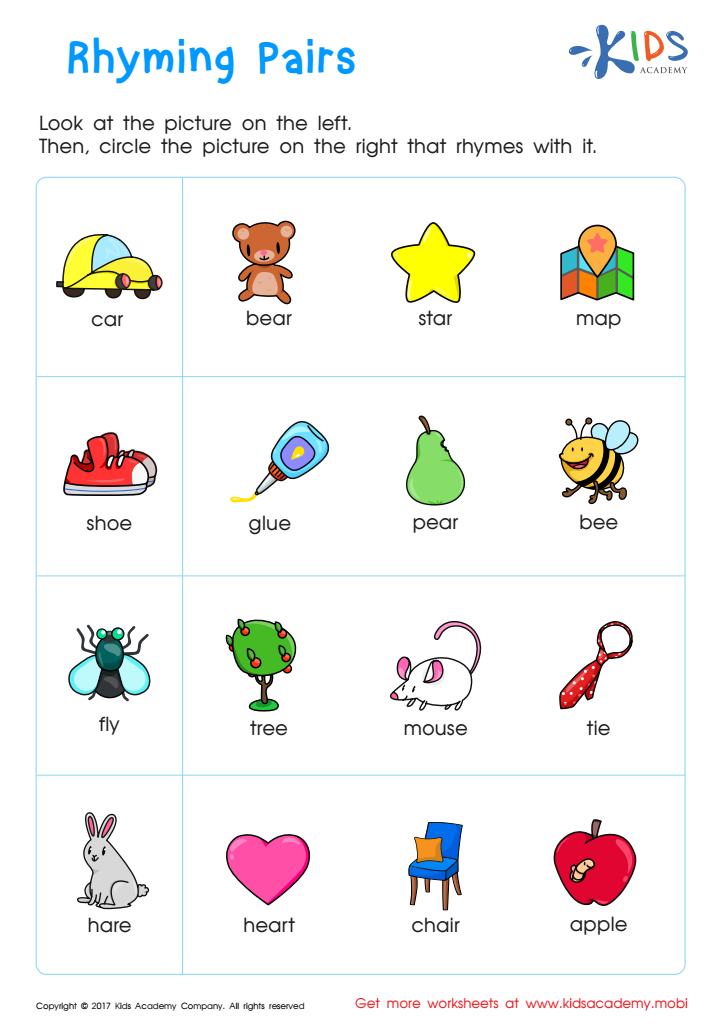
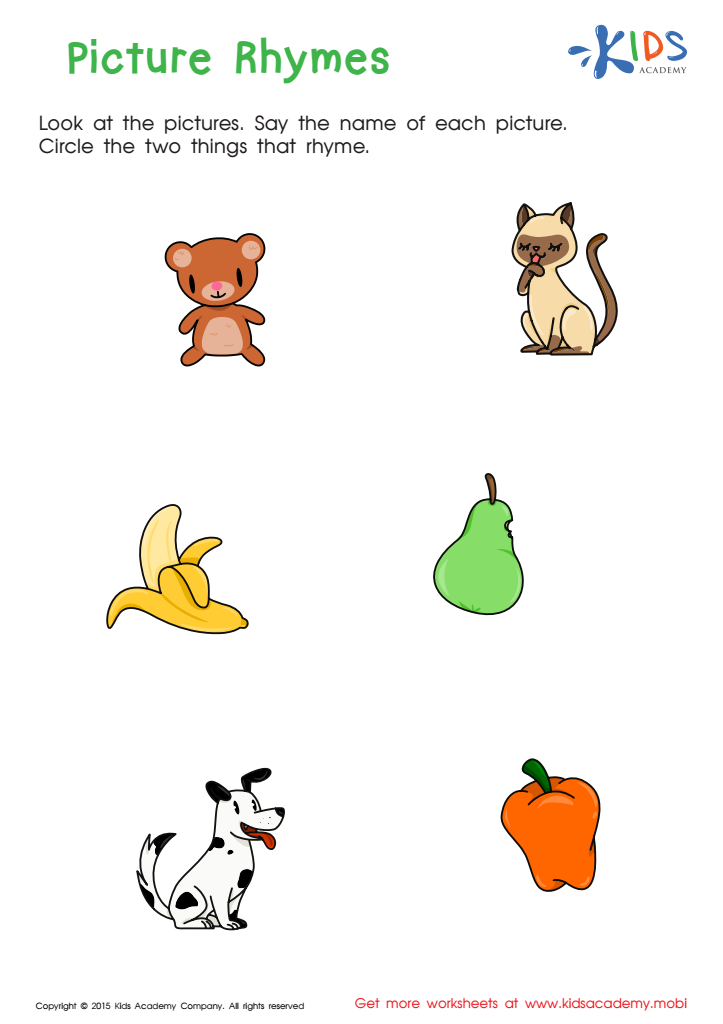
First Words: Picture Rhymes Worksheet







Rhyming skills are foundational for young children, typically around the ages of 4-5, and parents and teachers should care deeply about their development for several compelling reasons. First, rhyming enhances phonological awareness, an essential precursor to reading. When children learn to recognize and produce rhymes, they improve their ability to identify and manipulate sounds within words, aiding in the process of decoding new words while reading.
Additionally, rhyming can expand a child's vocabulary. Through exposure to rhyming stories and songs, children encounter more words and thus build a richer linguistic repertoire. This not only bolsters their language skills but also augments their capacity for creative expression.
Rhyming also supports memory and recall. Rhyming patterns and rhythmic sequences are easier for young children to remember, facilitating better retention of words and concepts. Activities involving rhyming, such as reading rhyming books or singing rhyming songs, often involve repetition, which further reinforces memory skills.
Lastly, engaging with rhymes can make learning enjoyable. The playful nature of rhyming games and activities can spark a child’s interest in language and reading, fostering a positive attitude towards learning. In summary, cultivating rhyming skills in early childhood equips children with critical reading abilities, enriched vocabularies, strong memory skills, and a love for learning—all of which are cornerstones of academic success.