Visual discrimination skills Normal Upper & Lowercase Letters Worksheets for Ages 4-5
4 filtered results
-
From - To
Enhance your child's visual discrimination skills with our engaging worksheets for ages 4-5, focusing on normal uppercase and lowercase letters. Designed to cultivate letter recognition, these worksheets provide young learners with a fun and interactive way to differentiate between similar letters. Each activity encourages children to explore the nuances of letter shapes and forms, fostering essential pre-reading skills. Our carefully crafted exercises allow for endless practice, reinforcing kids' understanding of the alphabet in an enjoyable manner. Perfect for at-home learning or classroom use, these worksheets lay the foundation for literacy and boost confidence in young learners as they embark on their educational journey.

Find Uppercase Letters A, B, and C Worksheet
 Assign to My Students

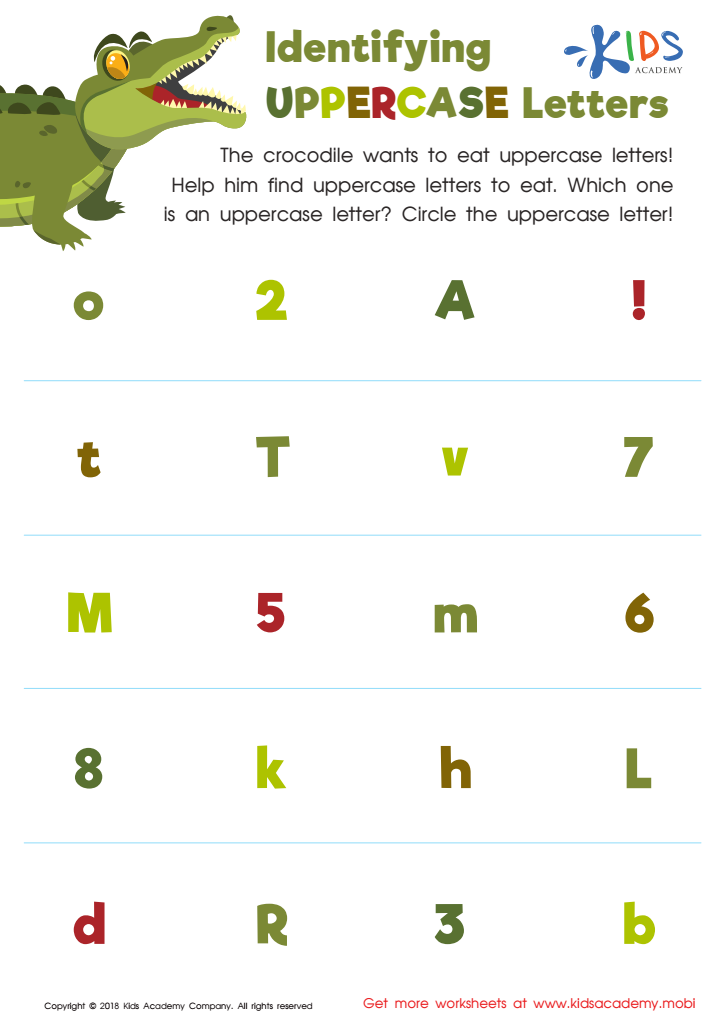
Identifying Uppercase Letters Worksheet
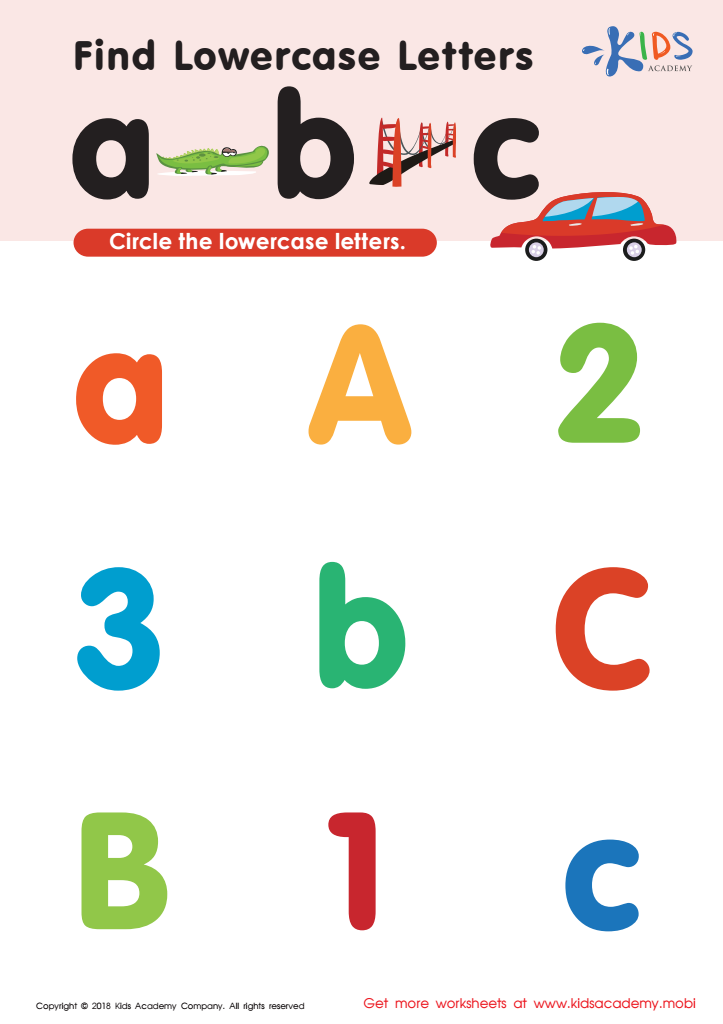
Find lowercase letters a b c Worksheet
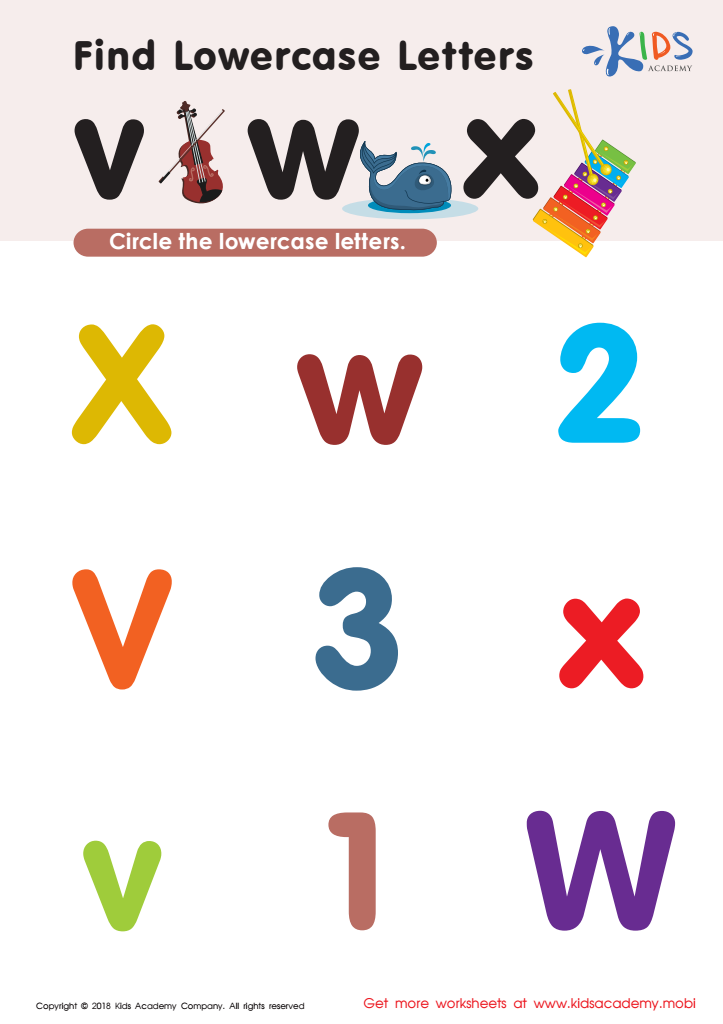
Find Lowercase Letters v w x Worksheet






Visual discrimination skills, particularly for normal upper and lowercase letters, are crucial for children ages 4-5 as they form the foundation for future reading and writing success. At this developmental stage, children are beginning to recognize letters and differentiate between similar-looking characters. Strong visual discrimination allows them to identify whether a letter is uppercase or lowercase, which is essential for understanding text.
Parents and teachers should care about these skills because they directly impact a child’s literacy development. Mastering these distinctions influences their ability to correctly read simple words, follow instructions, and ultimately progress in their education. Additionally, children with well-developed visual discrimination are often more confident in their ability to write, as they can better differentiate letters when spelling.
Engaging in activities that enhance these skills, such as letter sorting games, matching exercises, or fun worksheets, can make learning enjoyable and effective. By fostering visual discrimination, adults help prepare children for more complex literacy tasks they will encounter later in their educational journey. Furthermore, children who struggle in this area may benefit from tailored teaching strategies or activities, ensuring they receive the support needed to thrive in reading and writing tasks.







