Uppercase identification Normal Uppercase Letters Worksheets for Ages 4-5
5 filtered results
-
From - To
Enhance your child's literacy skills with our engaging Uppercase Identification Worksheets, specially designed for ages 4-5. These printable resources offer a fun and interactive way for young learners to recognize and solidify their knowledge of normal uppercase letters. Each worksheet features colorful illustrations and clear instructions, making learning enjoyable and effective. Through a variety of activities, children will practice identifying, tracing, and writing uppercase letters, laying a strong foundation for future reading and writing endeavors. Support your child's educational journey with these thoughtfully crafted worksheets that promote both confidence and creativity in learning the alphabet! Perfect for home or classroom use.
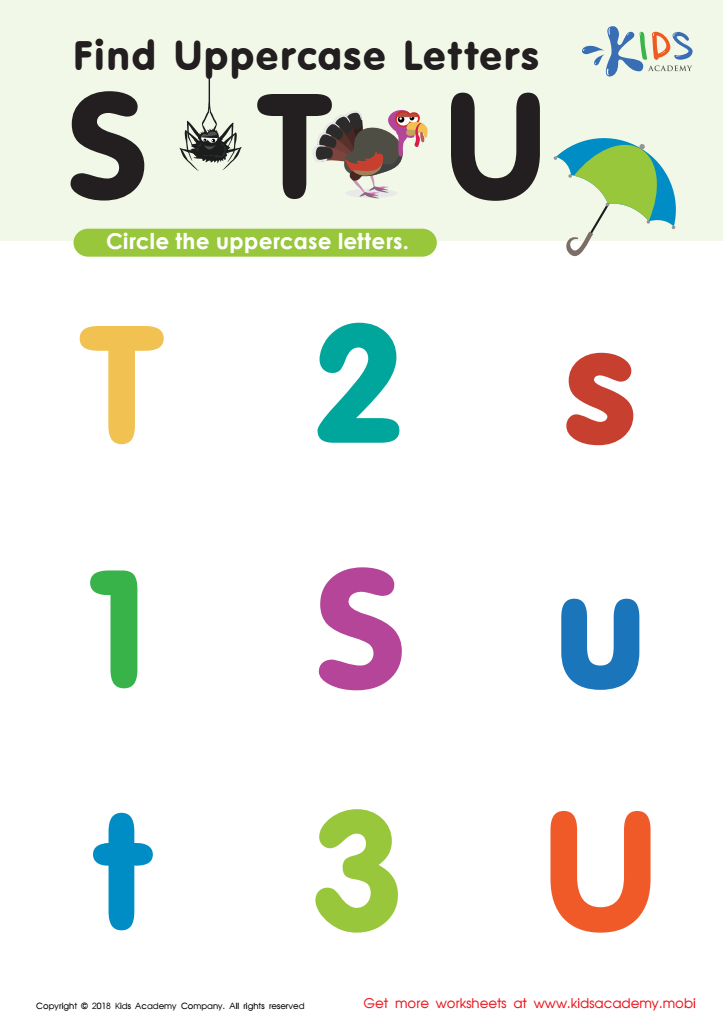
Find Uppercase Letters Worksheet
 Assign to My Students
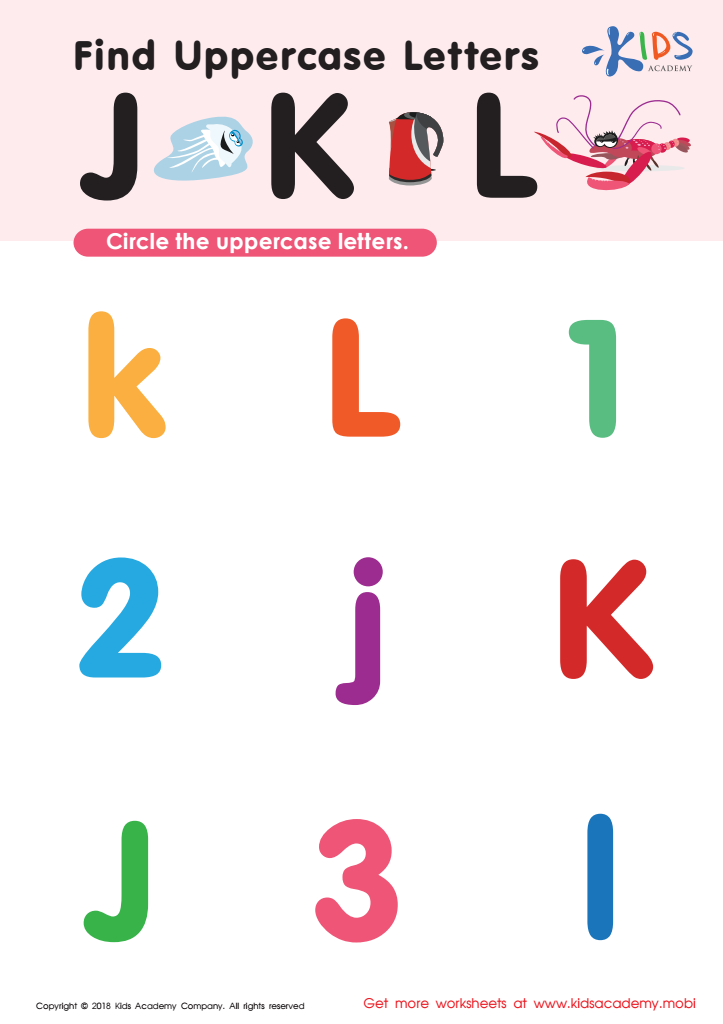
Find Uppercase Letters J, K, and L Worksheet
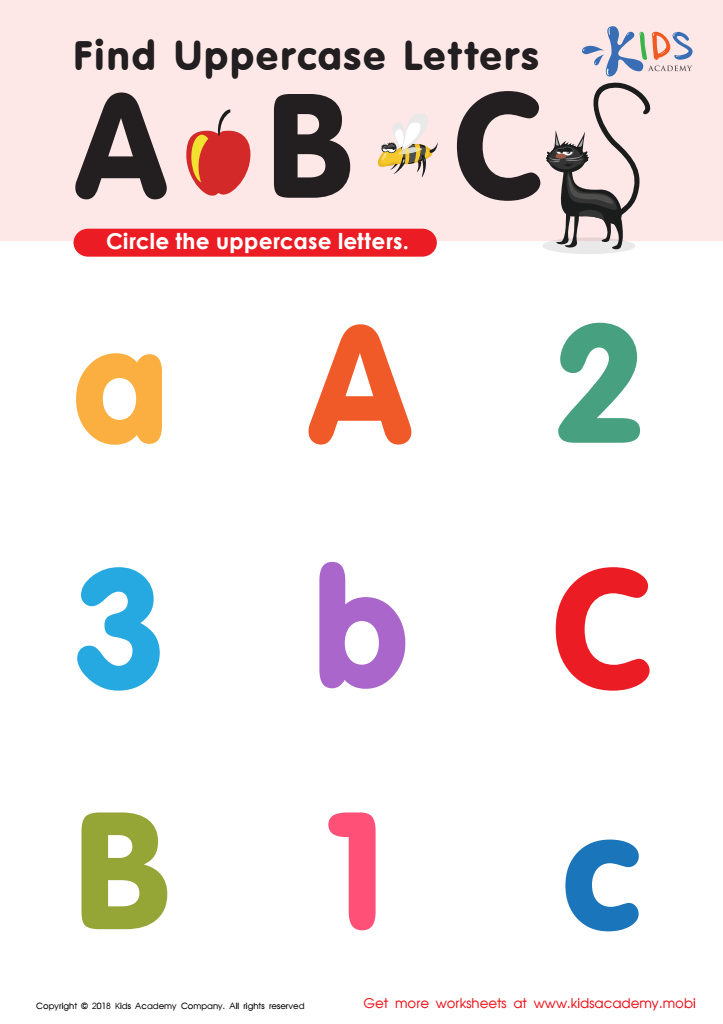
Find Uppercase Letters A, B, and C Worksheet
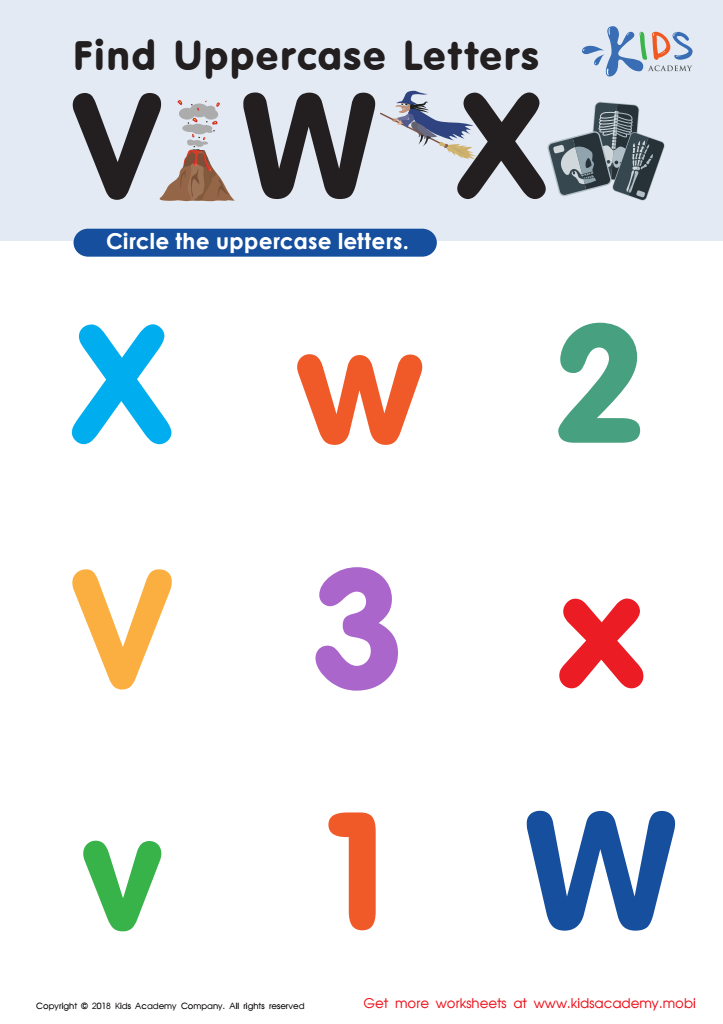
Find Uppercase Letters V, W, X Worksheet
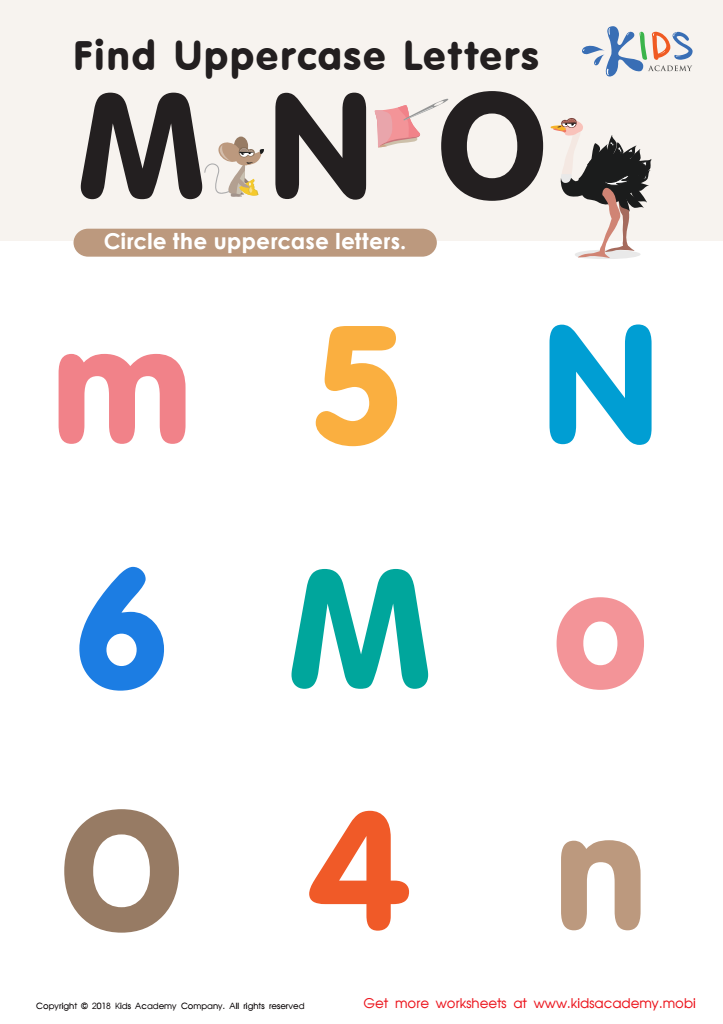
Find Uppercase Letters M, N, and O Worksheet








Understanding uppercase letters is crucial for children aged 4-5, as it lays the foundation for literacy and communication skills. At this age, children are naturally curious and are developing their language abilities. Familiarity with uppercase letters enables them to recognize words in their environment, from signs to storybooks, enhancing their reading readiness.
Moreover, uppercase letters are often the first kinds of letters that children encounter; they usually appear in names, signs, and books. Recognizing these letters helps children develop phonemic awareness, fostering skills needed for reading and writing. When children can identify uppercase letters, they are more likely to experiment with writing, spelling, and creating narratives, thus enhancing their overall literacy development.
By engaging with uppercase letters, parents and teachers can instill confidence in young learners, motivating them to explore language further. Activities like letter games, displaying names, and reading aloud using books emphasizing uppercase letters can strengthen these skills. Therefore, understanding uppercase letter identification is essential not only for immediate literacy progress but also for fostering a lifelong love of reading and learning. Supporting children in mastering this skill is an invaluable investment in their educational journey.