Problem-Solving Skills Normal Addition Worksheets for Ages 4-5
4 filtered results
-
From - To
Discover engaging Problem-Solving Skills Normal Addition Worksheets designed for children ages 4-5! These interactive resources help young learners develop foundational math skills through entertaining activities that promote critical thinking and reasoning. Our worksheets encourage kids to solve addition problems in a fun, age-appropriate way, ensuring they grasp essential concepts while honing their problem-solving abilities. With vibrant illustrations and varied exercises, these worksheets make learning enjoyable and effective. Perfect for home or classroom use, they assist in preparing preschoolers for future academic challenges. Start building your child's confidence in math with our carefully crafted addition worksheets today!
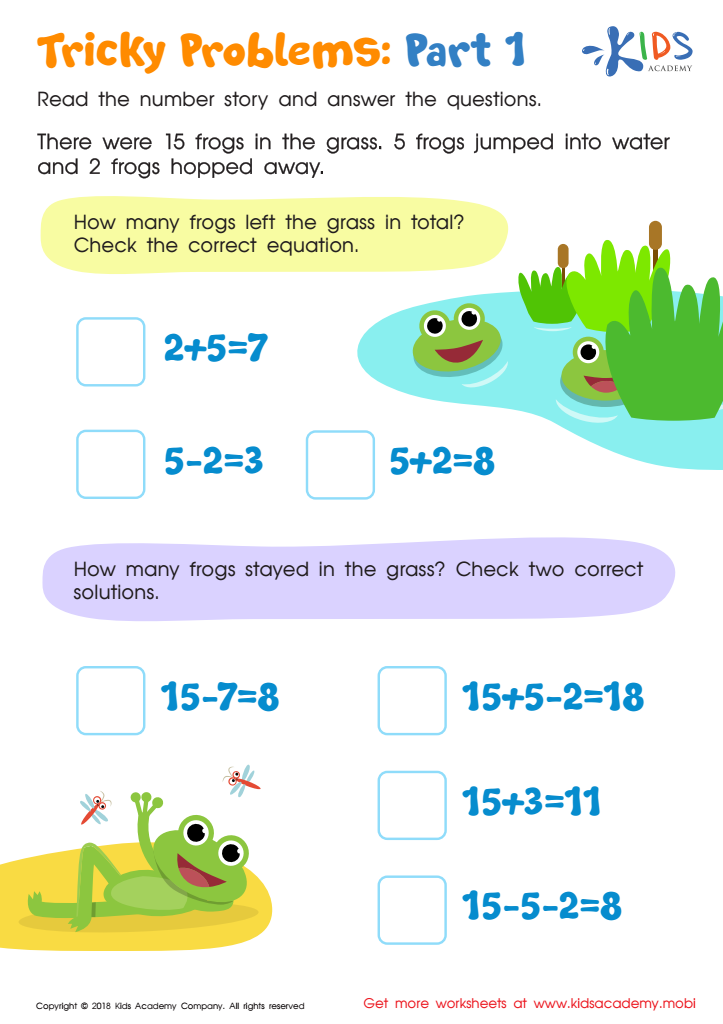
Tricky Problems Worksheet: Part 1
 Assign to My Students
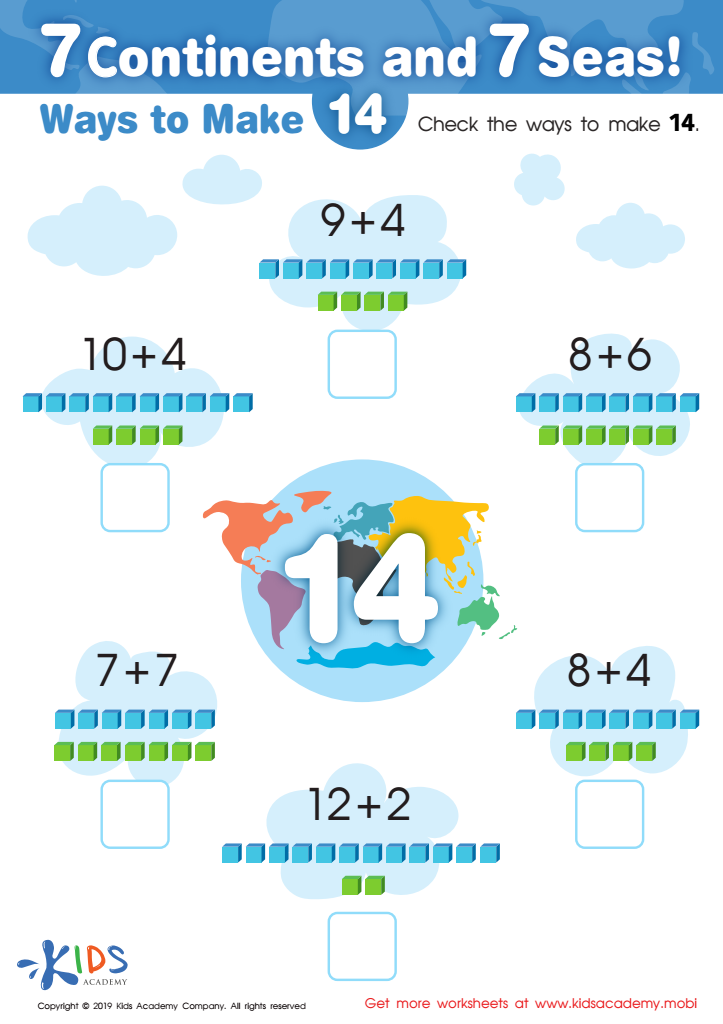
7 Continents and 7 Seas Worksheet
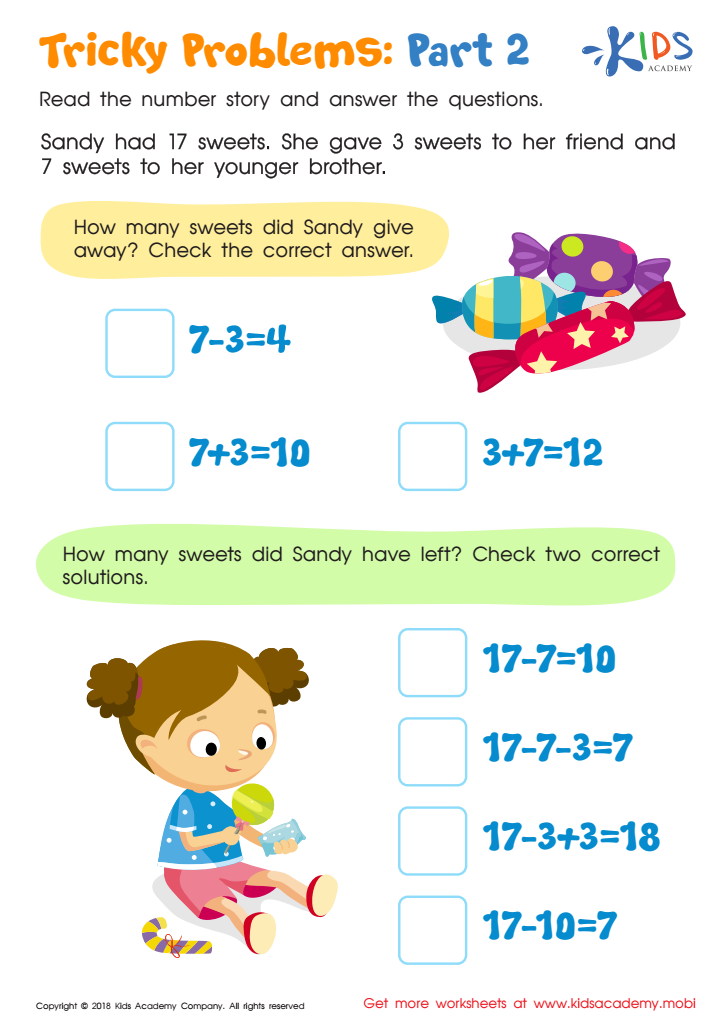
Tricky Problems Worksheet: Part 2
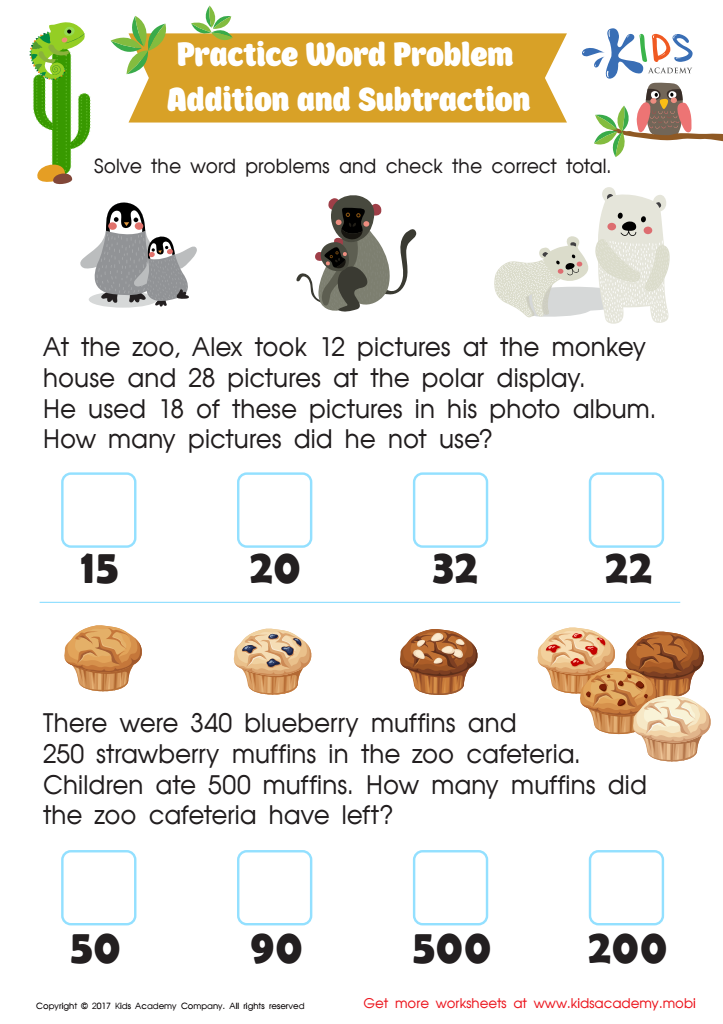
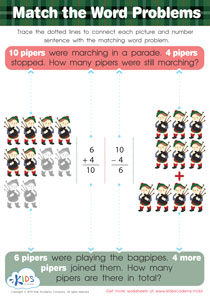
Addition and Subtraction: Word Problems Worksheet








Developing problem-solving skills through normal addition for children ages 4-5 is crucial for several reasons. At this stage, children are not only mastering mathematical concepts but also building their cognitive abilities. Engaging in simple addition activities helps them learn how to analyze problems, identify patterns, and approach challenges systematically. These foundational skills extend beyond math, fostering critical thought processes necessary for success in various life scenarios.
Parents and teachers should prioritize problem-solving exercises because they encourage a growth mindset. When young learners tackle addition problems, they experience both success and setbacks, teaching them perseverance and resilience. This foundation is essential for their emotional and social development, encouraging them to view challenges as opportunities for growth.
Furthermore, integrating problem-solving into everyday situations enhances enjoyment and significance in learning. By contextualizing math into relatable scenarios, such as counting toys or sharing snacks, children are more likely to engage and understand the relevance of math in daily life. In summary, nurturing problem-solving skills through other normal additions equips children with the tools they need to tackle academic challenges while promoting confidence and independence that will benefit their overall development.