
Multiplication practice Normal Word Problems Worksheets for Ages 4-5
3 filtered results
Difficulty Level
Grade
Age
-
From - To
Subject
Activity
Standards
Welcome to our Multiplication Practice Normal Word Problems Worksheets, designed specifically for children aged 4-5! These engaging and age-appropriate worksheets help lay a solid foundation in multiplication through fun, relatable word problems. Tailored to stimulate young minds, each worksheet encourages critical thinking and problem-solving skills. Perfect for classroom or home learning, our resource provides a mix of visuals and simple language to captivate your child’s interest while they learn basic multiplication concepts. Foster a love for math in your little ones with our interactive worksheets, and watch them thrive as they confidently tackle word problems with ease!
Favorites
With answer key
Interactive
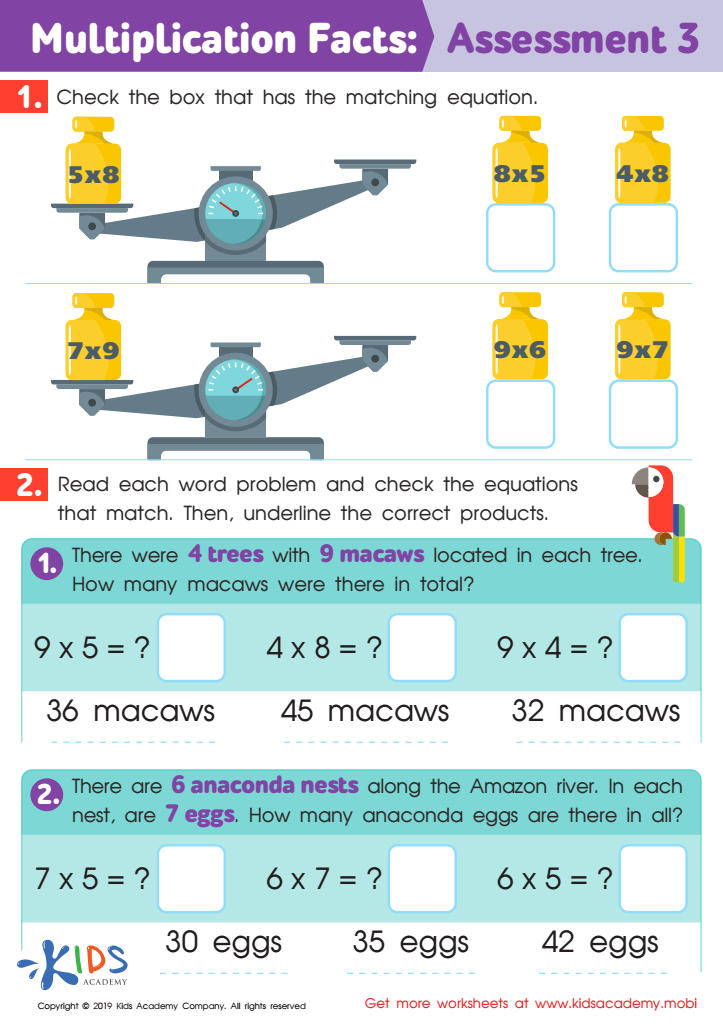
Multiplication Facts: Assessment 3 Worksheet
Test your kid's maths skills with this easy to use worksheet! Help them check the box that matches the equation in the first part, then read each word problem and underline the right answers to the second part. Assess your child's muliplication knowledge and find out where they need extra help.
 Assign to My Students
Multiplication Facts: Assessment 3 Worksheet
Worksheet
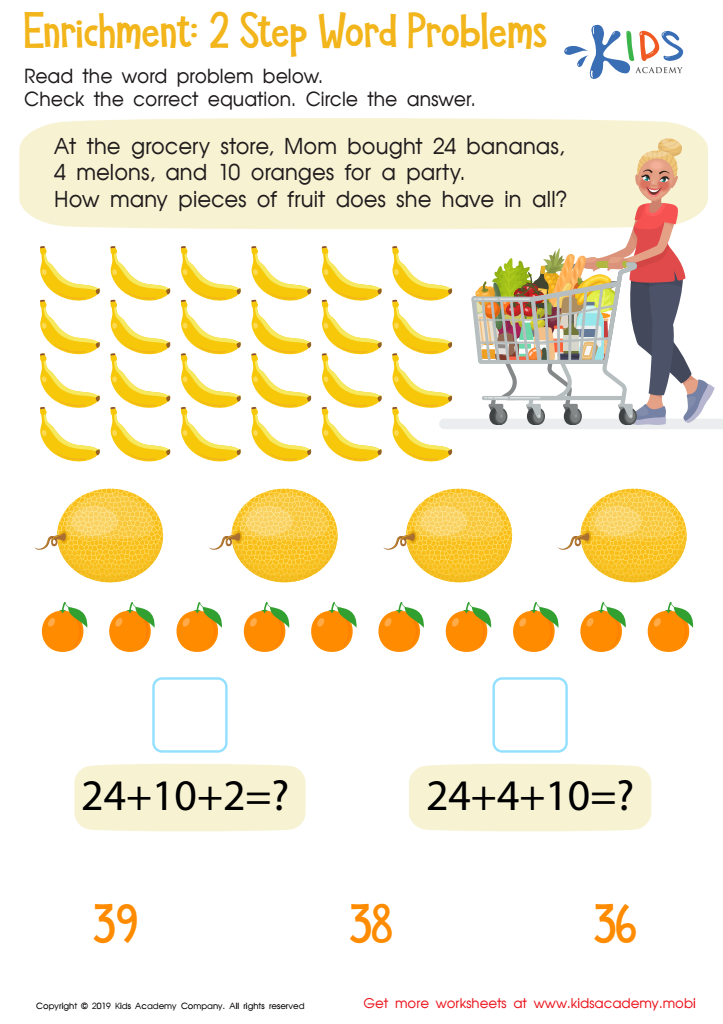
Enrichment -2 Step Word Problems Worksheet
Help your students learn math easier and faster with this colorful worksheet. Read the word problem and then guide them in checking the correct equation and finding the answer. Your students will benefit from the extra help, as they work through new concepts each day.
Enrichment -2 Step Word Problems Worksheet
Worksheet
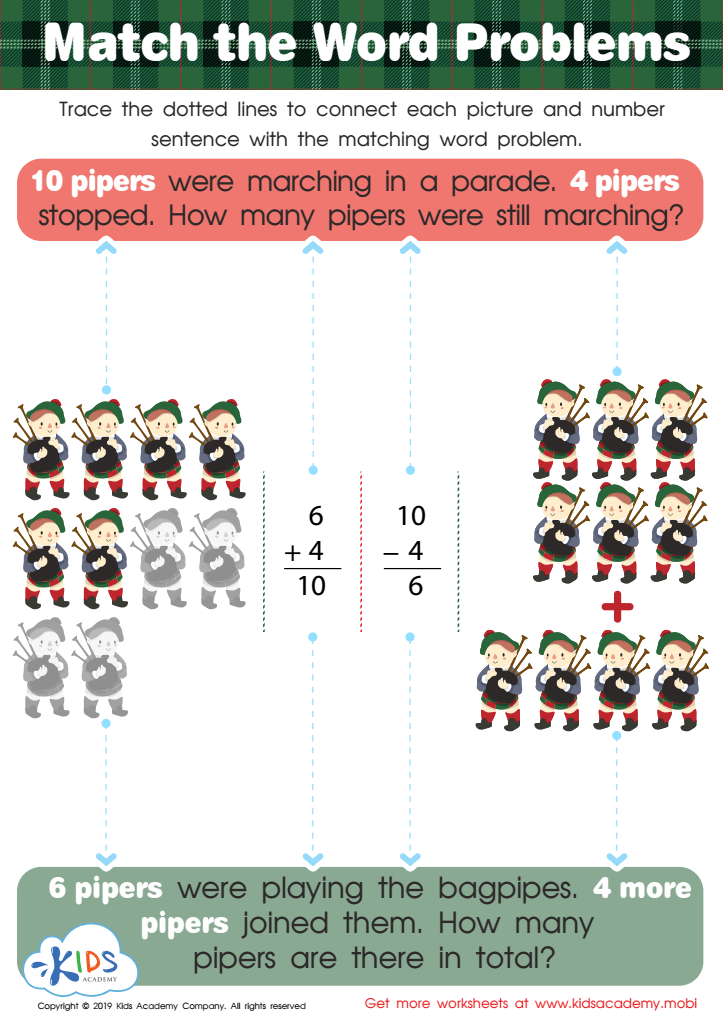
Match the Word Problems Worksheet
Read this word problem to your kids: Help them understand how it can be translated into a number problem. Trace the dotted lines to see how each picture and number sentence match the problem. With this worksheet, you can show your kids how easy it is to transform a word problem into a number problem.
Match the Word Problems Worksheet
Worksheet
Join Kids Academy for Free
Who is primarily going to use this learning content?








Parents and teachers should care about multiplication practice through normal word problems for children aged 4-5 because this foundational skill significantly impacts early numeracy development. At this age, children are beginning to grasp basic mathematical concepts, and introducing multiplication in a relatable context can enhance their understanding.
Word problems provide a tangible way for young children to apply their mathematical knowledge. They encourage critical thinking, helping kids connect numbers to real-life scenarios. For instance, asking a child how many legs a group of cats has builds their ability to visualize the problem and engage in simple multiplication, even if they don't realize it yet.
Additionally, incorporating multiplication practice into daily activities fosters a love for math. It turns learning into a fun and interactive experience, promoting curiosity and confidence. By engaging with word problems, children develop vocabulary, improve comprehension skills, and learn to communicate their thought processes.
Ultimately, early exposure to multiplication through context-based problems lays a strong foundation for future math learning. It equips children with essential problem-solving tools and strengthens their number sense, preparing them for more complex mathematical concepts as they advance in their education. Parents and teachers play a crucial role in nurturing these skills during these formative years.








