Sound recognition Normal Reading Worksheets for Ages 4-5
3 filtered results
-
From - To
Discover our engaging "Sound Recognition Normal Reading Worksheets" for children ages 4-5. Carefully designed to boost early reading skills, these worksheets help young learners identify and match sounds with corresponding letters and words. With a mix of fun activities, including coloring, tracing, and sound matching, kids can develop their phonemic awareness while enjoying the learning process. Perfect for both classroom and home practice, these worksheets lay a solid foundation for successful reading. Enhance your child’s literacy journey with our expertly crafted resources that promote confidence and a love for reading. Download now to see the difference!

Rhyming Words Rhyming Worksheet
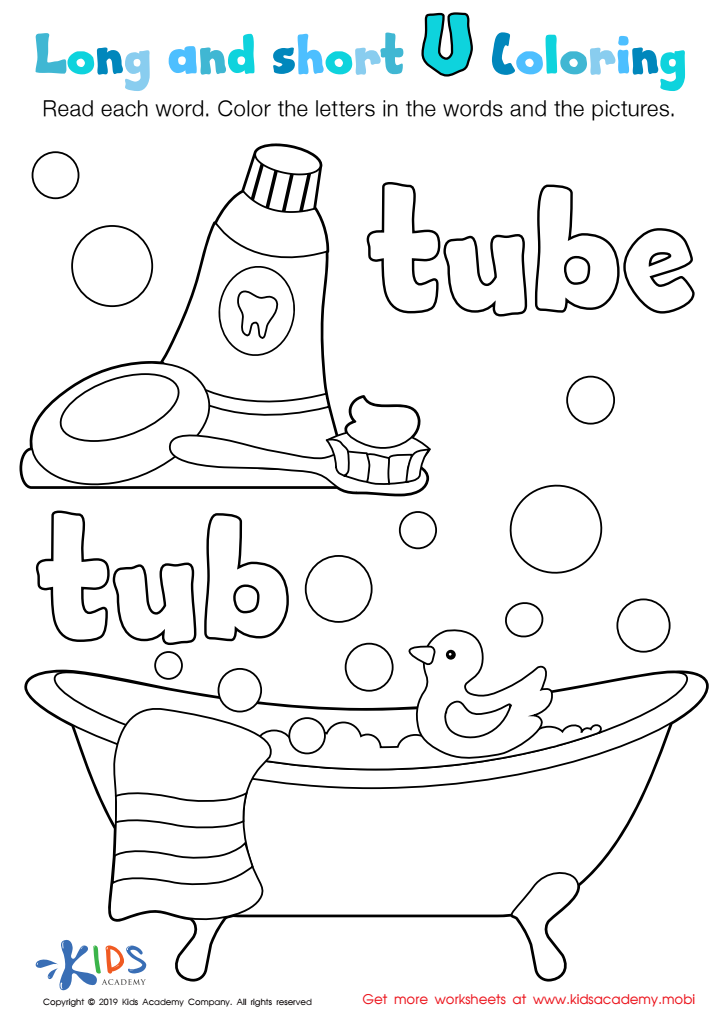
Long and Short U Worksheet
 Assign to My Students

First Words: Picture Rhymes Worksheet







Sound recognition is a vital precursor to normal reading development, particularly for children aged 4-5. At this developmental stage, children’s brains are highly receptive to language acquisition, making it an ideal time for them to develop phonemic awareness—the ability to hear, identify, and manipulate individual sounds in spoken words. This skill is foundational for decoding, the process by which readers translate written words into their spoken equivalents.
Parents and teachers must prioritize sound recognition because it directly impacts a child's reading proficiency. Poor phonemic awareness can lead to difficulties in learning to read, which might have cascading effects on academic achievement and self-esteem. Studies consistently show that early reading skills are strong predictors of future educational success.
Moreover, fostering sound recognition can be fun and engaging. Simple activities like rhyming games, clapping out syllables, and reading aloud can significantly enhance a child's phonemic abilities and cultivate a love for reading. Schools and homes that support early literacy create confident, capable readers eager to explore and learn, setting the stage for lifelong educational success. Both parents and teachers play crucial roles in laying this critical foundation, ensuring that children not only learn to read but also develop a passion for it.








