
Vocabulary development Normal Reading Worksheets for Ages 4-5
4 filtered results
Difficulty Level
Grade
Age
-
From - To
Subject
Activity
Standards
Discover our engaging Vocabulary Development Worksheets tailored for children ages 4-5! These resources are designed to foster language skills through fun and interactive activities, promoting an early love for reading. Each worksheet features colorful visuals and simple exercises that help young learners identify words, recognize their meanings, and build their vocabulary in an enjoyable way. Ideal for home or classroom use, our worksheets cater to various learning styles, ensuring every child can thrive. Unlock your child's linguistic potential and support their journey towards literacy with our thoughtfully crafted materials, making vocabulary building both effective and delightful!
Favorites
With answer key
Interactive
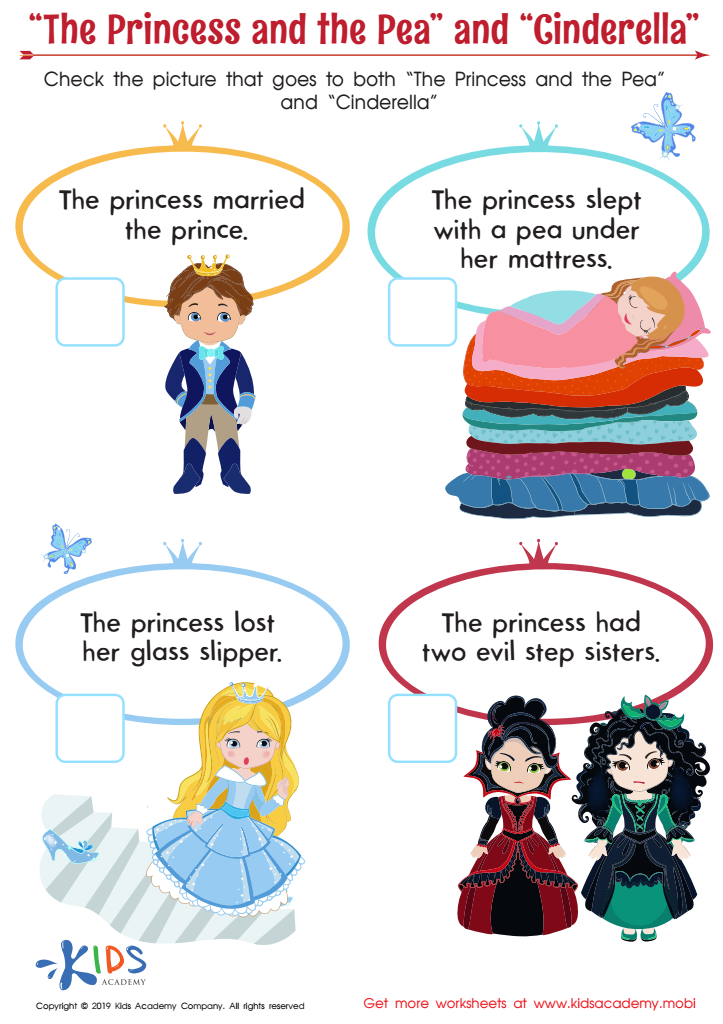
“The Princess and the Pea” and “Cinderella” Worksheet
Read "Cinderella" and "The Princess and the Pea" to your little ones. Ask them what their favorite parts were and what similarities they found in the princesses. This worksheet has four pictures of scenes from the stories. Ask your kids which picture goes with both tales.
 Assign to My Students
“The Princess and the Pea” and “Cinderella” Worksheet
Worksheet
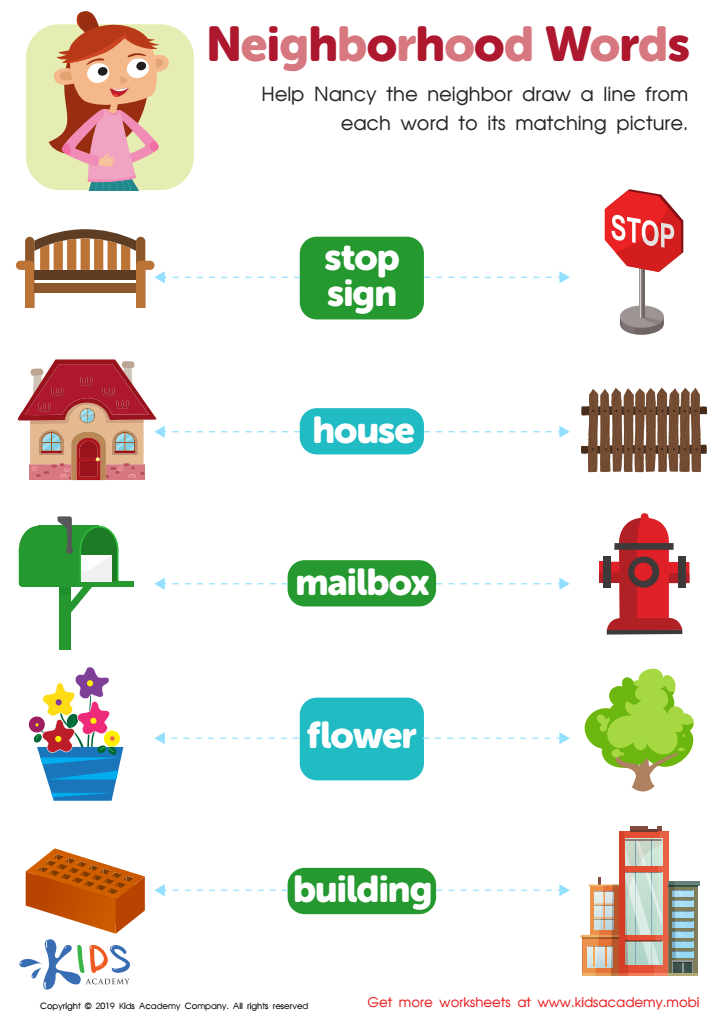
Neighborhood Words Worksheet
Help preschoolers develop life skills and familiarize them with words and concepts with this worksheet! It'll also boost their fine motor skills as they trace lines to match pictures with the words. They'll learn new words and feel more confident in their reading.
Neighborhood Words Worksheet
Worksheet
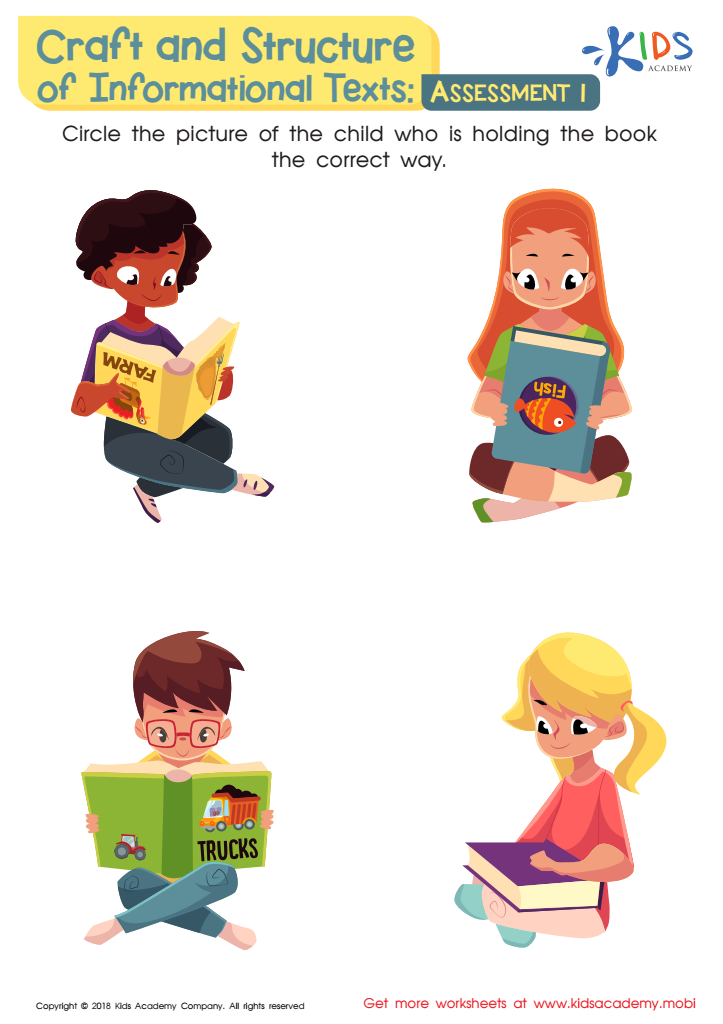
Craft and Structure of Informational Texts: Assessment 1 Worksheet
Young children need to know how to hold books correctly when they start reading. This assessment worksheet helps them show they know what to do. They'll look at the pictures and circle the child who is holding the book correctly. It's a great way to tell they are well on their way to becoming lifetime readers!
Craft and Structure of Informational Texts: Assessment 1 Worksheet
Worksheet
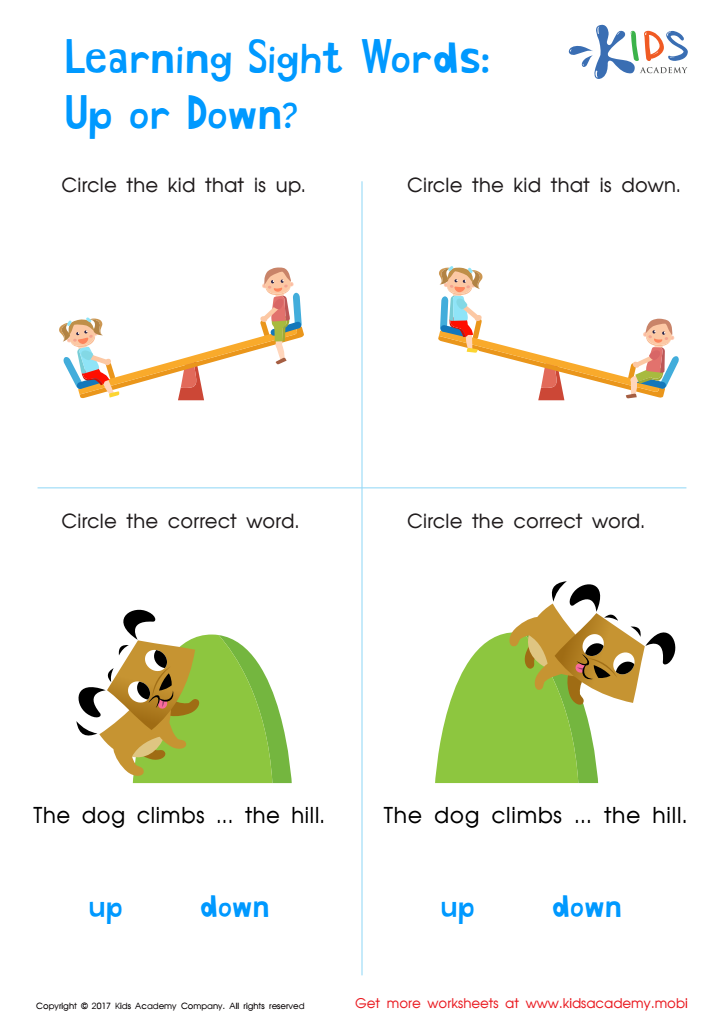
Up or Down Printable Sight Words Worksheet
Help your child identify up and down in print with this sight words worksheet. It has simple sentences, vibrant images and easy-to-read language that allow your little learner to practice these essential sight words. Perfect for early readers!
Help your early reader identify and read up and down with this sight words worksheet. It provides simple sentences, clear language and vibrant images to help them practice these essential sight words. Perfect for toddlers!
Up or Down Printable Sight Words Worksheet
Worksheet
Join Kids Academy for Free
Who is primarily going to use this learning content?








Vocabulary development is a crucial aspect of early literacy that significantly influences a child's overall academic success. For children ages 4-5, building a robust vocabulary lays the foundation for relational understanding in reading, writing, and verbal communication. At this stage, children's brains are exceptionally receptive to language, making it the perfect time to engage them with diverse words through conversation and reading.
Parents and teachers should care about this development because a rich vocabulary enhances children's comprehension skills, allowing them to better understand stories and express their thoughts and feelings. Early exposure to varied and complex words can help combat future reading difficulties, fostering a lifelong love for reading.
Furthermore, vocabulary development fosters critical thinking skills, enabling children to connect new concepts with their existing knowledge. Through play and daily interactions, children learn words contextually, which aids in deeper understanding. Parents and teachers can play a key role by sharing storybooks, engaging in meaningful conversations, and stimulating language-rich environments. Developing vocabulary at this vibrant stage not only promotes effective communication skills but also sets children on a path toward a successful academic journey. Supporting their vocabulary growth is an investment in their future educational achievements.








